
Cytherea
Runaway-greenhouse world
Its surface is a furnace that melts lead; its air a crushing oven. But fifty kilometres up lies a temperate shelf of sulfuric-acid cloud where pressure and warmth turn almost Earthlike. Life never touched the ground here — it colonised the sky, sealed in acid-proof skin. The Sulfur Bell drifts that one survivable band, a bubble of life over an inferno.
Life on Cytherea · 4 species

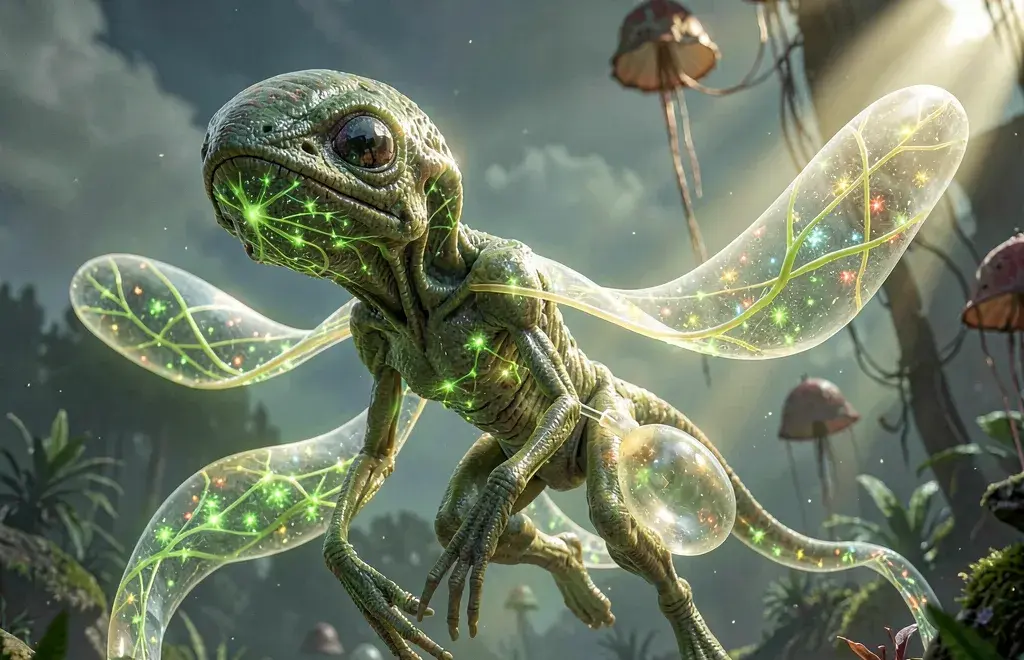
Sulfurophyton filum, or Acid Weave, dominates Cytherea's lower atmosphere as a translucent, ribbon-like primary producer. Its wide membranes harvest intense solar radiation while catalyzing atmospheric sulfur into organic bonds within a highly acidic cytoplasm. This unique photo-chemical process converts the runaway-greenhouse world's toxic haze directly into biomass, sustaining the planet's entire food web without liquid water. Anchored by buoyant gas bladders, these delicate ribbons drift in synchronized currents to maximize light exposure while avoiding collisions. Their fluid, gelatinous bodies ripple in unison, forming vast, living tapestries that shift with thermal winds. This collective movement ensures optimal photosynthetic efficiency, turning the scorching sky into a shimmering, self-regulating energy grid for Cytherea's alien biosphere.
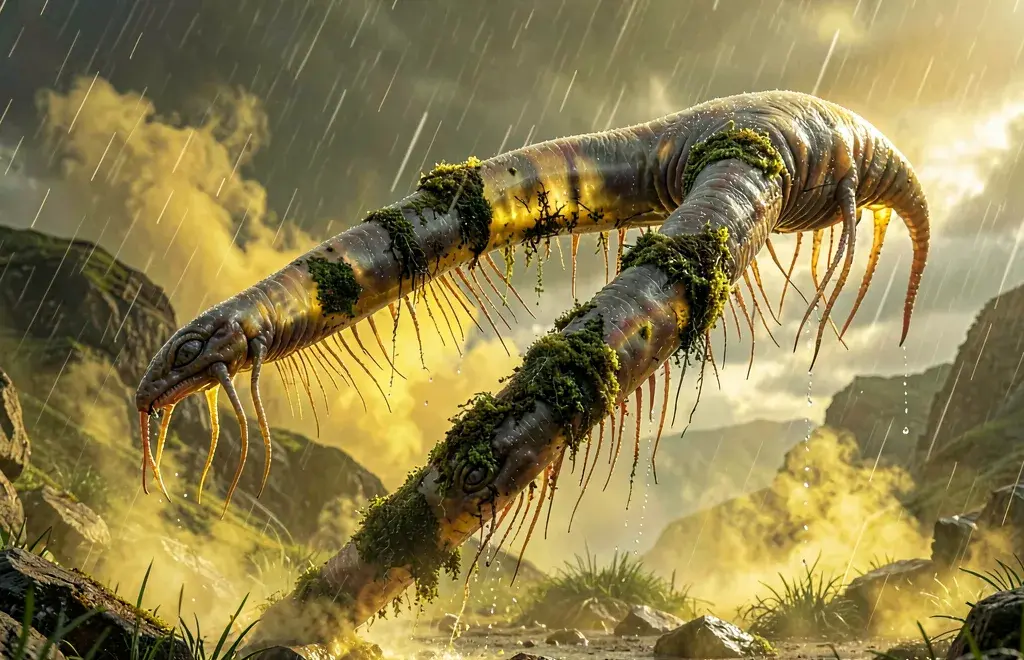
Nebulosiphon vorax, or Cloud Whisker, drifts in Cytherea's perpetual yellow haze as a ghostly, elongated worm. Its translucent hide refracts sunlight to match the sulfur-dense atmosphere, rendering it nearly invisible against the acid clouds. These suspended particles feeders navigate turbulent thermal currents with precise undulations, avoiding the deadly descent into the superheated surface below while harvesting microbial mats from passing rain squalls. Six rows of ciliated gills line its ventral side, filtering dissolved sulfur compounds directly from the corrosive precipitation. By converting toxic aerosols into biomass, the Cloud Whisker acts as a vital nutrient cycle recycler in this runaway-greenhouse world. Its slow, deliberate movement through the updrafts ensures survival, turning the planet's harshest atmospheric conditions into a thriving, silent ecosystem within the clouds.

On Cytherea’s superheated upper strata, the translucent disc-shaped *Nebulovis acutus* drifts among slower herbivores. Concealing retractable acidic spines beneath their ventral rim, they utilize thermal updrafts for silent vertical descent, remaining invisible against the solar backdrop until striking prey from below. They puncture buoyant sacs, draining nutrient-rich fluids before discarding empty shells sinking toward the toxic surface. Such efficient predation regulates drift populations, preventing dangerous atmospheric overcrowding. Sinking debris and floating carcasses mark their presence; they serve as essential regulators, silently culling the weak on this volatile runaway greenhouse world.
World Data
- Star
- Sol-like
- Gravity
- 0.9 g
- Surface
- 460 °C furnace
- Clouds
- sulfuric acid