
Verdance
Alternate Earth
An Earth that took one different turn deep in time — where photosynthesisers kept their muscles and nerves, and the line between plant and animal never hardened. Violently seasonal and quick to exhaust its soils, it rewards a forest that can walk to the light. Here the Walking Groves migrate the plains — one of two fates this atlas imagines for our world, the other being a far-future Earth.
Life on Verdance · 4 species

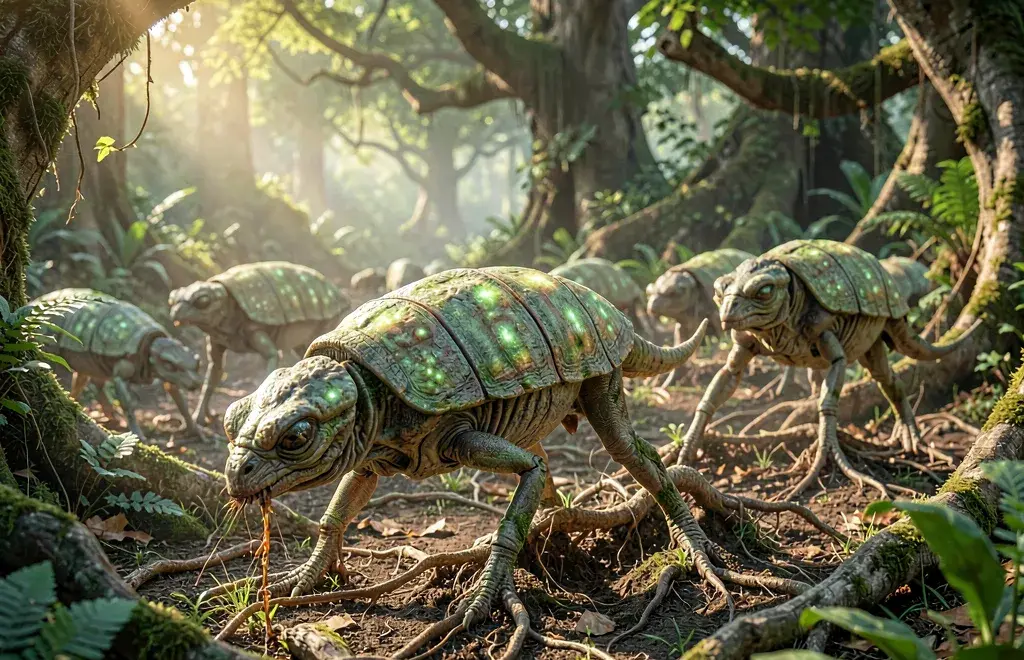
The Sun-Fallow Grazer (*Heliofagus migrans*) is a low-profile herbivore distinguished by its broad, chlorophyll-rich carapace, which supplements its diet through photosynthesis. These creatures primarily feed on the nutrient-dense root-muscles shed by Verdance's migrating grove-trees. Moving in dense herds, their jointed petiole-legs precisely track these wandering roots across the landscape, ensuring constant access to fresh organic matter while minimizing exposure to predators. Hourly pivots allow the herd to maximize solar intake as they digest debris. This unique behavior transforms them into mobile primary consumers and efficient nutrient recyclers within Verdance's dynamic ecosystem. By converting shed root biomass into stable energy pools, *H. migrans* sustains the soil cycle even as the forest itself shifts position daily, bridging the gap between stationary flora and a wandering biosphere.
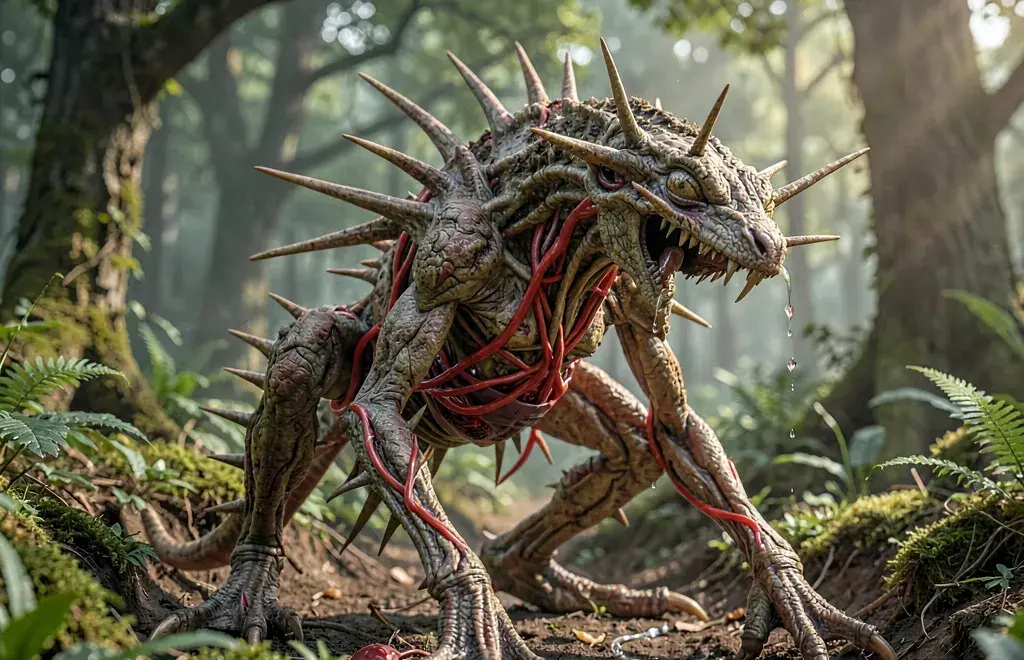
The Deadwood Stalker (*Simulacrum venator*) perfectly mimics dormant timber on Verdance's forest floor, its bark-like dermis concealing a predatory intent. This carnivorous flora-animal lies in wait specifically for straying juveniles, triggering an ambush when prey nears its root-bound perimeter. Upon contact, rapid-stinging thorns erupt from the surface, injecting potent digestive enzymes that instantly liquefy soft tissue while the victim remains paralyzed. Fueling this sudden violence is a unique internal vascular system pumping oxygenated blood to drive powerful muscle contractions within its fibrous core. Once feeding concludes, the Stalker utilizes these same mechanisms to rapidly retract beneath the soil, vanishing completely before scavengers arrive. This efficient cycle not only sustains the species but serves as a critical population regulator for Verdance's vulnerable young fauna.
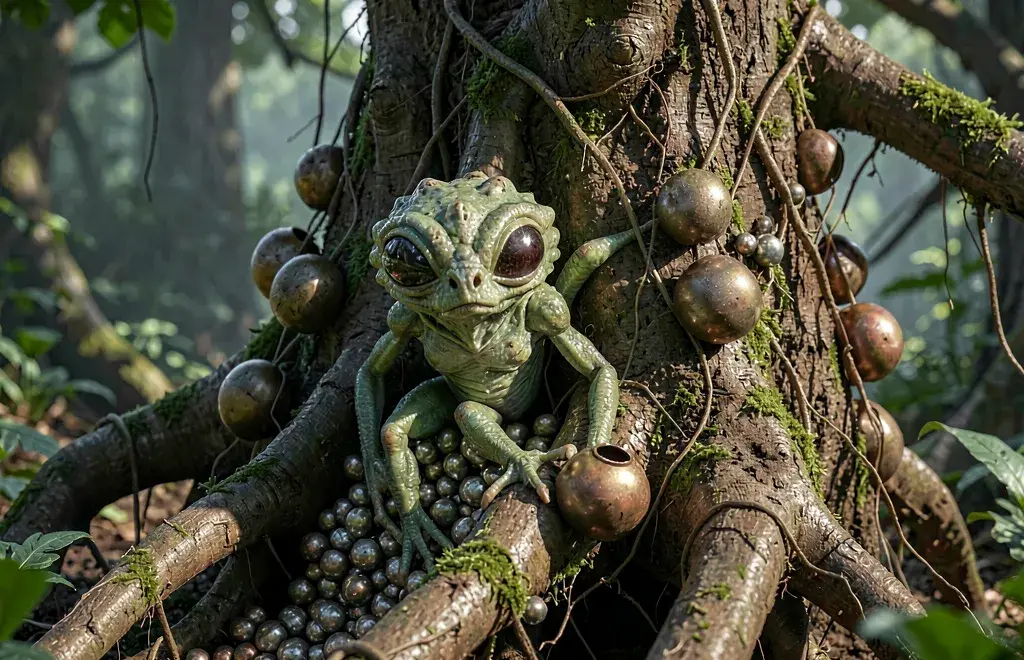
Clinging tenaciously to Verdance's massive root-stalks, the Soil-Siphon Symbiote (*Rhizosoma purgans*) acts as a living filtration unit for exhausted terrain. These small, translucent organisms actively draw heavy metals from depleted soil, converting toxins into inert crystalline structures stored within specialized host pods. This process prevents lethal toxic buildup during the planet's seasonal migrations, ensuring the ecosystem remains viable despite constant movement across contaminated landscapes. In return, hosts gain a mobile nutrient buffer essential for rapid regrowth upon reaching fresh ground. The symbiotes secrete concentrated minerals directly into root systems, triggering immediate bursts of vegetative expansion in barren zones. This mutualistic exchange transforms potential death traps into fertile stepping stones, allowing Verdance's flora to thrive through perpetual cycles of exhaustion and renewal driven by the siphon's tireless metabolic labor.
World Data
- Star
- Sol · G-type
- Gravity
- 1.0 g
- Atmosphere
- Earthlike, O₂-rich
- Divergence
- plant/animal never split