
Xylos Prime
Tidally Locked Super-Earth with High-UV Flux
Life on Xylos Prime · 4 species

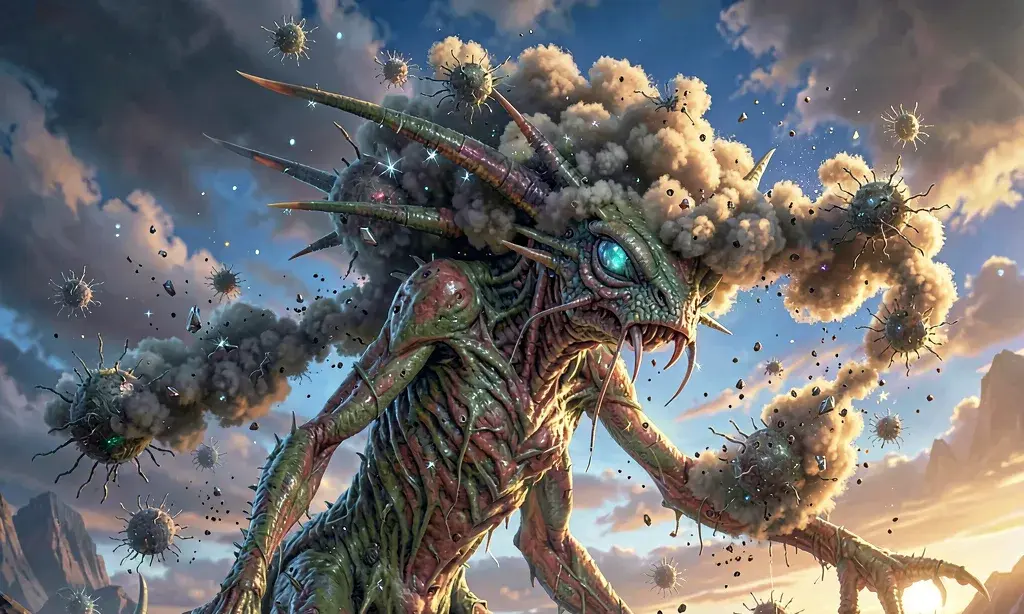
The Flare-Cleaner (*Purifex aerosol*) manifests as a shimmering, ochre-hued fog drifting above Xylos Prime’s permanent twilight terminator. Composed of hyper-aggressive bacterial micro-colonies, this entity actively hunts the saturated dust precipitating from the planet's floating biospheric rafts. Its cells possess unique photoreceptive membranes that trigger rapid enzymatic breakdown upon contact with particulate matter, instantly dissolving heavy metals previously trapped in organic sludge. By volatilizing these toxins into breathable atmospheric compounds, the Flare-Cleaner acts as a critical planetary circulatory system. Without this microbial gas, Xylos Prime's upper atmosphere would suffocate under toxic accumulation. These scavengers thrive only where UV flux remains high yet stable, converting lethal sediment back into life-sustaining vapor before the dust ever reaches the scorching sub-stellar surface.
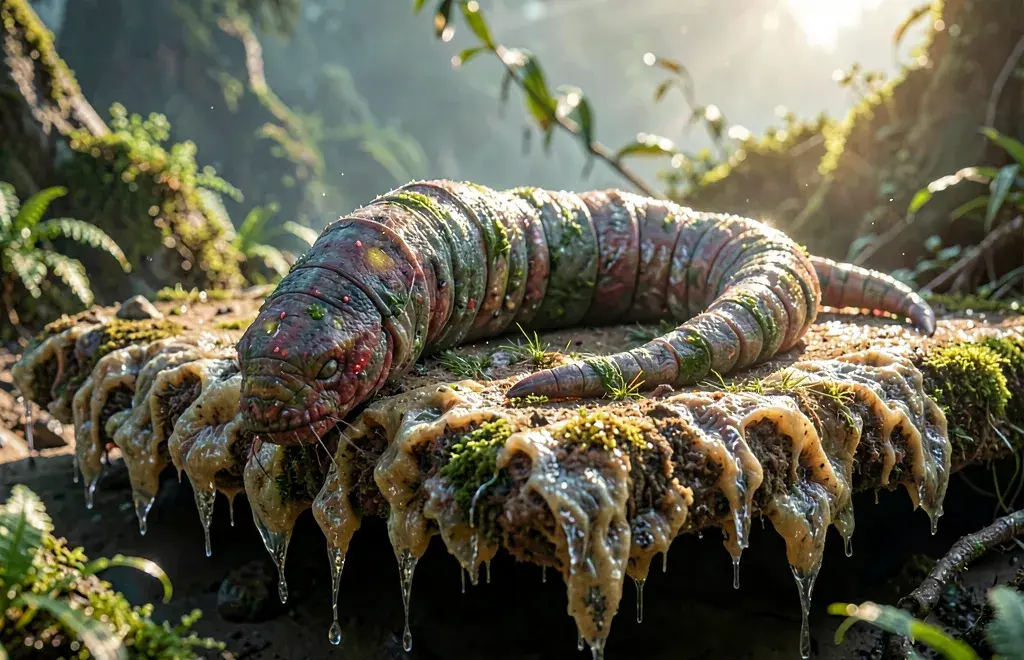
Dendrothrix sif, or the Sludge-Worm, is a blind, segmented grazer endemic to Xylos Prime's twilight zone. Its translucent body navigates the high-UV shadows beneath the planet's massive silicate rafts, relying on chemoreception to locate silica-reinforced tissue. These macro-parasites burrow deeply into the raft's underbelly, consuming structural fibers essential for buoyancy and thermal regulation. Their feeding triggers a violent exfoliation response in the host, causing layers of the raft to slough off. This self-defense mechanism often leaves the Sludge-Worm stranded on the exposed surface, where intense radiation quickly desiccates its soft tissues. Consequently, populations remain concentrated in deep crevices, cycling rapidly between infestation and host rejection.

Shadow-Blooms (Umbra-flora) thrive exclusively in the perpetual twilight zone of Xylos Prime, clinging to the charred underbellies of drifting photon-cleaver rafts. These non-photosynthetic entities possess obsidian, gelatinous fronds that absorb residual waste heat from their hosts' fusion cores. This thermal gradient drives a unique chemosynthetic process, converting atmospheric sulfur and carbon monoxide into complex organic matter without any reliance on stellar radiation. Functioning as obligate symbionts, they provide the rafts with structural reinforcement and localized cooling while gaining mobility across the tidally locked surface. Their dark pigmentation is not for camouflage but to maximize infrared absorption efficiency. Observers note that detached specimens rapidly desiccate within minutes, confirming their total dependence on the thermal exhaust of their massive mechanical hosts.
World Data
- star
- K-type Orange Dwarf (Active Flare Frequency: High)
- gravity
- 1.4g
- atmosphere
- Sulfur-dioxide rich, ozone-depleted, dense haze layer
- temp
- 45C (Surface) to 85C (Sub-surface)