
Mycelia Prime
Super-Earth, Hyper-Organic
Life on Mycelia Prime · 4 species

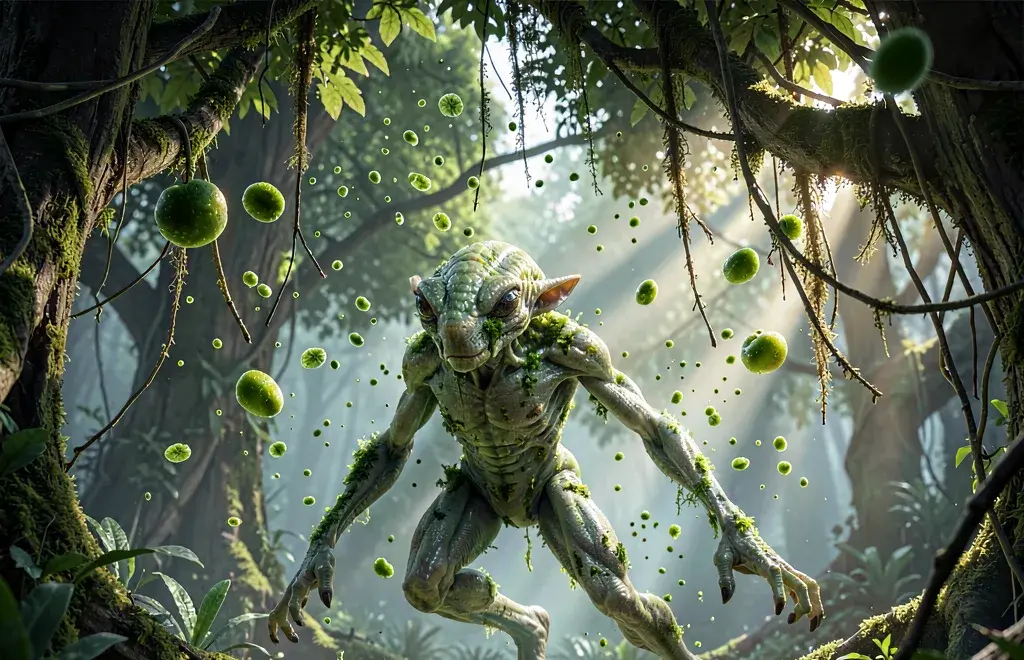
Drift-Moss (*Aerobryum vagans*) manifests as iridescent, microscopic filaments suspended in Mycelia Prime's dense upper canopy. These buoyant algae generate faint bioluminescence to capture the planet's perpetual twilight, forming a shimmering, drifting carpet that shifts with atmospheric eddies. Their cellulose-rich spores act as the primary energy source for the massive, filter-feeding Mycofiltra, which sweep through the air to harvest them. Though individually fragile, their collective biomass sustains the entire hyper-organic ecosystem below. During seasonal updrafts, vast swarms detach and rain downward, creating nutrient-rich "green snow" that fertilizes the fungal forests. Researchers caution that disrupting these aerial currents could collapse the planetary food web, as no other organism effectively replaces this drifting primary production.
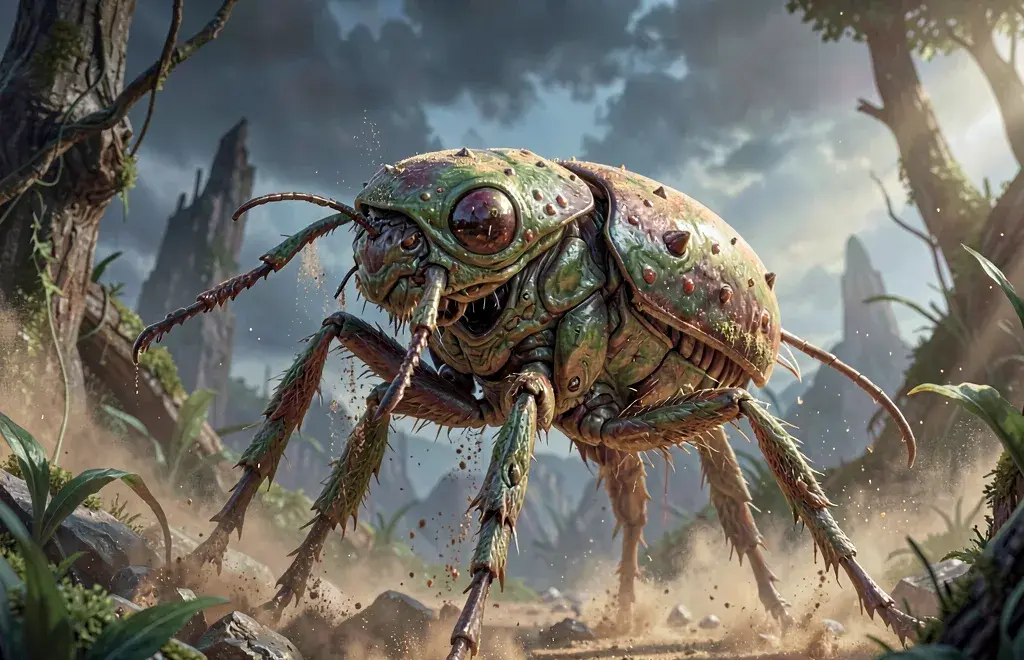
The Spore-Husk Beetle (*Chitinex destructor*) is a compact, armored scavenger endemic to Mycelia Prime's lower atmospheric strata. Measuring merely three centimeters, its dense, obsidian carapace withstands the planet's crushing gravity while insulating against abrasive silicate storms. These insects possess specialized mandibles evolved solely for grinding the dry, glass-like dust excreted by towering Mycofiltra organisms, a waste product that would otherwise choke the fungal forests below. Functioning as essential air cleaners, colonies of *C. destructor* process tons of particulate matter daily, converting hazardous silica into harmless, nutrient-rich grit. Their rhythmic, grinding chorus signals healthy atmospheric turnover. Despite their unassuming size, these heavy-bodied consumers are vital to the hyper-organic ecosystem, ensuring the breathable clarity required for Mycelia Prime's vast, subterranean life webs to thrive.
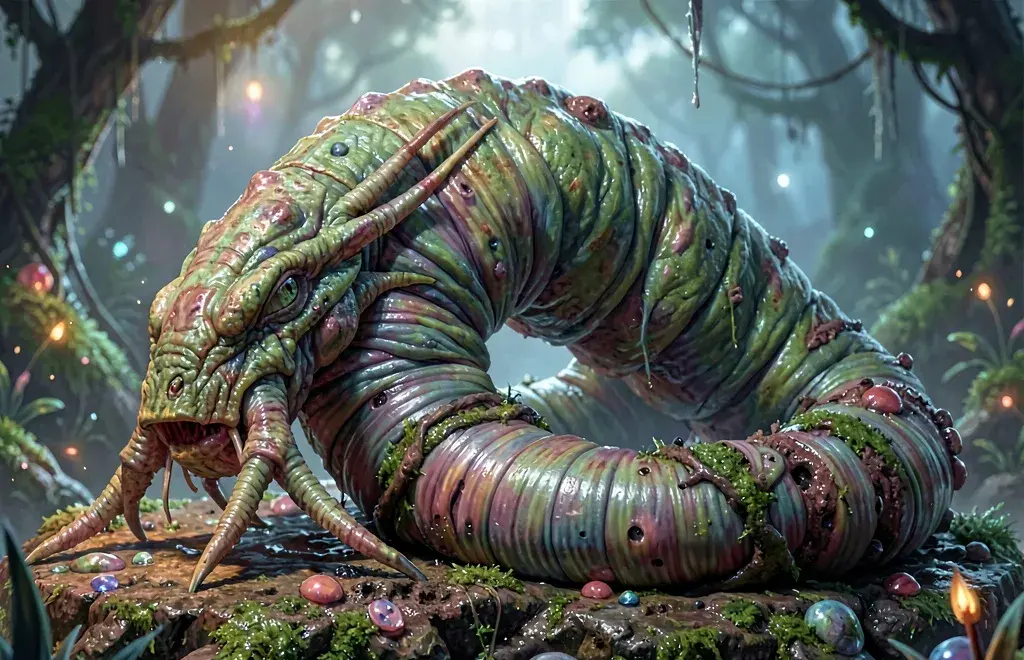
Terrafigus profundus, the Anchor-Worm, is a translucent, segmented vermiform native to Mycelia Prime's hyper-organic crusts. During the Mycofiltra's spawning cycle, this commensal burrows into the fragile reproductive peduncle, secreting a rapid-hardening chitin-mycelium hybrid that acts as a biological tension cable. This structural reinforcement prevents the immense weight of the spore-sacs from snapping the stalk under the planet's high gravity, ensuring successful dispersal without harming the host. The worm remains embedded only for the forty-eight hours required for spore maturation, after which it detaches and burrows back into the soil matrix to await the next cycle. Its existence is a delicate symbiosis of necessity; the Mycofiltra gains stability against planetary shear forces, while the Anchor-Worm secures a nutrient-rich, protected microhabitat during its most vulnerable developmental phase.
World Data
- star
- Red Dwarf (M4V)
- gravity
- 1.8g
- atmosphere
- Dense, high-pressure organic soup (15 atm, 2.5 kg/m³ density), rich in suspended silicate-organic aerosols
- temp
- 14°C (stable, greenhouse equilibrium)