
Cryos-IV
Cold Ammonia Ocean World
Life on Cryos-IV · 4 species

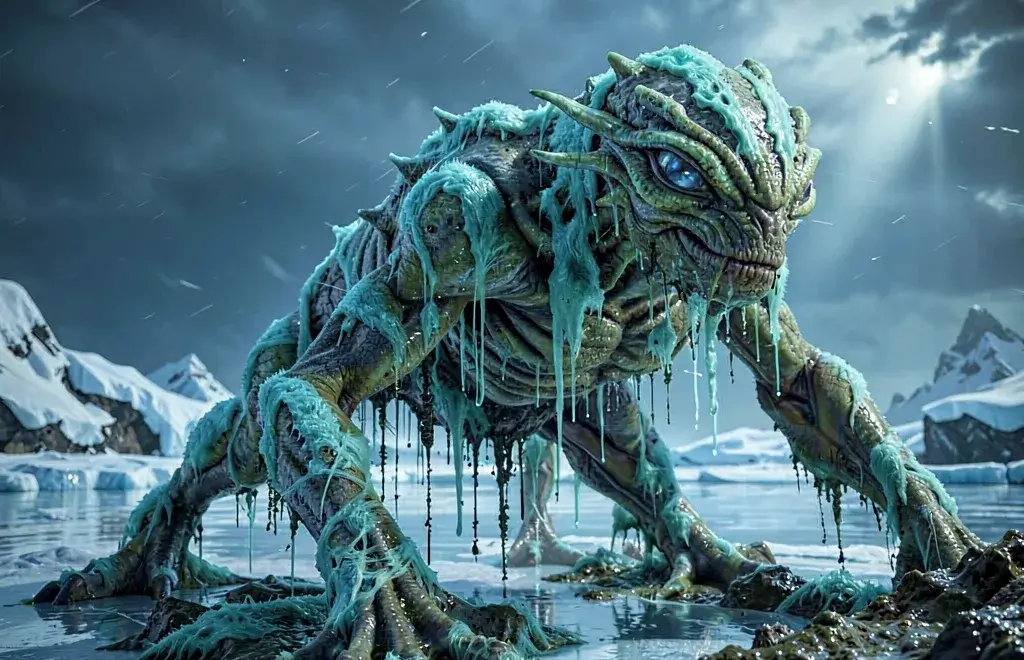
Nitrifilum cryo manifests as iridescent, cyan-tinted mats clinging to Cryos-IV's fractured sea ice. These autotrophic colonies harvest faint stellar radiation through translucent filaments, driving a unique chemosynthetic cycle that converts atmospheric nitrogen into dense, organic sludge. The resulting biomass forms a resilient, gelatinous substrate essential for survival in the planet's ammonia-rich, sub-zero oceans. Detached fragments drift within the brine channels, serving as the primary energy source for local heterotrophs. The moss thrives where liquid water meets frozen crust, its metabolic byproducts slowly altering the ice's chemical composition. This foundational producer anchors the entire cryo-ecosystem, transforming inert gas into life-sustaining matter beneath the eternal frost.
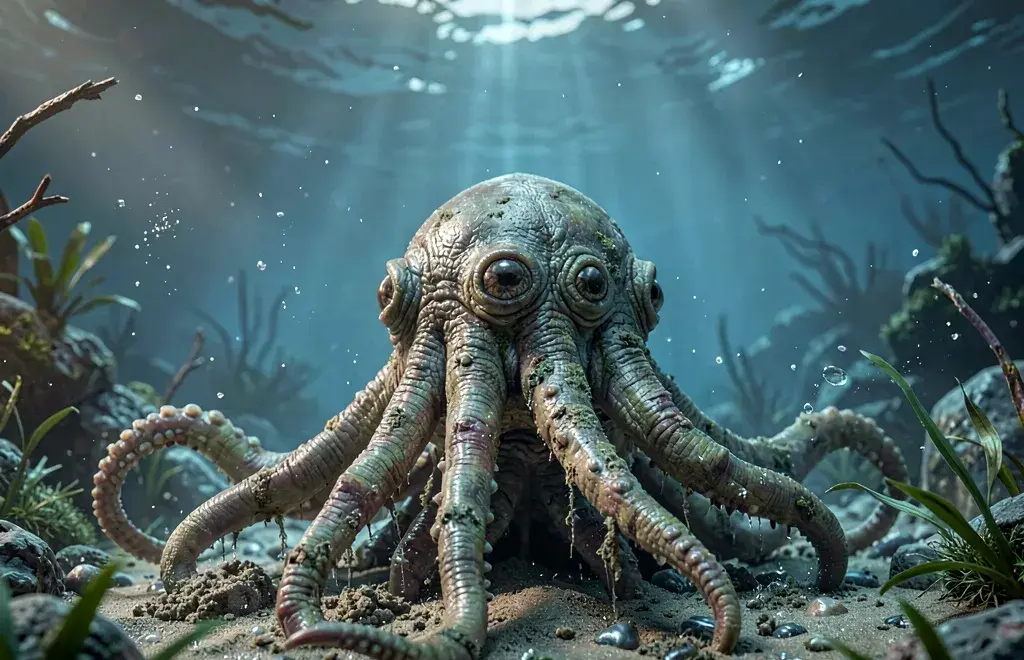
The Gastro-vortex spinosus, commonly named the Silt-Eater, anchors firmly to Cryos-IV’s sublimated oceanic crust. This sessile detritivore deploys twenty translucent tentacles lined with cilia to vacuum ammonia-rich sediment. Its thickened, spined carapace withstands crushing depths while efficiently filtering dissolved organics from the dense sludge. Waste flows through its internal vortex, converting decay into bio-luminescent heat. Critical to the nitrogen cycle, it processes dead microbial mats left by surface vents. Field researchers note their rhythmic pulses synchronize precisely with local tidal shifts, confirming them as vital keystone decomposers within this frozen biosphere.
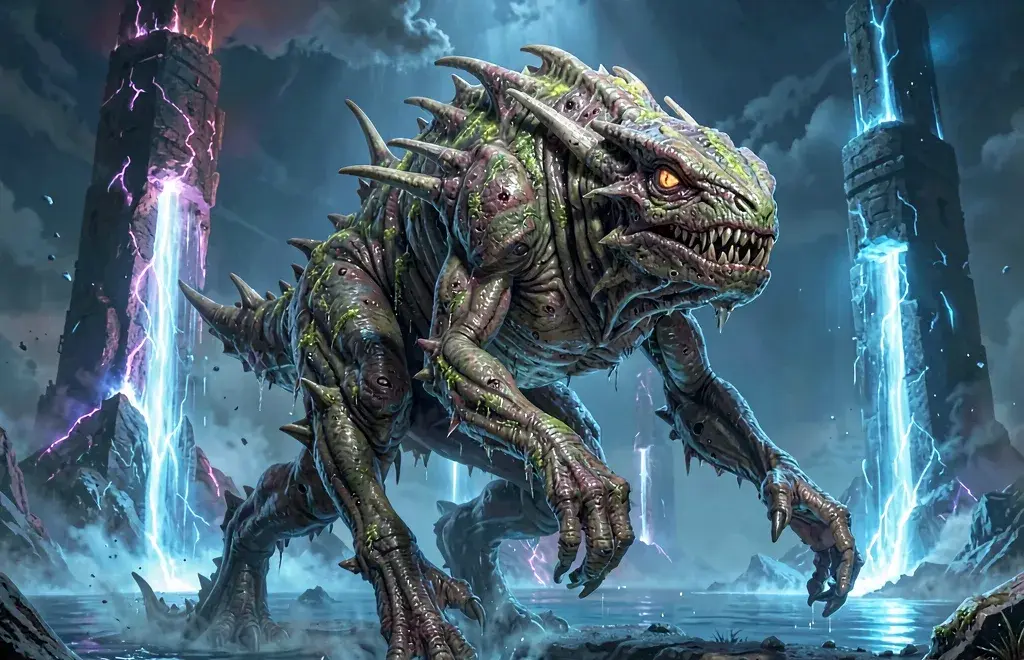
Volcanis dentatus, or the Thermal-Predator, is a dense, obsidian-skinned apex carnivore endemic to Cryos-IV's sub-surface ammonia oceans. Its massive, low-center-of-gravity frame anchors it against powerful currents near hydrothermal vents, where water temperatures briefly rise above the ambient freezing point. This creature relies on extreme mass and thermal insulation rather than speed, allowing it to remain motionless for days within the vent's updrafts. Ambush tactics define its hunting strategy; V. dentatus waits until warm-water migrations draw prey toward the heat source. Suddenly erupting from the dark sediment, it snaps upward with a crushing jaw apparatus designed to shear through thick ice-flesh. Once captured, the prey is dragged back into the cold depths, where metabolic processes slow rapidly before consumption ensues in total darkness.
World Data
- star
- K-type Orange Dwarf (Low UV, High IR)
- gravity
- 0.65g
- atmosphere
- Dense Nitrogen-Methane haze over global liquid ammonia ocean; high surface pressure (15 bar)
- temp
- -95°C to -70°C (supercooled liquid ammonia solvent)