
Mycelia Prime
Super-Earth with Hyper-Humid Fungal Biosphere
Life on Mycelia Prime · 4 species

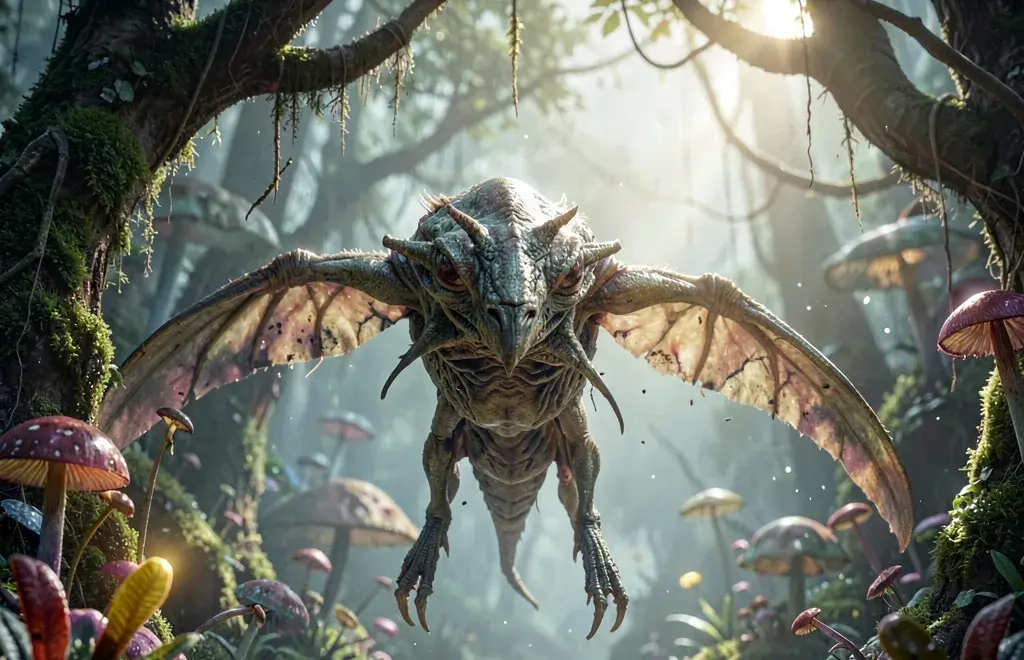
The Spore-Drifter (*Aerosporis vagus*) is a wingless, gas-filled arthropod native to Mycelia Prime's hyper-humid fungal canopy. Its translucent exoskeleton houses buoyant lungs filled with methane, allowing it to ride thermal updrafts effortlessly through the dense spore-mist. Lacking active flight muscles, this primary prey species remains entirely passive, drifting aimlessly until atmospheric turbulence guides its path. At night, the creature exhibits a fatal phototaxis, instinctively drawn to bioluminescent fungal blooms or artificial light sources for mating rituals. This unthinking attraction often leads them into predatory traps set by larger ambush-predators mimicking those lights. Consequently, Spore-Drifters rarely survive beyond their brief reproductive cycle, serving as a crucial energy transfer point in the planet's fragile food web before vanishing into the gloom.
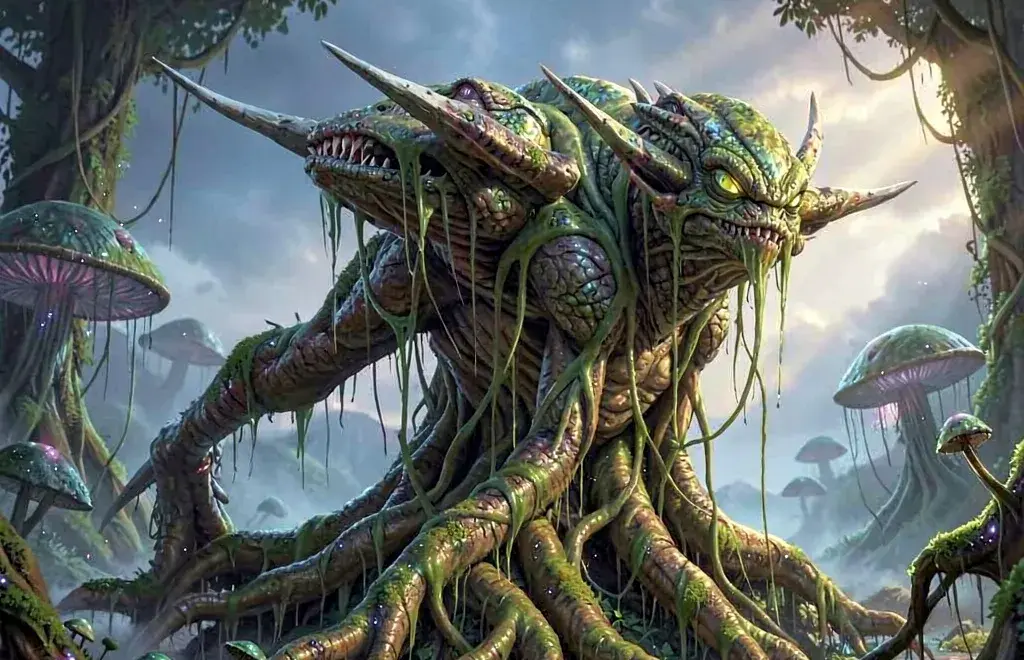
Mycelium tenax forms vast, subsurface mats across Mycelia Prime. These fibrous networks aggressively sequester nitrogen, outcompeting flora in the hyper-humid gloom. Growth is glacial, spanning centuries per meter, yet tensile strength remains immense. They bind loose soil against gravity shifts, acting as the planetary foundation. Root-Weavers serve as critical living scaffolds for fragile Lumifungos colonies. While parasitizing local nutrients, they offer stability against violent storms. This antagonistic symbiosis sustains the biosphere's vertical layers; without the Weaver's grip, the luminous canopy collapses into mud. Disturbing mycelial nodes risks cascading habitat failure.
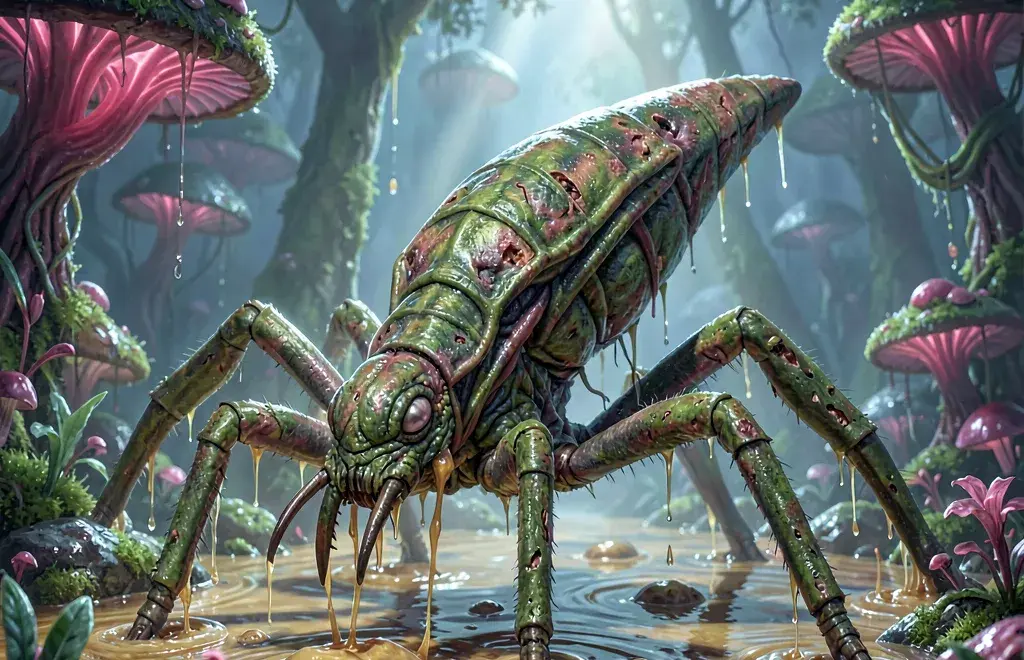
Umbra parvus, or the Shadow-Mite, navigates Mycelia Prime's crushing humidity via six sensitive, hair-tipped legs. Blind to visible light, it tracks dissolved Lumifungos by detecting thermal shifts in nutrient slurry. Its chitinous carapace blends seamlessly with damp fungal mats, rendering it nearly invisible against the super-earth's perpetual twilight. These arachnid scavengers emerge only when larger decomposers retreat, rapidly consuming the remaining organic broth before evaporation claims it. Their rhythmic mandible clicks signal feeding frenzies within dense spore-clouds, ensuring efficient nutrient recycling in this hyper-humid biosphere where decay is instantaneous and competition fierce for every drop of slurry.
World Data
- star
- Red Dwarf (M-type, dim, peak IR)
- gravity
- 1.4g
- atmosphere
- Dense, Oxygen-rich, high humidity, low UV
- temp
- 15°C - 25°C (stable), high thermal inertia