
Mycetia Prime
Frozen Fungal Super-Earth
Life on Mycetia Prime · 4 species

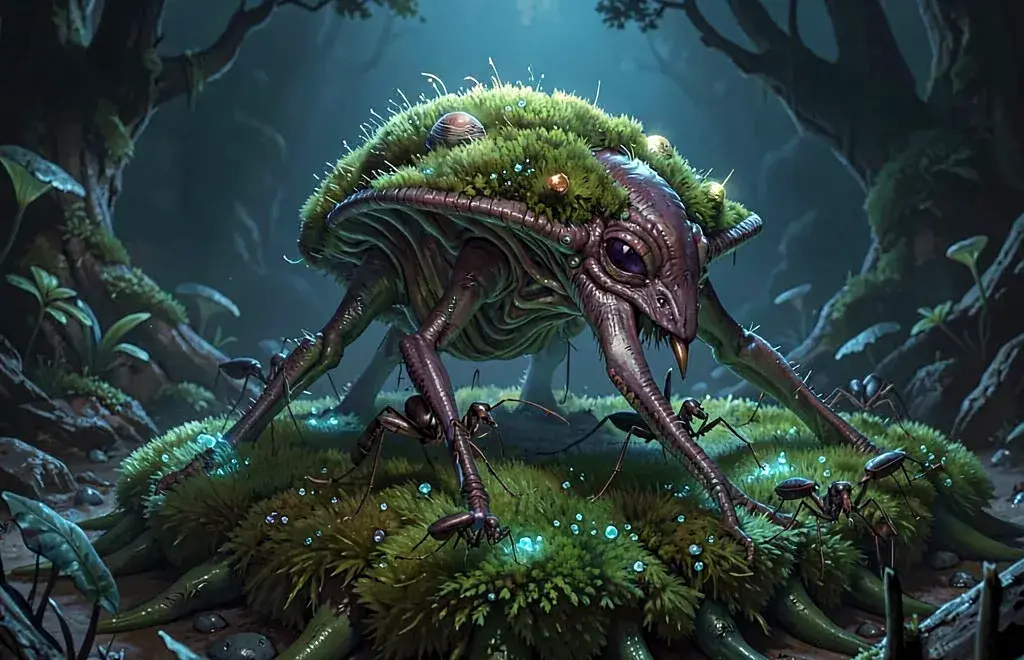
Aethelmyces resonans forms vast, undulating carpets across Mycetia Prime's cryo-plateaus, its fibrous hyphae locking into the permafrost to sustain primary production under eternal twilight. This low-profile flora compensates for scarce solar input by emitting a continuous, sub-audible thrum through specialized vibrational nodes. The resonance specifically lures the massive lithovorous striders, whose heavy footsteps disturb the moss just enough to release nutrient-rich spores while inadvertently aerating the frozen soil. In total darkness, the colony pulses with a faint, azure bioluminescence along its central rhizome network, serving as both a mating signal and a navigational beacon for native fauna. The light is dim, barely piercing the gloom, yet sufficient to guide striders toward dense patches of Aethelmyces. This symbiotic dance ensures the fungus's dispersal across the super-earth, turning the frozen tundra into a living, humming tapestry of survival.
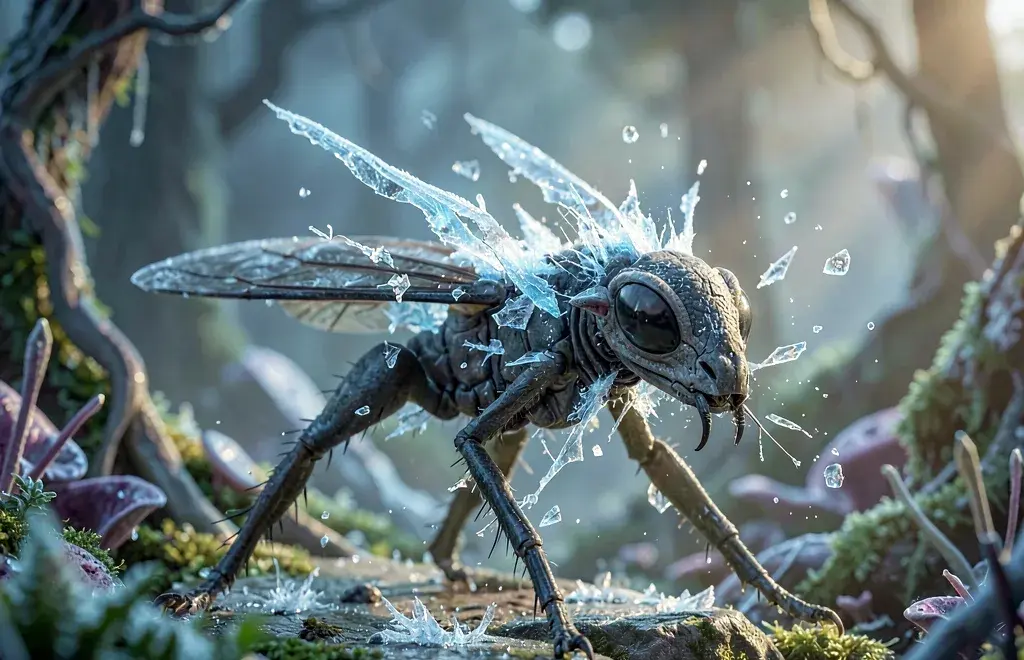
Cryoavis glacies, the Ice-Shrieker, is a diminutive yet lethal insectoid endemic to Mycetia Prime's frost-bitten fungal plains. Its chitinous exoskeleton mimics the pale lichen of its habitat, allowing near-perfect camouflage against the snow-dusted spore-caps. Unlike typical predators relying on sight or scent, this apex hunter possesses specialized thermal receptors along its mandibles, detecting the minute heat signatures generated when a victim's frozen epidermis begins to fracture under stress. It stalks the lumbering striders that traverse the icy tundra, waiting for these slow-moving giants to slip and crack their own ice-encrusted legs. At that precise moment of thermal shock, the Shrieker strikes with blinding speed, injecting neurotoxic saliva before the host can stabilize. This unique hunting strategy ensures efficient predation despite the creature's small stature, securing its dominance atop Mycetia Prime's frozen food web.
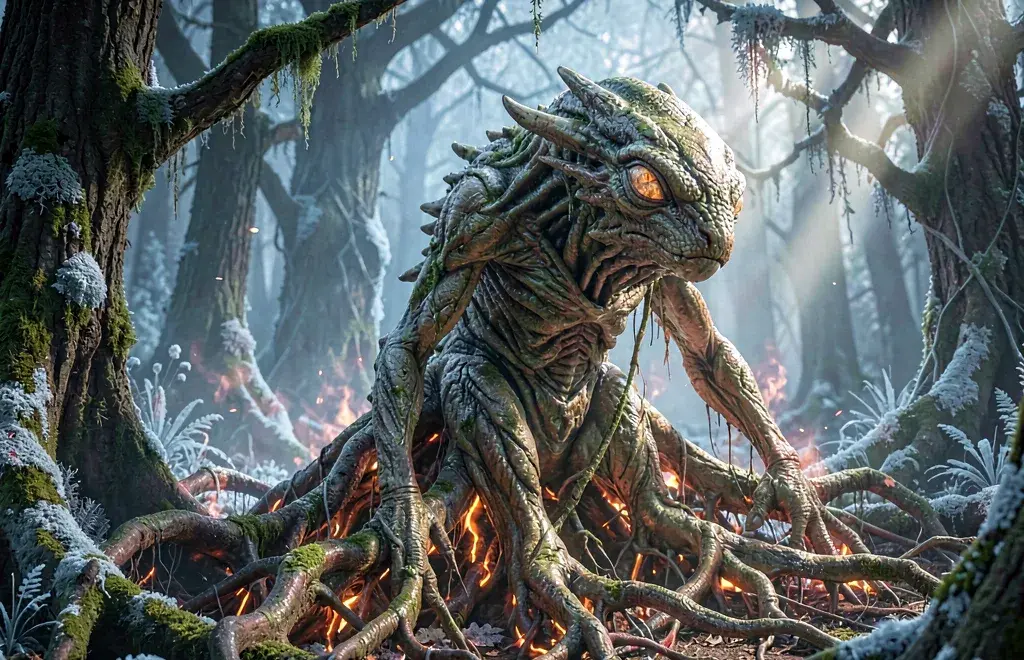
The Mycelial Weaver (/Nexus-filum complexus) dominates Mycetia Prime's cryo-forests as a subterranean lattice of bioluminescent rhizomes. This massive network penetrates deep into the permafrost, acting as the planet's primary thermal regulator by channeling geothermal heat upward through insulated hyphal channels to sustain surface epiphytes during the endless polar night. Functioning as the ecosystem's chief decomposer, it rapidly breaks down frozen organic matter, converting recalcitrant biomass into soluble nutrients distributed via rapid cytoplasmic streaming. Its vast, pulsating tendrils create a living circulatory system that binds scattered fungal colonies into a single, planet-spanning superorganism, ensuring survival against extreme thermal variance.
World Data
- star
- Red Dwarf (M-type, low UV, high IR)
- gravity
- 1.4g
- atmosphere
- Dense, oxygen-poor, rich in fungal spores and volatile alcohols
- temp
- -85°C to -40°C (global mean -60°C)