
Cryos-9
Titan-analog Cryomoon
Life on Cryos-9 · 4 species

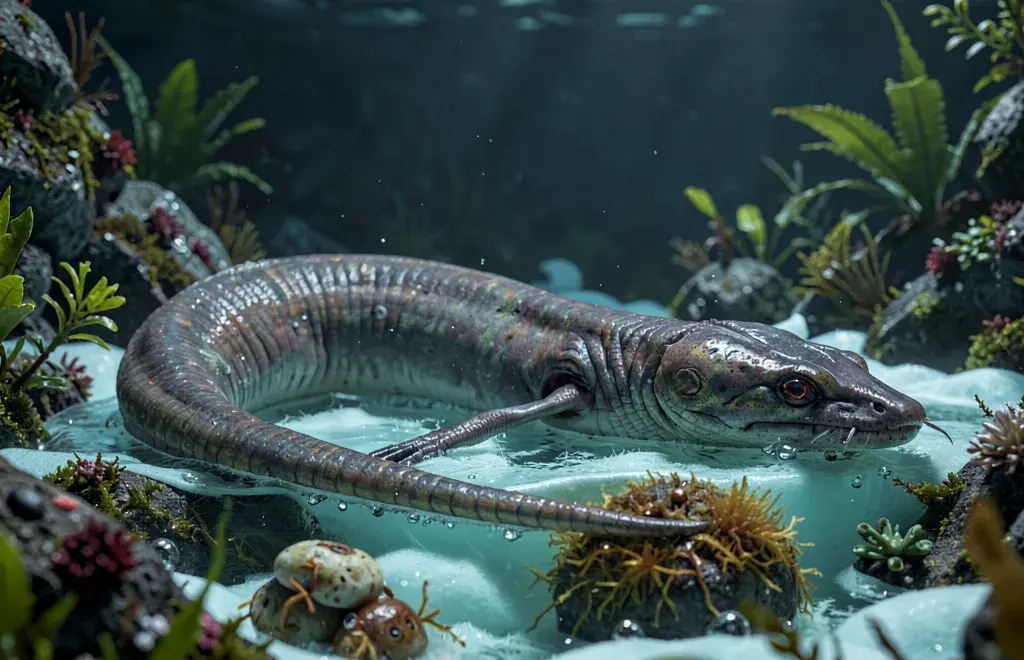
Lacustris anguis, the Methane-Eel, is a slender, blind predator of Cryos-9's sub-methane lakes. Its translucent skin filters faint geothermal luminescence, while sensitive lateral lines detect pressure waves in the dense, cryogenic fluid. Devoid of eyes, it navigates solely by sensing dissolved organic plumes released from hydrothermal vents below the ice crust. Feeding exclusively on suspended tholins and complex hydrocarbons, this herbivore drifts silently through the dark, methane-rich depths. Its elongated body undulates with minimal resistance, allowing it to ambush nutrient clouds before they dissipate. Though harmless to explorers, its presence signals a thriving, alien ecosystem hidden beneath the frozen moon's surface.
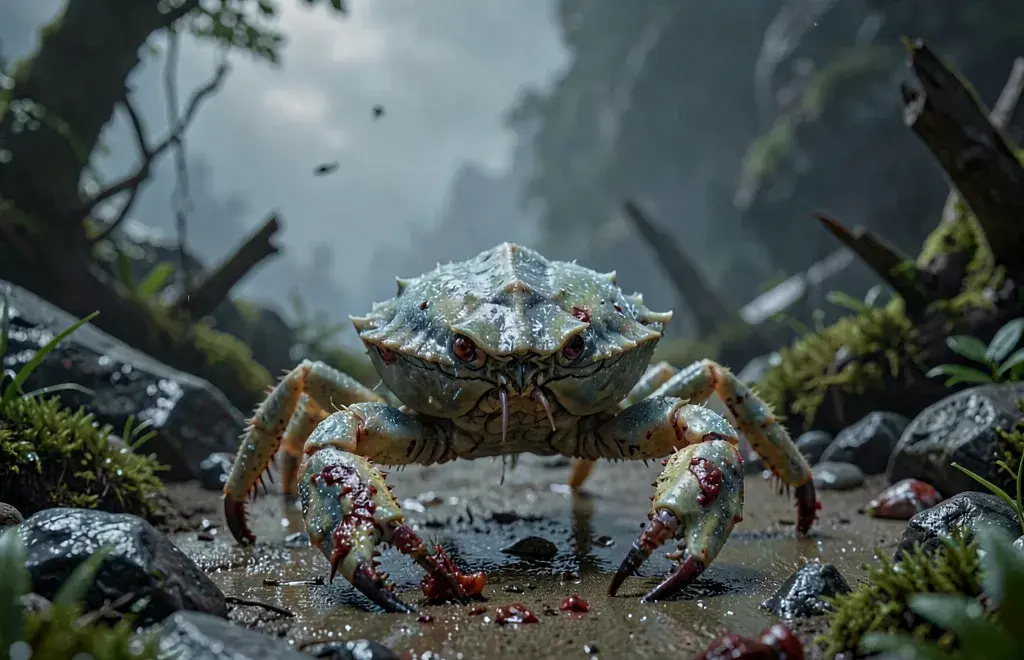
Glacies carapax, the Ice-Shard Crab, thrives in Cryos-9's sub-zero brine pools, its translucent carapace reinforced with silicate spikes that mimic surrounding frost. Measuring merely three centimeters, this agile scavenger navigates glacial fissures with unnerving speed, specifically targeting the necrotic tissue of larger predators like the regional Stalker. Its specialized mandibles possess cryo-resistant enzymes capable of dissolving frozen muscle without damaging healthy flesh, effectively acting as mobile sanitation units for the moon's apex fauna. These crustaceans operate in loose colonies, communicating via substrate vibrations to coordinate carcass dissection. By rapidly consuming decaying matter, they prevent toxin buildup within the Stalker's limbs and recycle nitrogen into the icy ecosystem. Their existence illustrates a delicate symbiotic balance; without the crabs' relentless cleaning, the Stalkers would succumb to gangrene in the harsh cryo-environment, ultimately destabilizing Cryos-9's fragile food web.
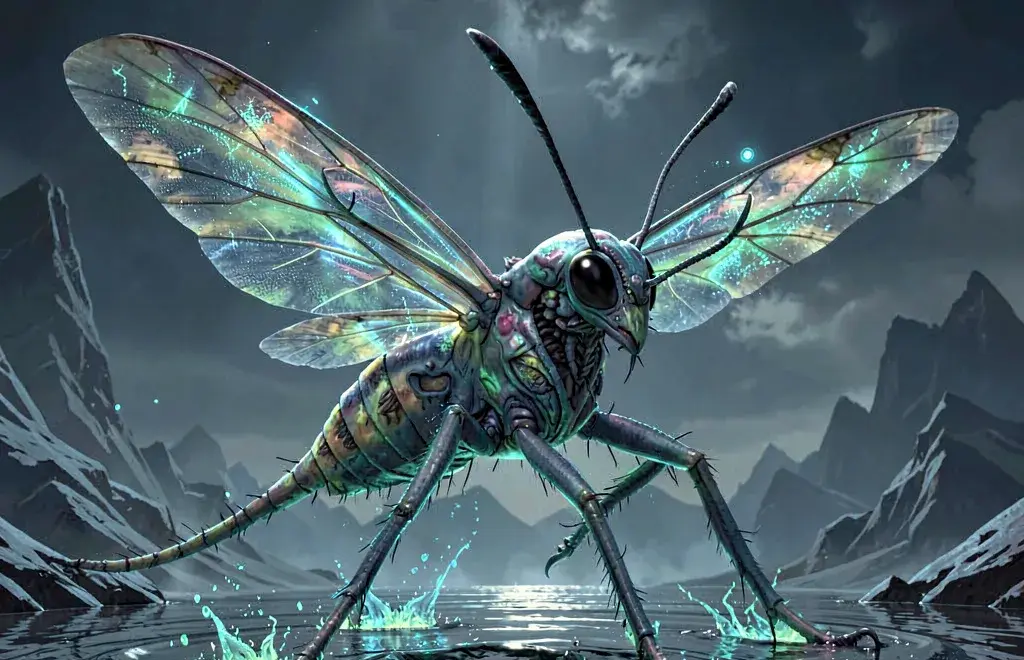
The Haze-Moth (Nebuloptera volans) is a delicate, six-winged grazer endemic to Cryos-9's subterranean ice caverns. With translucent wings spanning fifteen centimeters, it skims just above the nitrogen-mist lakes, filtering microscopic cryo-algae from the frigid air currents. Its chitinous exoskeleton shimmers with a faint, adaptive iridescence that mimics the surrounding glacial refraction, offering near-perfect camouflage against predators in the dim bioluminescent gloom. Despite its size, this species is surprisingly drawn to the intense ultraviolet pulses of the predatory Stalker. Mistaking these rhythmic flashes for the mating signals of its own kind, vast swarms converge on the apex predator's territory. This fatal attraction turns grazing flocks into easy meals, as the moths' blindness to danger overrides their survival instincts within the moon's eternal twilight.
World Data
- star
- Red Dwarf (M-type, dim)
- gravity
- 0.14 g
- atmosphere
- Nitrogen-Methane haze, 1.5 atm surface pressure
- temp
- -179°C (94 K)