
Pyra Major
Silicate Magma-Ocean World (M-Type)
Life on Pyra Major · 4 species

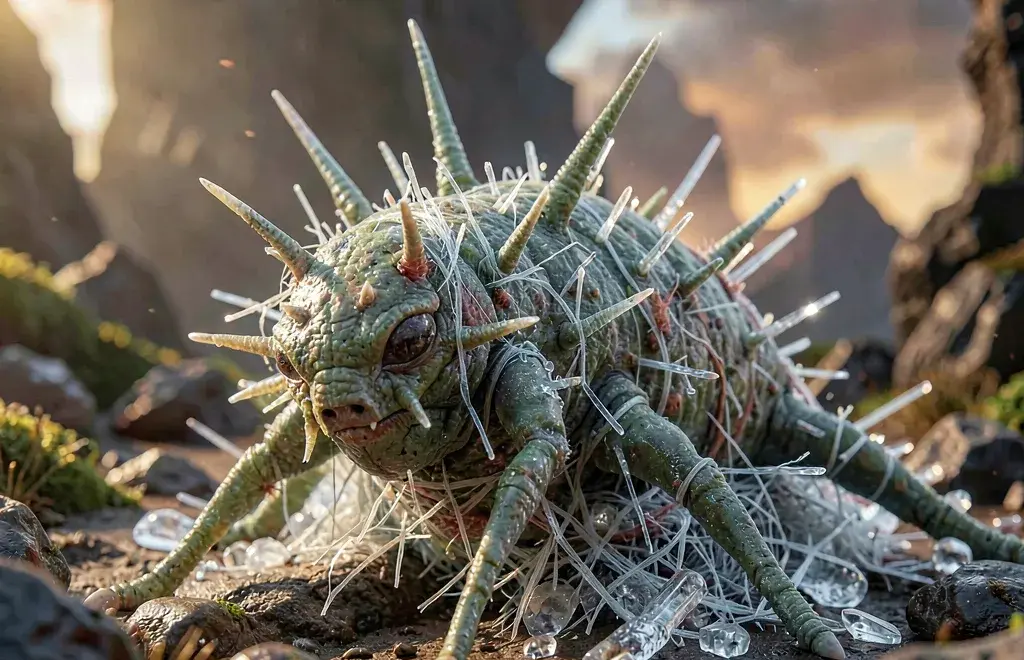
Lithovora gelida manifests as iridescent, heat-shielded filaments clinging to the chilled margins of Pyra Major's magma dyad. These microscopic scavengers thrive where molten silicate meets solidifying crust, their enzymes specialized to dissolve and ingest glass fibers ejected by thermal fracturing. Their metabolic processes convert excess silica into stable, crystalline waste, effectively stabilizing the chaotic shoreline against rapid erosion. Under magnification, colonies appear as shifting mosaics of obsidian and ruby, pulsing with faint thermoluminescence. By recycling volcanic debris into nutrient-rich dust, they sustain the planet's fragile thermal gradient, preventing localized superheating that could destabilize the entire crustal shelf. They are the silent architects of Pyra's cooling edges.
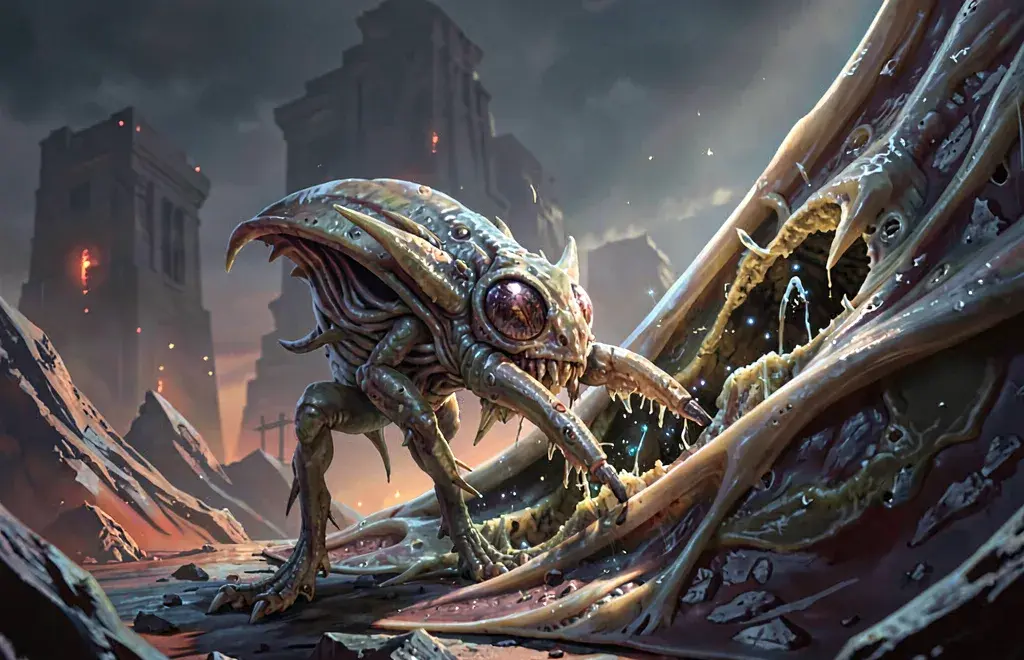
Sulfuricida vastator, the Sulfur Mite, is a microscopic protozoan endemic to Pyra Major's silicate magma oceans. Resembling a living shard of obsidian, it navigates superheated currents with flagellar precision until locating a Drifter. Upon contact, the mite drills through the host's heat-resistant membrane using enzymatic secretions, targeting stored sulfur reserves essential for the Dyad's metabolic fusion. The infestation forces the Drifter to divert significant thermal energy toward rapid cellular repair, disrupting its migration patterns across the lava sea. While individually harmless, swarms can critically weaken a host by inducing chronic metabolic exhaustion. Field researchers advise maintaining strict thermal shielding; even brief exposure allows these silicon-based parasites to breach defenses before the Dyad's immune response activates.
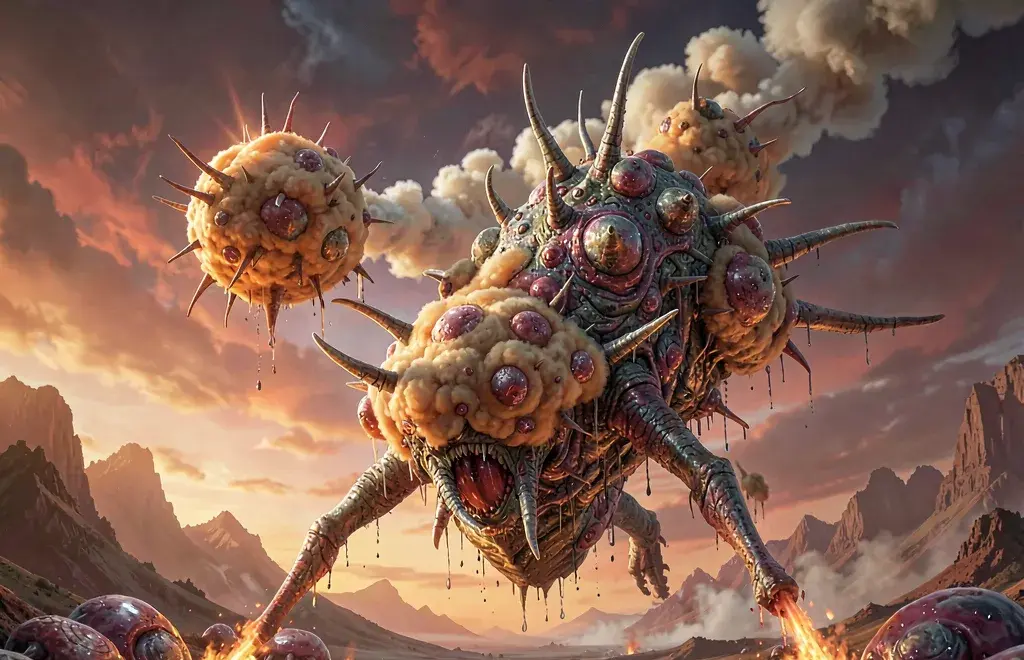
The Magma Eruptor (*Ignis ventus*) is a buoyant, gas-filled microbial colony drifting within Pyra Major's upper atmosphere. These autotrophs float above the churning silicate oceans, anchoring themselves in toxic sulfur clouds released by volcanic dyads. By chemosynthetically converting vented sulfides into energy, they form vast, iridescent mats that shimmer with orange and violet hues against the planet's perpetual twilight. Though visually striking, these layers constitute a dense, corrosive fog hazardous to complex life. The colonies continuously metabolize gases, thickening the stratosphere while releasing volatile byproducts that further acidify the air below. To observers, they appear as living storm fronts, a shimmering barrier between the molten surface and the thin, breathable exosphere above.
World Data
- star
- Red Dwarf (M4V), dim but infrared-rich
- gravity
- 1.6g
- atmosphere
- Dense CO2/SO2, near-surface supercritical fluid, 800°C ambient
- temp
- 850°C (surface), 1200°C (magma interface)