
Borealis Prime
High-Gravity Super-Earth
Life on Borealis Prime · 4 species

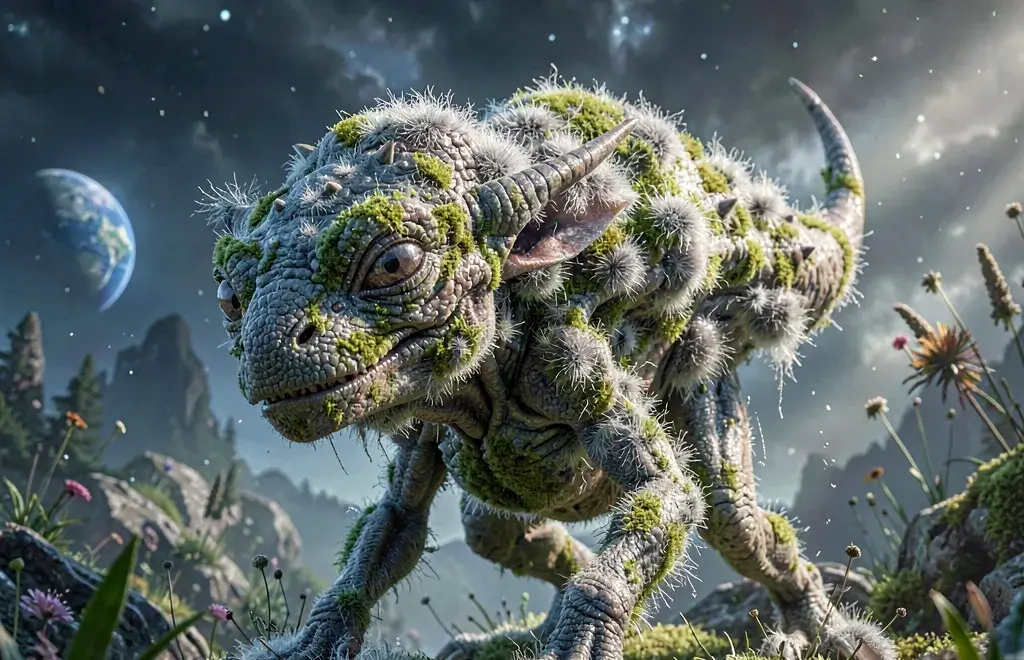
Aerosporeum dense, or Drift-Moss, consists of microscopic, helium-filled vesicles that coalesce into buoyant, emerald clouds within Borealis Prime's crushing 2.4g atmosphere. These gas-bladder organisms photosynthesize deep UV radiation while floating in the upper jet streams, forming a translucent, shifting layer that blankets the planet at twenty kilometers altitude. Serving as the primary producer for the aerial biosphere, Drift-Moss is consumed by filter-feeding sky-whales and giant gliders relying on its nutrient-rich spores. Despite their delicate structure, the collective mass of these drifting mats stabilizes local weather patterns, creating a fragile, floating ecosystem that survives only where high-gravity winds suspend them above the toxic surface fog.
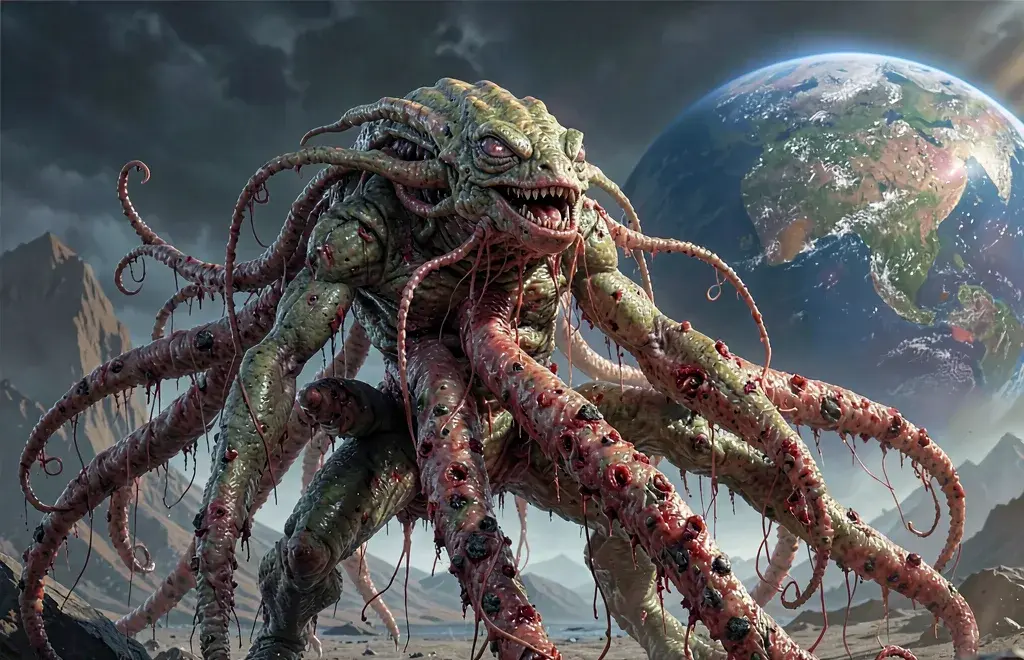
Compressivora vorax, colloquially known as Pressure-Leeches, are diminutive yet hyper-dense organisms endemic to Borealis Prime's crushing gravity wells. Measuring merely three centimeters, their calcified carapaces allow them to cling tenaciously to the massive tentacles of native leviathans without being crushed. They possess specialized adhesive pads capable of withstanding immense atmospheric pressure while filtering nutrients from decaying tissue at attachment sites. These obligate parasites function as essential scavengers, rapidly consuming necrotic flesh and preventing lethal infections on their hosts. Observed in swarms during the planet's violent storm cycles, they detach only when a host molts or dies, dispersing to colonize fresh biomass. Their rapid reproduction ensures a symbiotic balance where the leviathan gains hygiene while the leech secures a stable, high-pressure feeding ground.
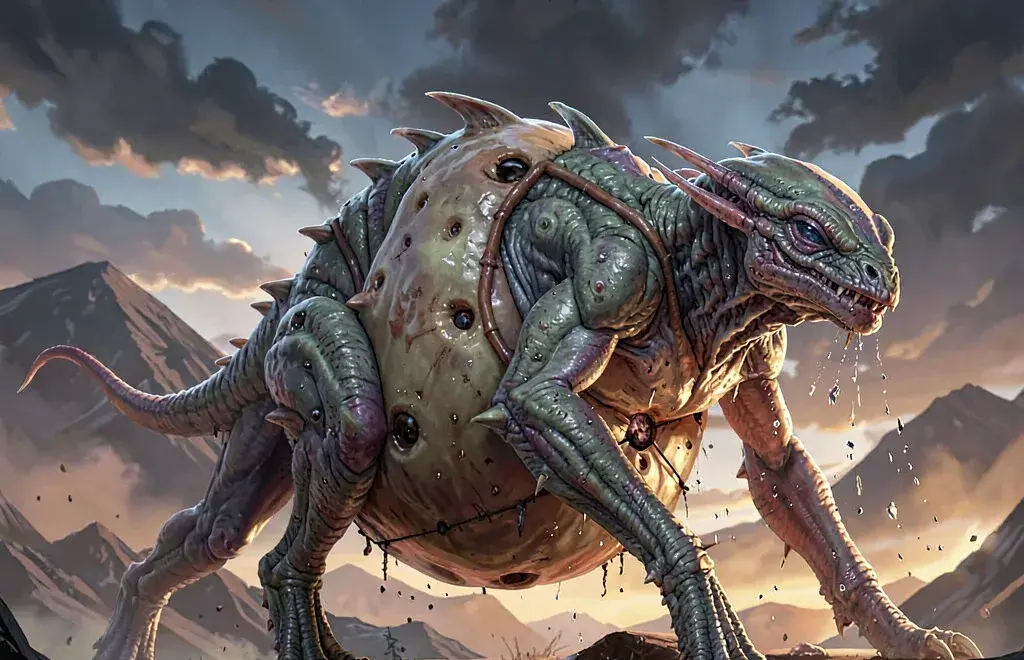
The Thunder-Weaver (Fulminaria arcus) thrives in Borealis Prime's crushing gravity by mimicking drifting spores. Its gelatinous, translucent body remains nearly weightless until it locates a target: the massive buoyant sacs of sky-ray jellyfish. Unlike typical predators that grapple flesh, this agile hunter silently ascends, using electrostatic cilia to adhere to the host's outer membrane before deploying needle-like proboscises. Once latched, Fulminaria arcus punctures the sac's pressurized core, causing rapid decompression that sends the prey plummeting into the lower atmosphere where the weaver feeds on the released gases and fluids. This specialized stratagem allows a soft-bodied creature to dominate the high-altitude food web, turning the sky-ray's primary survival mechanism into its fatal vulnerability.
World Data
- star
- K-type Orange Dwarf
- gravity
- 2.4g
- atmosphere
- Dense Nitrogen-Argon-Methane mix (18 atm surface)
- temp
- 45°C (surface), 120°C (sub-surface vents)