
Cymopis Prime
Super-Earth (Carbon-Rich)
Life on Cymopis Prime · 4 species

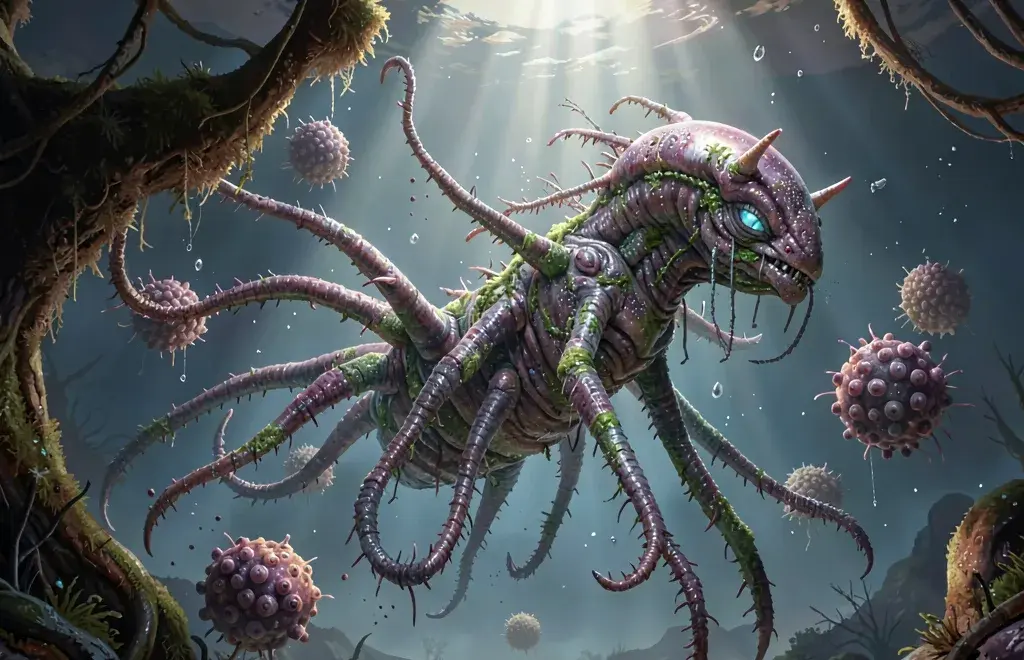
Acetobacter volans manifests as a shimmering, pearlescent haze within Cymopis Prime's upper atmosphere, where dense carbon cycles fuel vast colonies of acetylene-metabolizing bacteria. These microscopic drifters harvest energy from the planet's hydrocarbon-rich winds, converting toxic gases into stable organic aerosols that glow with a faint violet bioluminescence under the twin suns. Serving as the primary chemical substrate for larger aerial fauna like Aerocystis, these microbial clouds are both a navigational hazard and a vital food source. Native scavengers filter the haze through porous membranes, extracting lipids while leaving behind harmless nitrogen byproducts, sustaining the super-Earth's unique, airborne ecosystem in perpetual suspension above the carbon seas.
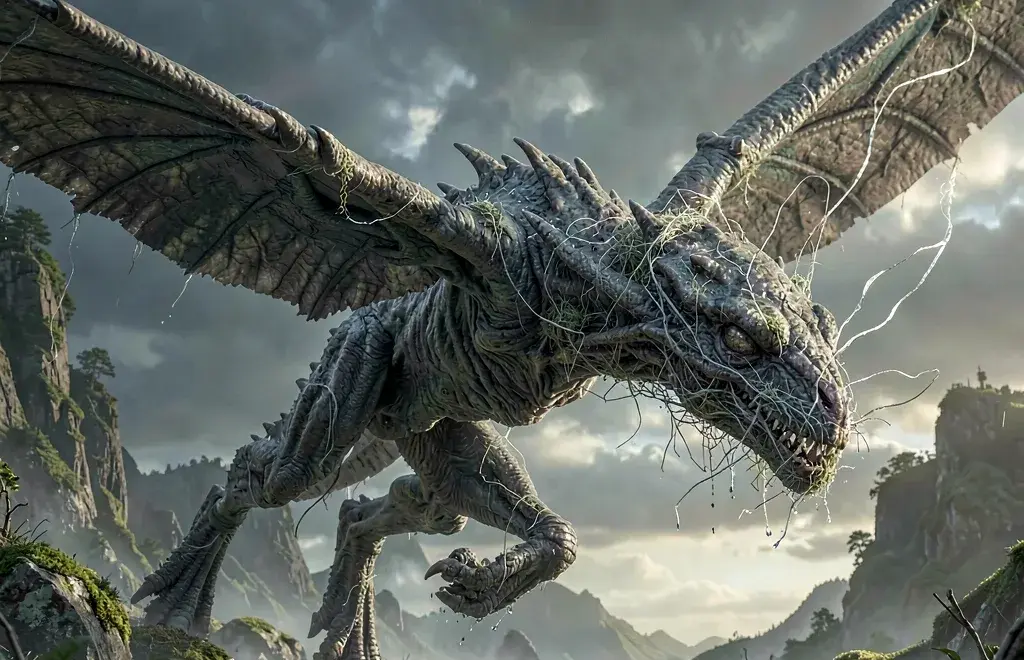
The Void-Stalker (Umbra lithos) is a dense, silent predator endemic to Cymopis Prime's carbon-rich atmosphere. Its body, composed of flexible silicate fibers reinforced with metallic alloys, allows it to glide noiselessly through the heavy air. Unlike visual hunters, this creature navigates by sensing minute pressure fluctuations generated by its primary prey, the buoyant Aerocystis. When an Aerocystis drifts within range, the Void-Stalker detects the organism's rhythmic breathing pulses through specialized sensory organs along its wings. In a fraction of a second, it snaps these silicate fibers into rigid spears, impaling the floating target before it can react. This hyper-specialized hunting strategy ensures survival in a world where sound travels slowly and light is perpetually filtered by thick hydrocarbon clouds.
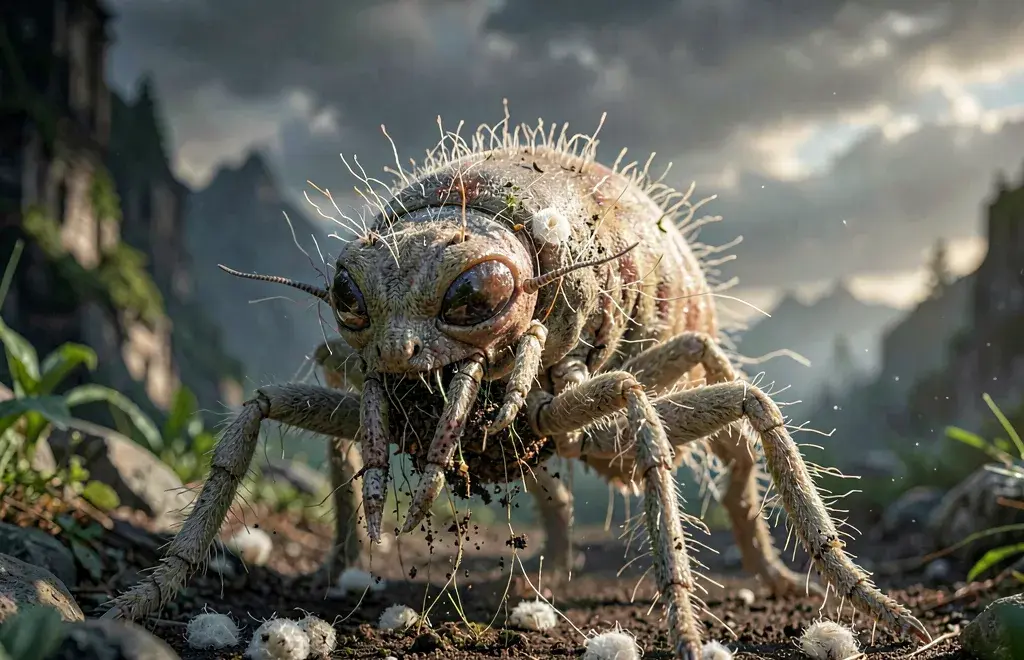
Lithocaris minutus, the Silicate Mite, thrives in Cymopis Prime’s basalt plains. Translucent hexapedal arthropods refract local amber light, effectively camouflaging against the dark weathered stone. Their mandibles grind minerals, yet they rarely hunt live fauna, preferring fallen drift of sky-jelly Aerocystis. Upon death, the jelly's silicate fibers carpet the ground in brittle ribbons. Mites pulverize debris, catalyzing reactions releasing locked phosphorus and nitrogen into rich soil. Without this vital recycling process, Cymopis’s carbon-heavy crust would starve the flora of essential trace elements, stifling the planet's fragile biosphere entirely.
World Data
- star
- Red Dwarf (M4V)
- gravity
- 2.4g
- atmosphere
- Dense Methane-Acetylene haze, high particulate load
- temp
- -120°C (Surface), -60°C (Upper Haze)