
Zephyria Prime
Tide-locked Ocean World (Eternal Storm Hemisphere)
Life on Zephyria Prime · 4 species

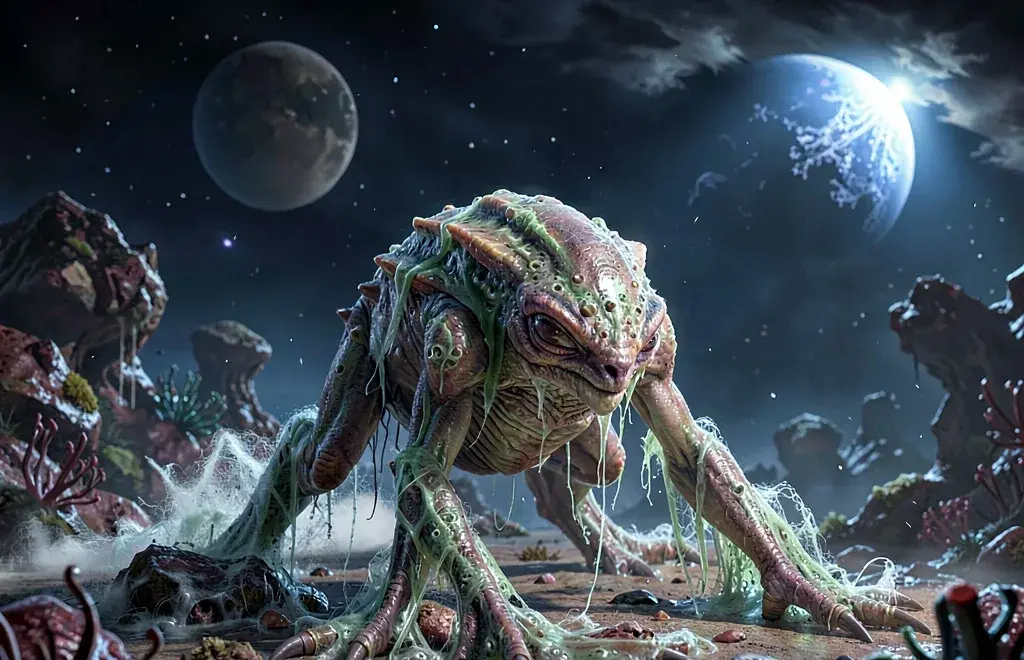
Aerofallax minutus, colloquially the Gale-Mite, thrives exclusively within the perpetual gales of Zephyria Prime's storm hemisphere. These microscopic symbionts colonize the turbulent Aequorfluxis surface, feeding voraciously on dead silicate-polymer fragments shed by native vesicle organisms. By digesting this debris, they secrete a viscous, translucent bio-film that coats their host's exterior. This biological coating significantly reduces hydrodynamic drag, allowing vesicles to maintain stability against the world's relentless hyper-storms. The relationship is strictly mutualistic: the mites gain shelter and a constant food supply, while the hosts achieve enhanced maneuverability in the churning ocean-atmosphere interface, illustrating a delicate evolutionary balance forged in eternal tempest.
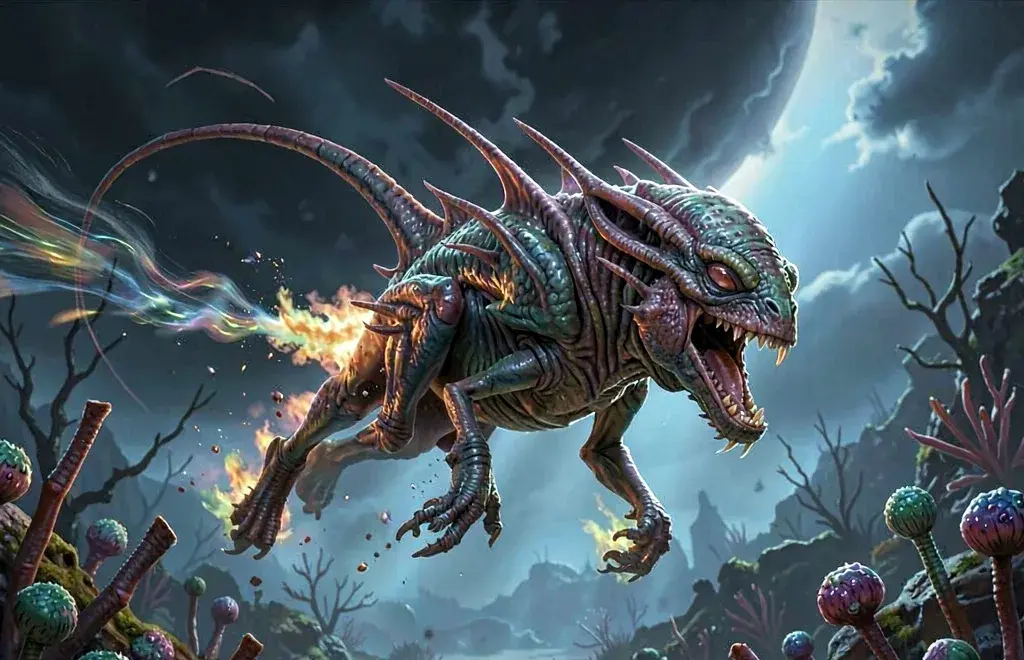
The Shear-Wraith (*Turbulencia vorax*) navigates Zephyria Prime's eternal storm hemisphere with terrifying agility, utilizing a powerful jet-propulsion system to slice through violent turbulence. Its translucent, hydrodynamic body remains nearly invisible against the churning grey waters until it strikes, relying on hyper-sensitive chemoreceptors that track faint chemical plumes drifting from submerged colonies. This apex predator waits in the chaotic currents for the precise moment when Chemosynth colonies bud, releasing a concentrated nutrient signature. Upon detection, the Wraith launches an instantaneous ambush, severing the budding stalks before retreating into the deeper froth. It is a creature of pure opportunism, evolved to exploit the brief windows of abundance within the planet's perpetual gale.
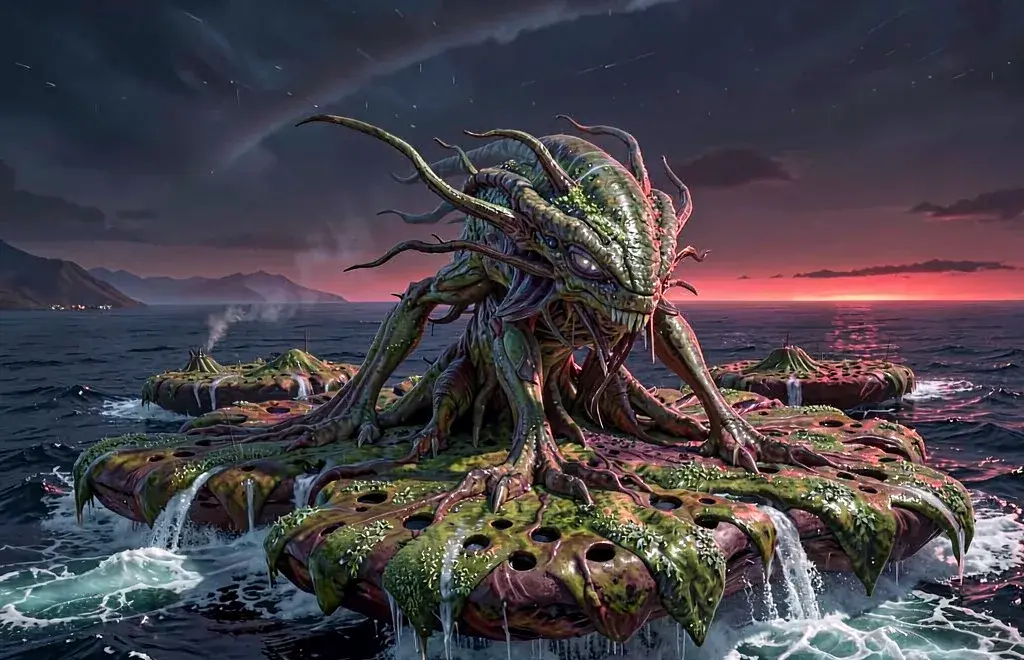
Vortexophyta gigantea, or "Storm-Bloom," dominates Zephyria Prime's eternal storm hemisphere as massive, buoyant mats of iridescent algae. Anchored deep within turbulent chemosynthetic wakes, these organisms drift just beneath the churning surface, their translucent fronds stretching toward the horizon where faint red light penetrates the perpetual gale. Their unique physiology converts kinetic energy from the constant storms into glucose, supplementing meager photosynthesis. The mats pulse with bioluminescent veins, signaling safe passage to smaller grazers while deterring predators through rapid chemical defense. This symbiotic balance allows Storm-Blooms to thrive in an environment where sunlight is a fleeting rumor and wind is the only constant.
World Data
- star
- Red Dwarf (M-type, 0.12 Solar Mass)
- gravity
- 0.92g
- atmosphere
- Dense, high-humidity Nitrogen-Water vapor mix; surface pressure 4.5 atm
- temp
- 285K (Day-side storm); 240K (Night-side calm)