
Mars-Red (Proxima Centauri c analogue)
Desiccated Iron-Oxide Desert World
Life on Mars-Red (Proxima Centauri c analogue) · 4 species

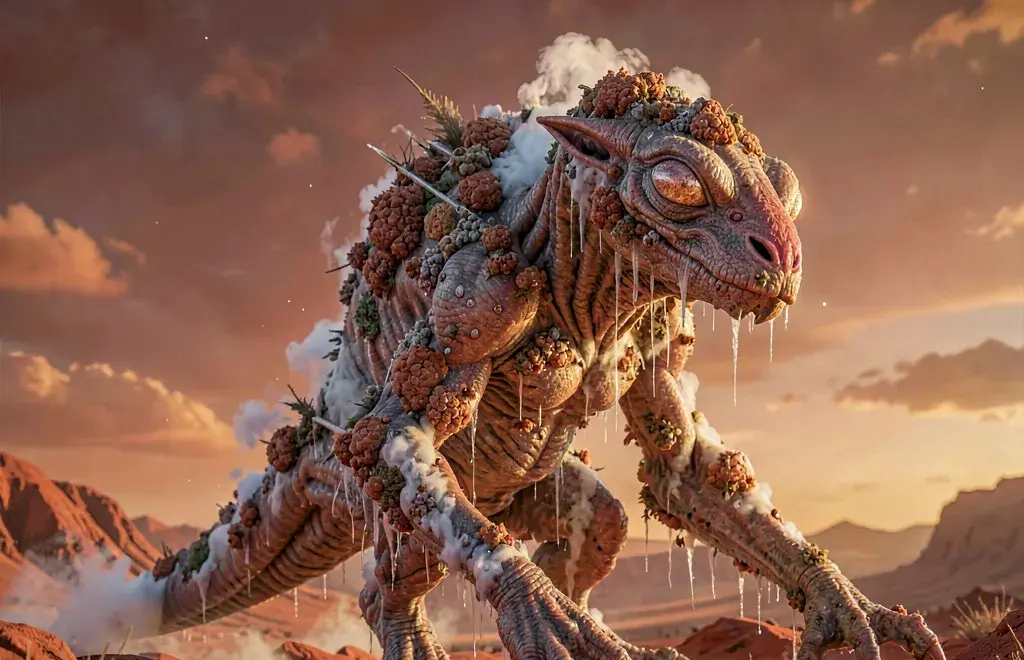
Subsurface Methane-Vent colonies manifest as iridescent, rust-hued mats nesting within deep fissures of Proxima Centauri c's desiccated iron-oxide crust. These extremophile microorganisms thrive by oxidizing subsurface methane seeps, a process that liberates critical hydrogen and chemical energy essential for the ecosystem's stability. Their metabolic activity creates a localized reducing environment, allowing them to act as the primary engine driving local geochemical cycles in an otherwise hostile, arid landscape. This unique symbiosis directly sustains the Ferricoradix, a larger lithotrophic organism that relies on these colonies to facilitate iron reduction. The vents effectively bridge the gap between atmospheric methane and solid bedrock, converting volatile gases into bioavailable electrons. Without this continuous microbial oxidation, the deep-dwelling Ferricoradix would starve, unable to access the reduced iron necessary for its own structural integrity and growth within the planet's harsh red desert.
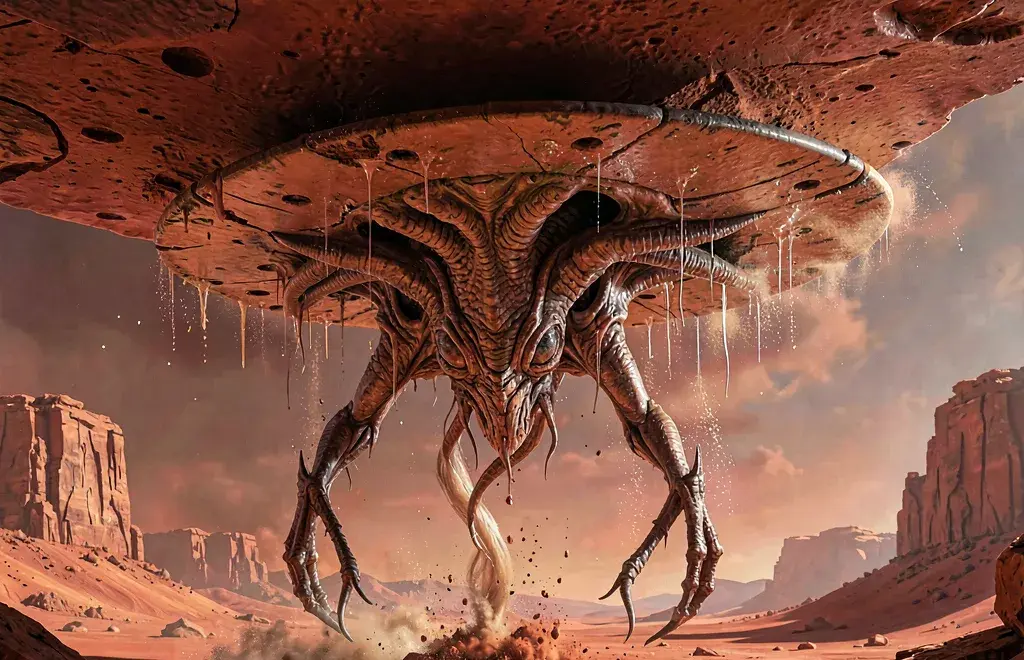
Vitrea glis is a translucent disc adhering inverted to cavern ceilings. Ribbed cilia facilitate silent electrostatic gliding above ground level. Its refractive body camouflages against iron-oxide rock while accessing aerial particulates drifting through subterranean air currents within the root-weaver’s lattice tunnels, minimizing predation risks significantly. Feeding relies on ciliary currents sweeping silica-rich dust and detritus into its oral aperture. Internal crystallization chambers convert waste into defensive glass-like plates. By recycling the root-weaver’s excretions, Silica-Skimmers maintain tunnel cleanliness, preventing toxic buildup where water scarcity limits decomposition rates in this arid world.
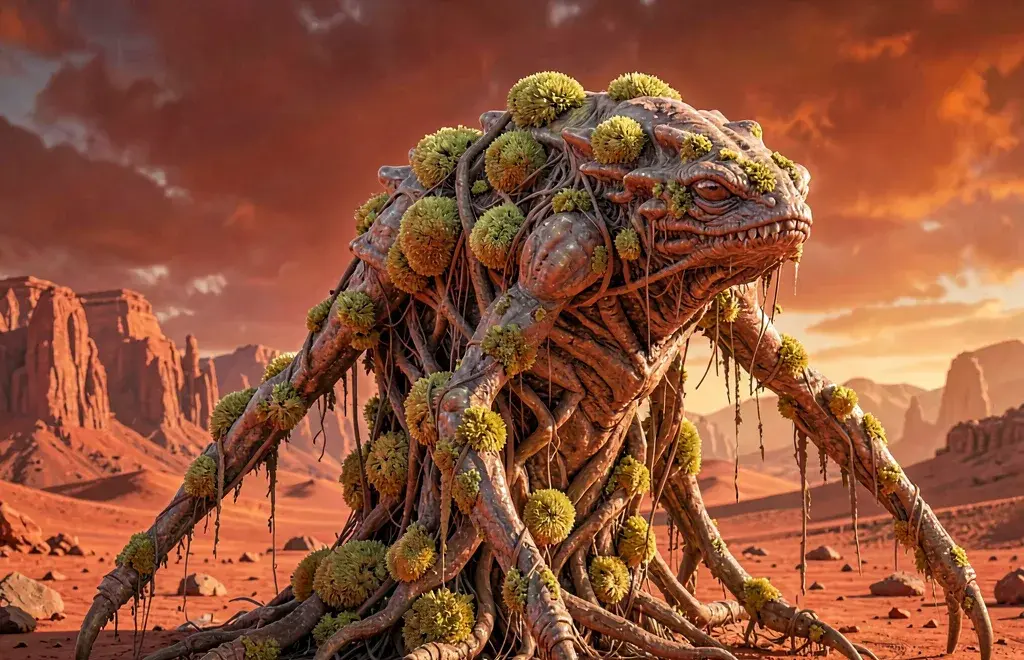
On Proxima c’s rusted dunes, Tectonic Lichen (*Lithosymbiont fractus*) clings to the burrowing root-weaver. Crustose colonies form a jagged carapace over vulnerable epidermis. Their filaments fuse with silicate dust, creating armor resistant to abrasive sandstorms. Essential for survival in this hyper-arid atmosphere where unshielded tissue desiccates instantly. In exchange for reinforcement, the lichen consumes nitrogenous waste from host digestion. This metabolic trade-off allows the root-weaver to withstand high-velocity debris while the symbiote thrives in a sheltered microclimate. Damaged shells regenerate rapidly where healthy lichens remain intact, proving role as living mortar.
World Data
- star
- M-dwarf (Proxima Centauri type, low UV, high flare activity)
- gravity
- 0.38g
- atmosphere
- Thin CO2 (600 Pa), negligible O2, trace Argon
- temp
- -60°C (surface), +40°C (subsurface 2m)