
Aethel-Prime
Terminator-Lock (Tidally Locked)
Life on Aethel-Prime · 4 species

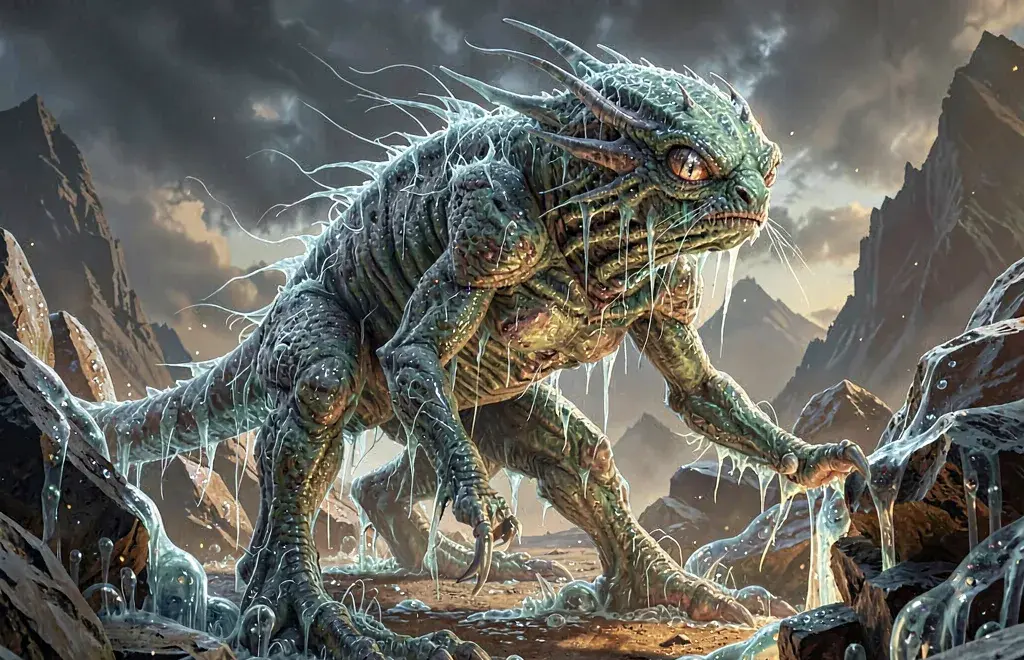
The Frost-Mat (*Cryococcus silicatum*) forms translucent, vitreous colonies clinging to the shadowed leeward sides of basalt outcrops along Aethel-Prime's terminator line. These dense biofilms act as extremophilic heat siphons, drawing geothermal warmth from the crust while metabolizing silicate dust and trace gases swept by the planet's perpetual gales. Their glassy matrices refract the dim twilight into faint prisms, masking their metabolic activity against the frozen landscape. As primary producers in this harsh equilibrium, they sustain local microfauna through rapid cellular division, creating fragile, shimmering carpets that vanish instantly if exposed to direct stellar radiation or thermal shock.
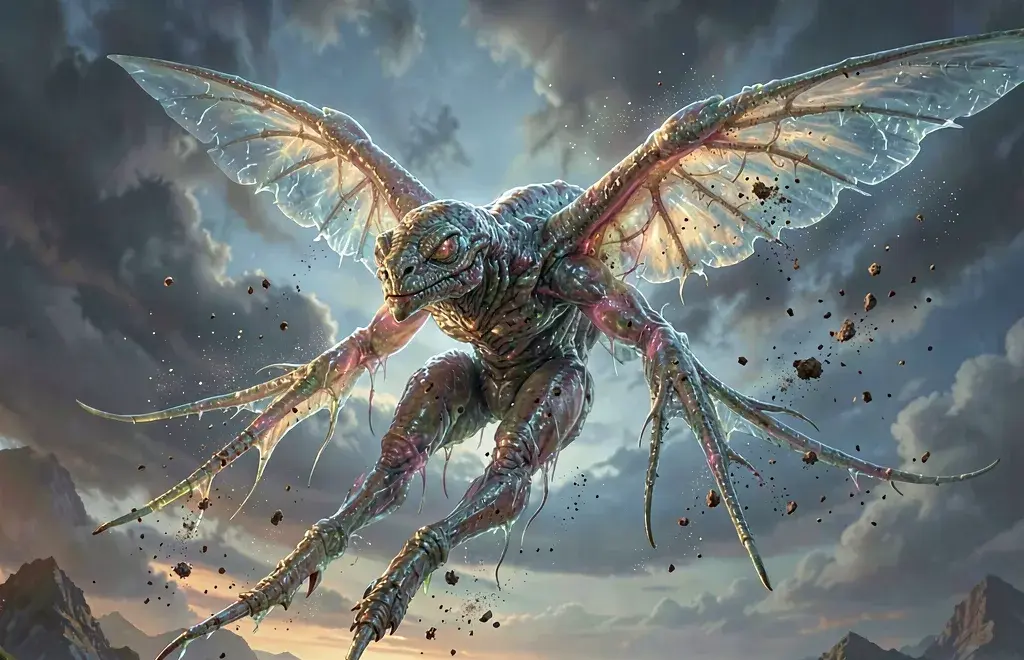
The Gale-Wing (*Aero-vortex membranaceus*) drifts effortlessly within Aethel-Prime's perpetual terminator-zone jet stream. Its gelatinous, translucent body expands into a vast, membrane-like sail to catch high-altitude currents. This buoyant filter-feeder remains suspended in the upper atmosphere, where it passively siphons airborne nutrients from the wind, primarily consuming fungal spores and desiccated skin flakes shed by the massive Aetheltherma below. By filtering these particles through microscopic cilia lining its internal cavity, the creature sustains itself without ever touching the scorching or freezing surfaces of the tidally locked world. Its semi-transparent form renders it nearly invisible against the swirling clouds, allowing it to navigate violent thermal updrafts while silently harvesting the atmospheric detritus that defines life on Aethel-Prime.
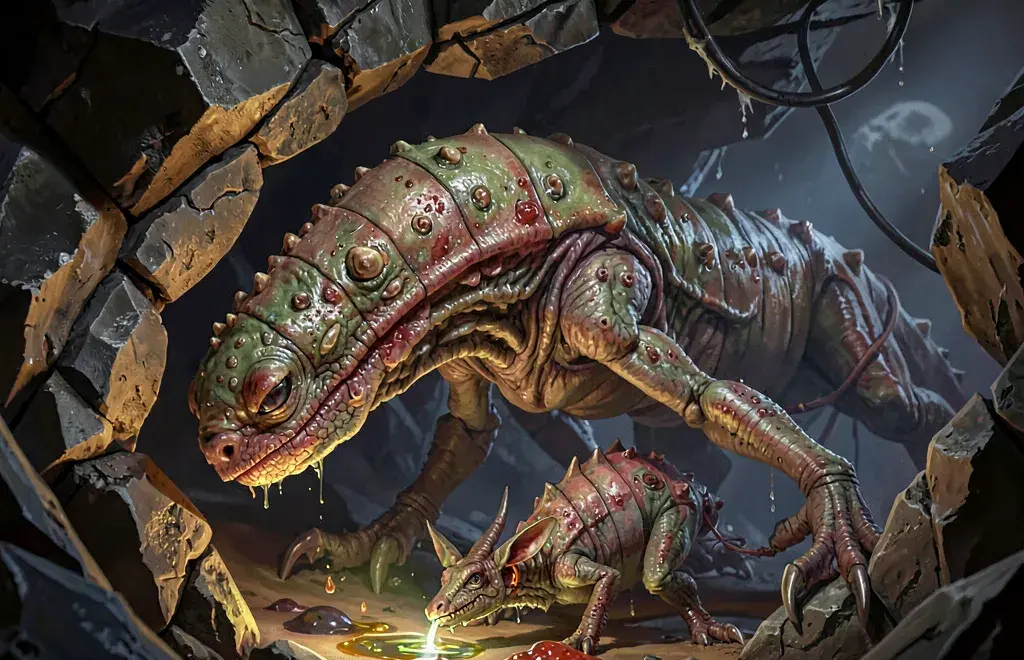
Residing within Aethel-Prime’s twilight terminator band, *Litho-grabber minor* lurks deep inside thermal fractures. This blind, segmented invertebrate lacks eyes, relying on seismic sensitivity to detect trembling prey nearby. Its chitinous armor mimics local basalt, rendering it nearly invisible against the gloom. When smaller grazers brush past its hideout, the Stalker strikes rapidly. It anchors with hooked limbs and injects a potent acidic enzyme through a proboscis. This fluid quickly dissolves calcified shells, allowing digestion of soft tissue while leaving the exoskeleton intact. Such specialization ensures survival in this harsh ecosystem.
World Data
- star
- Red Dwarf (M4V)
- gravity
- 1.4g
- atmosphere
- Dense CO2-Nitrogen (6 bar), trace H2S, high aerosol load, perpetual super-rotating winds at the terminator
- temp
- -40°C (Day side) to -120°C (Night side); Narrow habitable band at -20°C to 0°C