
Kaelthas Prime
Super-Venusian Hadean World
Life on Kaelthas Prime · 4 species

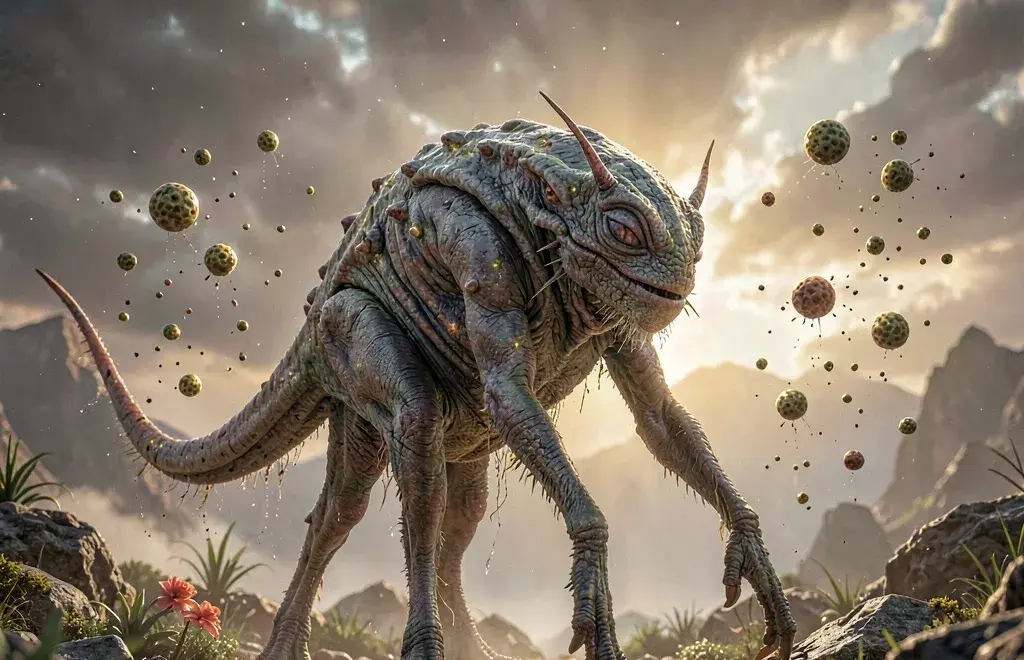
The Drift-mill (*Aerolithe minisculus*) dominates Kaelthas Prime's upper atmosphere as a microscopic sulfur-oxidizing archaeon. These resilient primary producers form vast, iridescent clouds that harvest thermal energy from the planet's superheated haze while metabolizing volcanic sulfur compounds. Their gelatinous matrices trap moisture, creating floating micro-habitats suspended miles above the crushing surface pressure, effectively turning the acidic sky into a churning, luminous ocean of life. Serving as the foundational tier of this alien food web, Drift-mills support larger filter-feeders that skim the cloud layers. Their rapid reproduction and buoyant structure allow them to thrive in perpetual twilight, where they convert toxic gases into organic biomass. This unique decomposition cycle sustains Kaelthas's entire biosphere, turning a Hadean nightmare of heat and acid into a vibrant, drifting ecosystem.
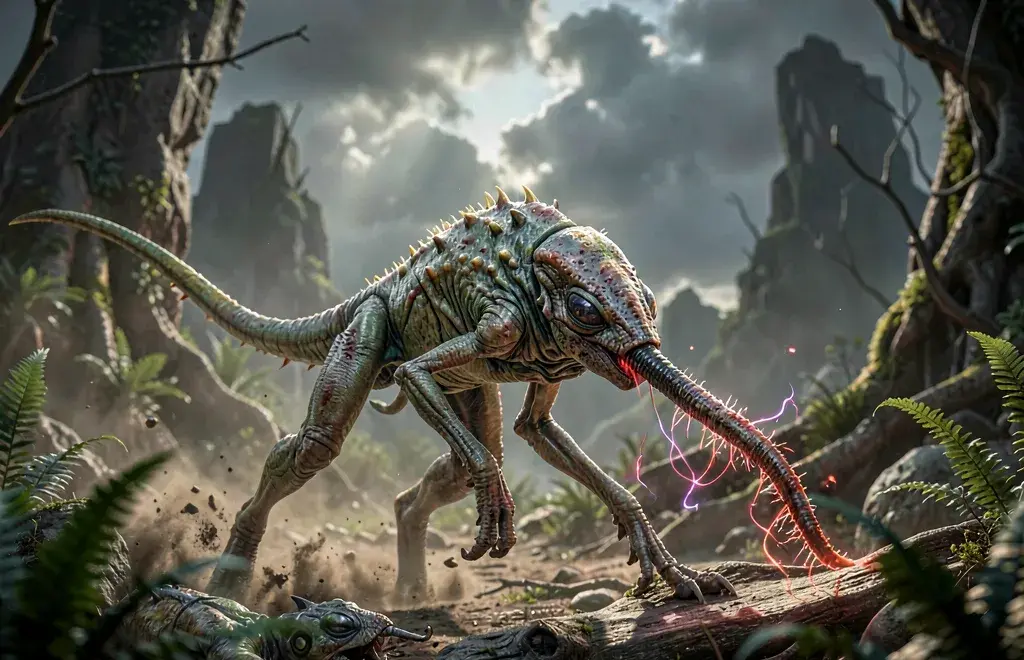
The Shear-stalker (*Vorticella raptor*) prowls Kaelthas Prime’s dense sulfuric haze as a smaller, agile invertebrate sensing turbulence continuously via specialized cilia rather than sight. Its iridescent scales deflect thermal imaging, effectively concealing it until an injured Grazer slows its retreat amidst storm-tossed underbrush. Intercepting prey, the stalker lunges with surprising velocity, extending a hollow proboscis from its ventral mouthpart to inject deadly neurotoxic venom instantly. This rapid paralysis effectively prevents struggle within high-wind gusts. Efficiency secures nutrient-rich fluids before scavengers arrive during perpetual twilight, minimizing energy expenditure in this hostile atmosphere.
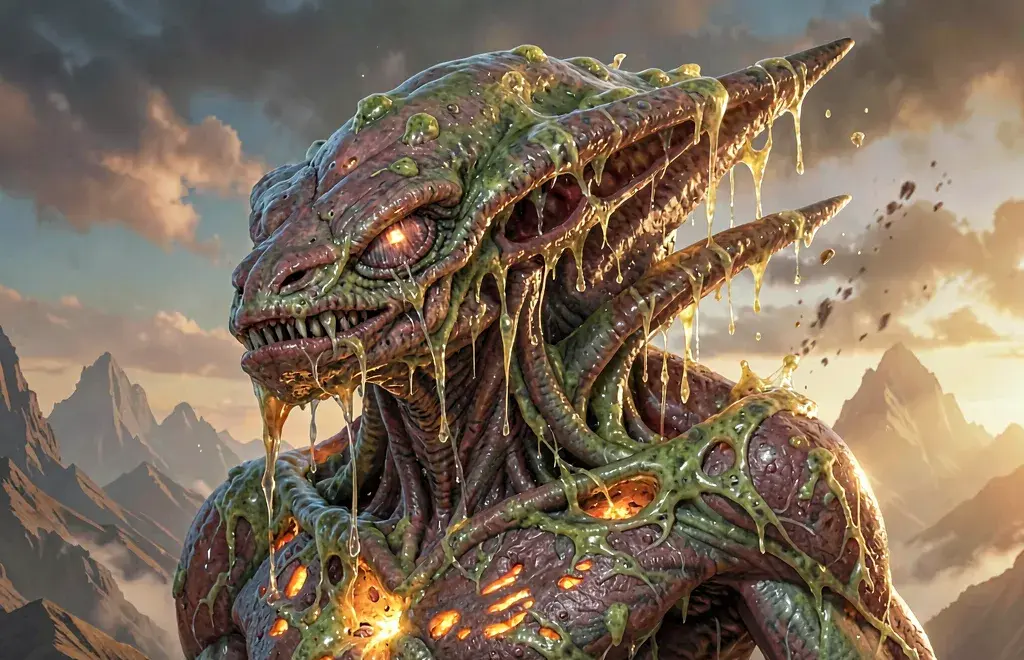
The Coalescent manifests as a translucent, gelatinous lattice adhering tightly to the host epidermis of Kaelthas Prime. Thriving in the planet's crushing sulfuric haze, this symbiotic entity actively filters airborne toxins through its porous matrix, converting lethal particulates into harmless organic sludge. In return for this atmospheric purification, it secures a stable microclimate against external thermal fluctuations, drawing minimal metabolic sustenance from the host's radiant heat without draining bodily fluids. Observers note the lattice pulsing rhythmically as air flows across its surface, shifting hue from pale amber to deep violet based on toxicity levels. While initially parasitic during colonization, mature Coalescents become obligate mutualists, their presence often extending host survival by hours in otherwise breathable-starved zones. The organism's removal typically results in rapid dermal necrosis and immediate atmospheric poisoning for the host.
World Data
- star
- Red Dwarf (M4V), dim but steady
- gravity
- 2.8g
- atmosphere
- 96% CO2, 3% N2, 1% Argon; pressure 120 atm; supercritical density
- temp
- Surface avg 480°C; habitable layer at 150km altitude (~120°C)