
Glacies Major
Cryo-hydrosphere with transient melt-zones
Life on Glacies Major · 4 species

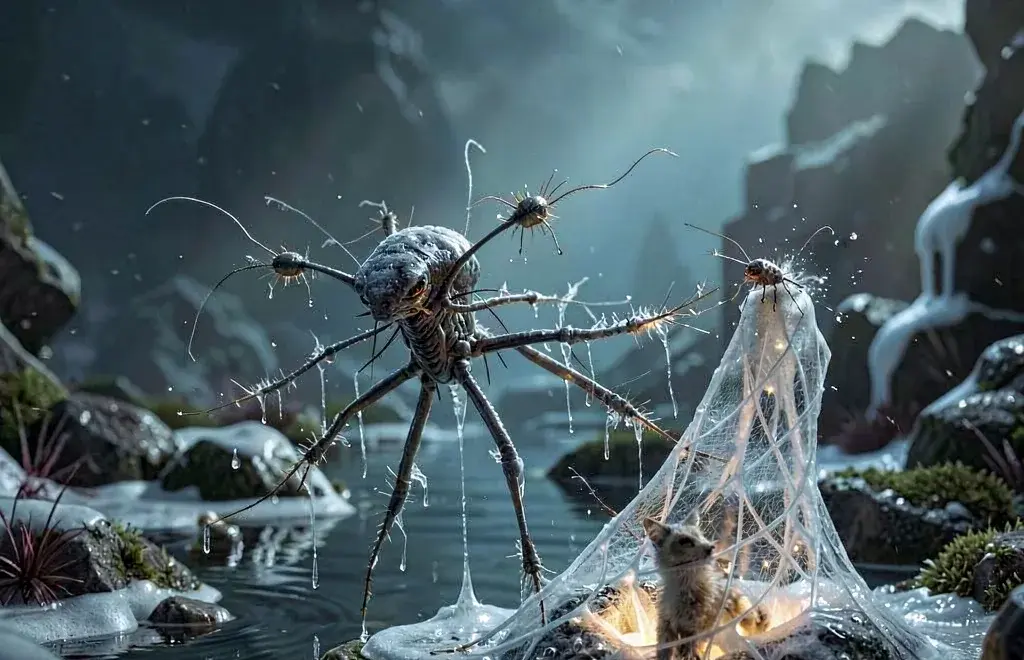
Translucent, microscopic flagellates, *Fluctuans cryo* inhabit Glacies Major’s transient melt-zones. They navigate suspended water droplets via rhythmic cilia, serving as decomposers that break down ice-trapped organic particulate while generating minimal metabolic warmth before refreezing into dormant states within the surrounding structural ice lattice. Eventually caught by Frost-Weaver nets during freeze-thaw cycles, these drifters shatter instantly upon impact with the silken strands. This rupture releases stored internal heat, preventing web-embrittlement and sustaining the predator’s hunting efficiency in sub-zero gradients. Their cyclical destruction returns vital thermal energy to the cryo-hydrosphere’s fragile ecosystem balance.
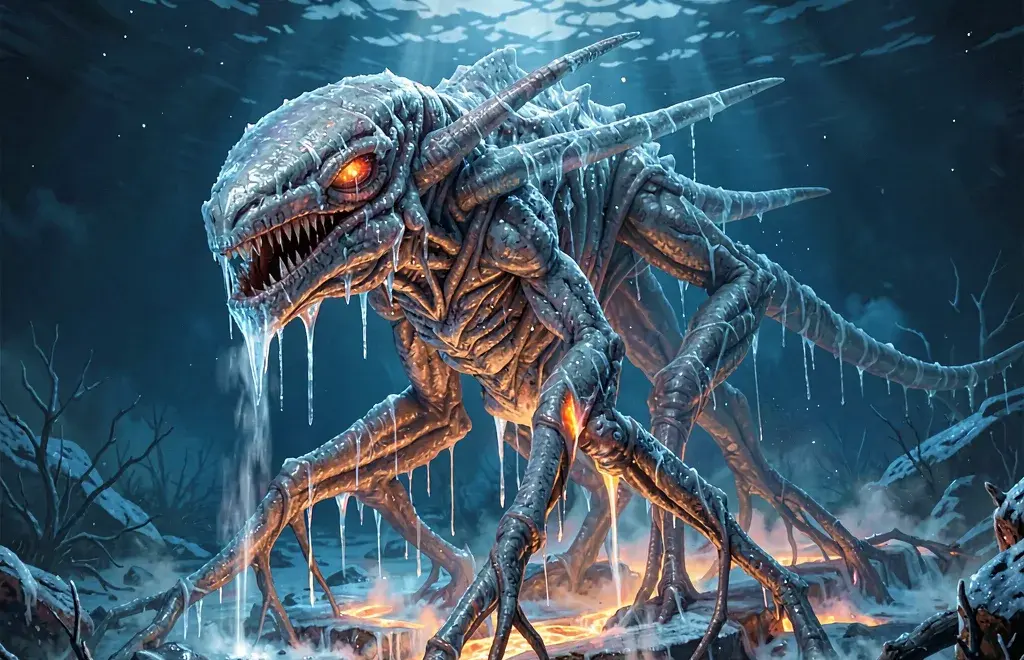
Radix glacies anchors itself within Glacies Major's transient melt-zones, its fibrous root-networks plunging deep to tap sub-oceanic geothermal vents. Unlike surface flora, this sessile producer draws energy not from starlight but from thermal gradients, converting heat into organic mass while remaining invisible beneath the shifting ice shelves. As metabolic byproducts accumulate, the organism slowly leaks trace methane into surrounding brine layers, creating faint, bubbling plumes that mark its hidden presence. These chemical signatures sustain local microbial mats, making the Ice-Root a foundational architect of life in this frozen, lightless realm despite its rigid, silent existence.
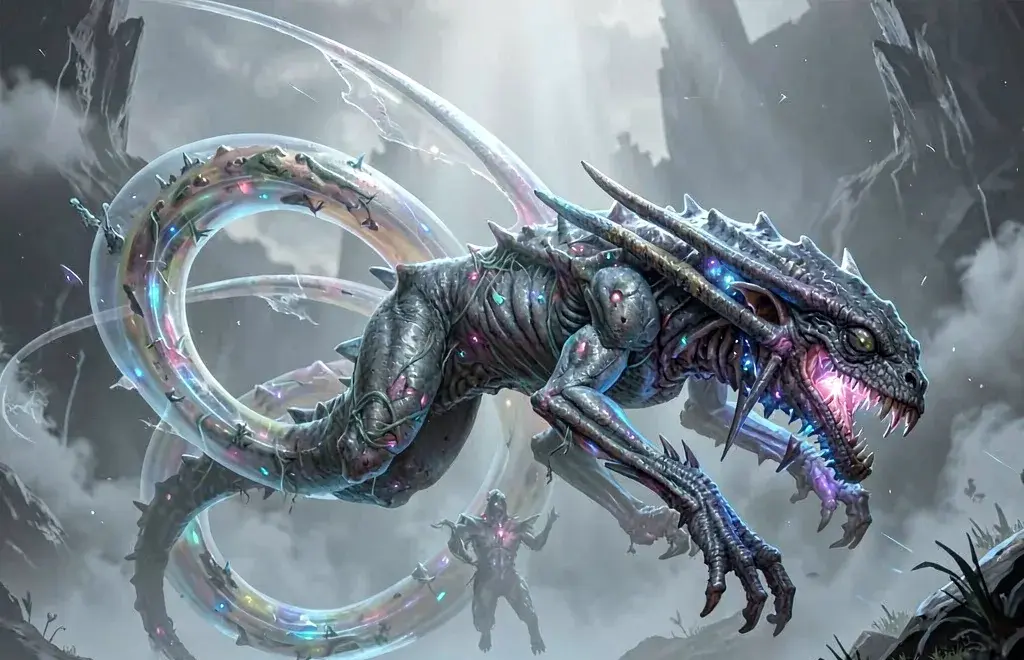
The Drift-Stalker (*Vagus nebulos*) navigates Glacies Major's perpetual fog as a ribbon-like, semi-transparent entity, its gelatinous form barely disturbing the dense vapor. Adapted to the planet's transient melt-zones, it drifts silently through the cryo-hydrosphere, relying on hyper-sensitive thermal receptors to locate Frost-Weavers hidden within the freezing mist. Once a target is locked via its unique ionic signature, the Stalker surges forward with surprising speed. It delivers a precise bite through the prey's defensive spines to rupture the internal ionic sac, draining vital energy before dissolving back into the fog, leaving only faint thermal ripples in its wake.
World Data
- star
- Red Dwarf (M4V), low luminosity, high infrared output
- gravity
- 0.85g
- atmosphere
- Dense Nitrogen-Methane, high particulate haze (ice crystals)
- temp
- -180°C (surface) to -80°C (melt-layers)