
Cymopolea
Subsurface Ocean Ice Moon
Life on Cymopolea · 4 species

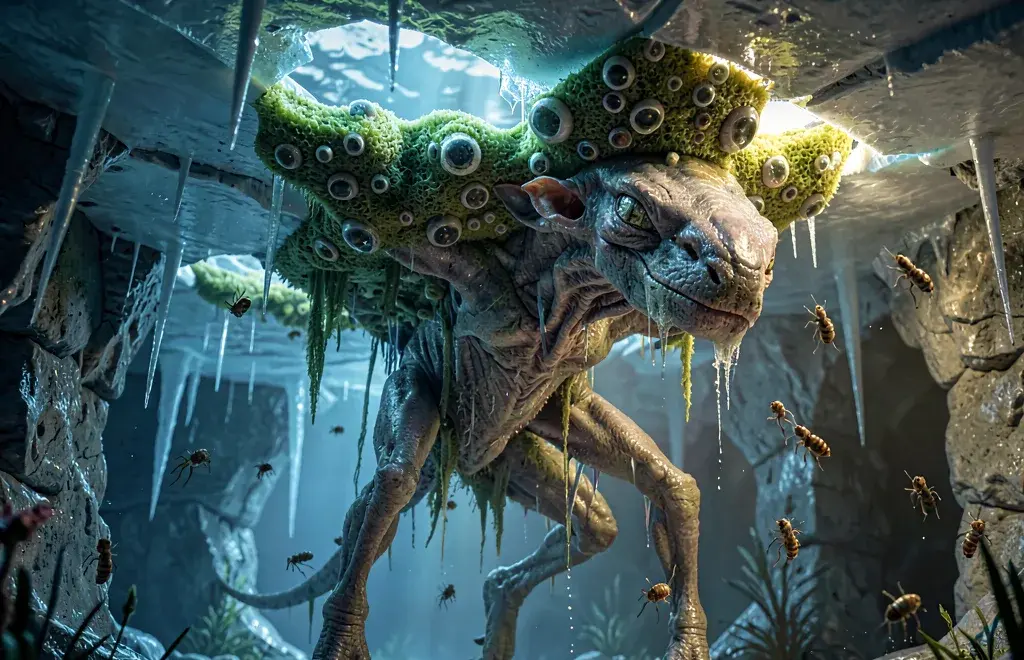
Glaciphyton crustus forms iridescent, slate-blue mats clinging to Cymopolea's cavernous ice ceilings, thriving where geothermal vents fracture the frozen shell. These photosynthetic bacteria harness faint, amber-tinted light leaking through thin glacial fissures, converting subterranean thermal energy into biomass despite the crushing darkness below. Their cellular structure remains flexible yet resilient, anchoring firmly against sub-zero currents while metabolizing dissolved minerals from the subsurface ocean. The resulting biological mats serve as a critical nursery for native crustacean larvae. Delicate filter feeders graze upon the algae's nutrient-rich surface, extracting proteins essential for early development. Occasionally, the mat detaches in buoyant sheets, drifting downward to seed deeper thermal layers or providing a transient food source for larger scavengers navigating the moon's eternal twilight.
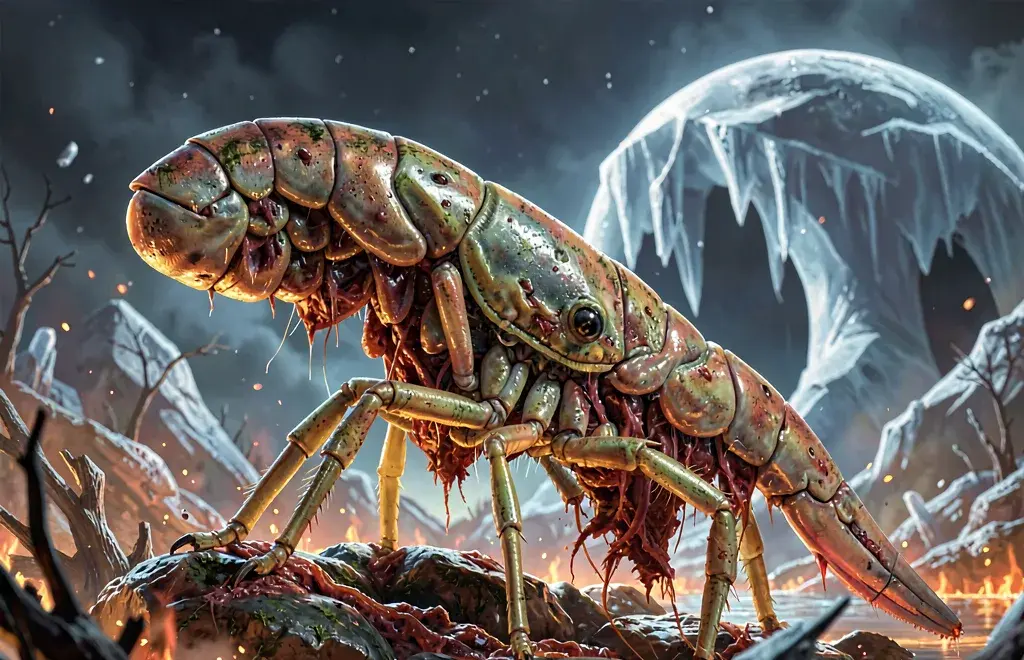
The Vent-Shrimp (*Thermocaris vulgaris*) thrives in Cymopolea's sulfurous abyssal vents, its translucent carapace reinforced with heat-shielding chitin to withstand extreme thermal gradients. These diminutive crustaceans navigate the scalding currents by detecting subtle chemical plumes, guiding them toward colonies of dead Thermocnida. Their specialized mandibles efficiently strip nutrient-rich tissue from the decaying gelatinous bodies, acting as the moon's primary recyclers in this isolated ecosystem. Once consumed, the shrimp metabolize sulfur compounds into bio-usable energy, circulating vital nutrients back into the subsurface ocean food web. Their rapid reproduction rates ensure constant population turnover, preventing toxic waste accumulation near the vents. Observers note their iridescent blue glow during feeding frenzies, a bioluminescent signal marking successful nutrient extraction for nearby scavengers and predators alike.
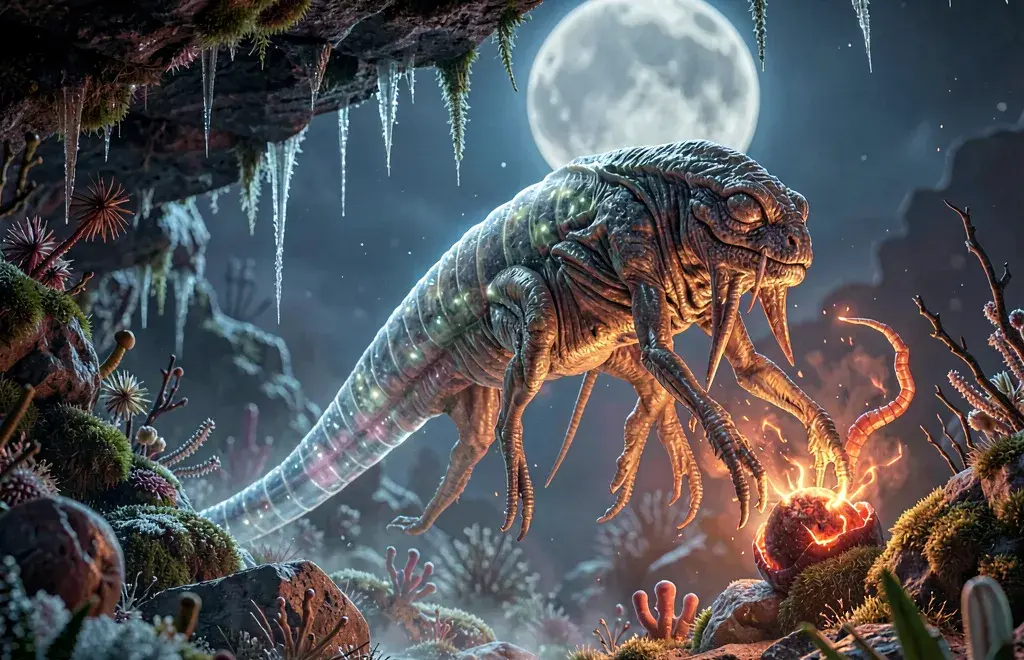
Bathytunna profundus, the Pressure-Eel, glides as a translucent ribbon through Cymopolea's crushing abyssal currents. Its gelatinous body remains nearly invisible to the eye, yet it detects minute thermal shock waves with specialized lateral line organs tuned to sudden heat fluctuations from migrating Thermocnida. As an apex predator, it hunts during these sub-ice vent migrations, striking with silent precision to sever the prey's vital heat-exchange organs. This targeted consumption not only sustains the eel in the frigid dark but disrupts the colony's thermal regulation, effectively collapsing their migratory chains for weeks.
World Data
- star
- Faint Red Dwarf (Primary Star)
- gravity
- 0.15 g
- atmosphere
- None (Subsurface Liquid Interface)
- temp
- -10°C Surface / 0°C Ocean / 350°C Vents