
Typhon IX
Jovian Gas Giant
Life on Typhon IX · 4 species

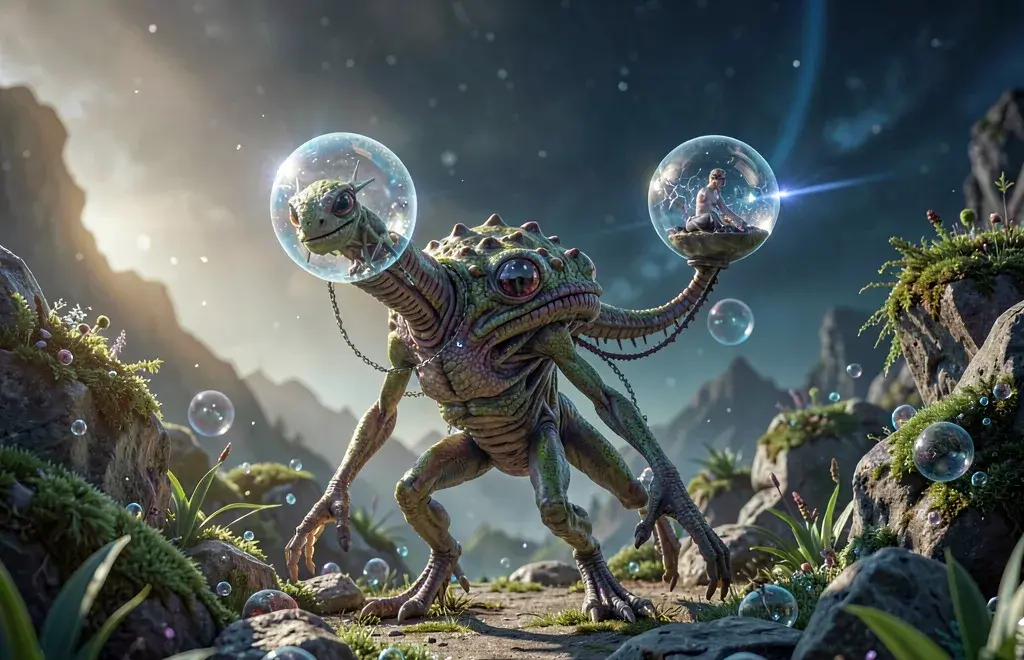
The Stratospheric Drifter (*Driftosphaera*) inhabits Typhon IX's temperate cloud decks as a diminutive, gas-filled competitor. These translucent spheres rely on passive thermal buoyancy to maintain altitude within the turbulent ammonia layers. Their delicate membranes expand and contract with minor temperature shifts, allowing them to drift lazily among denser currents while harvesting trace nutrients from the surrounding mist. However, this reliance on simple thermodynamics proves fatal against the robust *Aerolithos*. While Drifts can adjust their volume slowly, they lack the active pressure-regulation mechanisms of their larger counterparts. Consequently, they are frequently crushed or displaced into lethal lower strata whenever *Aerolithos* asserts dominance through precise density control, leaving only scattered remnants in the uppermost, stable winds.
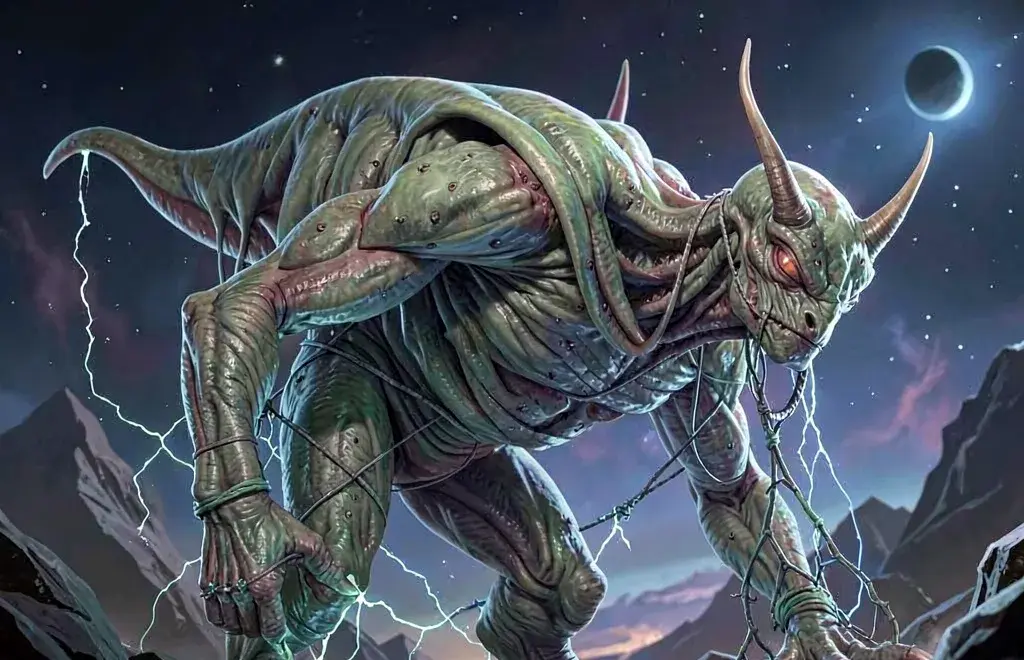
Voltvora, colloquially "Shock-Leech," is a soft-bodied macroparasite endemic to Typhon IX's upper ammonia clouds. Resembling translucent ribbons of living filament, these organisms drift on electrical storms before latching onto the planet's natural lightning-lattice. They lack rigid skeletons, relying instead on piezoelectric skin to absorb ambient charge directly from atmospheric discharges without sustaining damage. By siphoning massive currents, Voltvora disrupts the delicate hydrogen-reduction cycles essential for Typhon IX's thermal stability. This parasitic drain creates localized cold pockets that destabilize surrounding cloud formations. While seemingly minor in isolation, dense infestations can trigger cascading atmospheric collapse, making them a critical variable in the gas giant's volatile weather patterns.
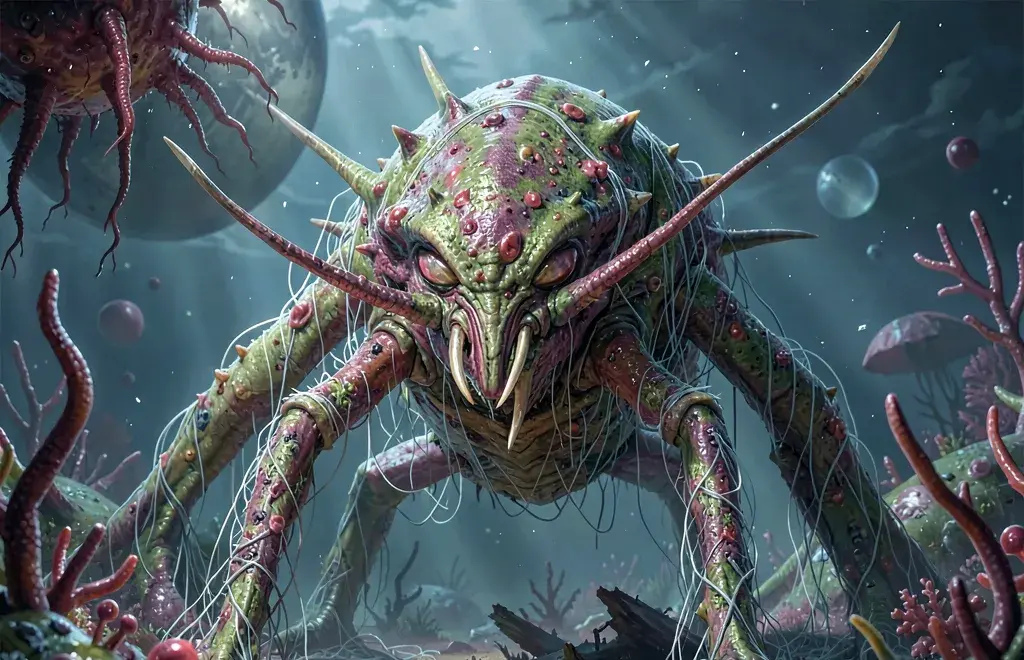
The Depth-Crawler (Bathyfilament) thrives within Typhon IX's crushing abyssal layers, where it colonizes the sinking wreckage of high-altitude reefs. These filamentous microbial mats secrete potent proteolytic enzymes that dissolve the complex protein-silicate mesh of dead organic structures. By converting this resilient debris into soluble nutrients, they sustain the dark ecosystem's base food web while preventing toxic accumulation in the dense atmosphere. Under extreme pressure and near-freezing temperatures, Bathyfilament colonies glow faint bioluminescent blue as they digest their substrate. Their rapid metabolic turnover recycles essential minerals back into the upper currents, effectively closing the gas giant's nutrient loop. Without these microscopic scavengers, the sinking reefs would choke the lower atmosphere, halting the planet's vertical circulation of life-sustaining elements.
World Data
- star
- K7V Red Dwarf
- gravity
- 1.5g
- atmosphere
- Hydrogen/Helium/Ammonia/Methane
- temp
- 150K-300K Gradient