
Aethelgard
Hyper-Evaporite Super-Earth
Life on Aethelgard · 4 species

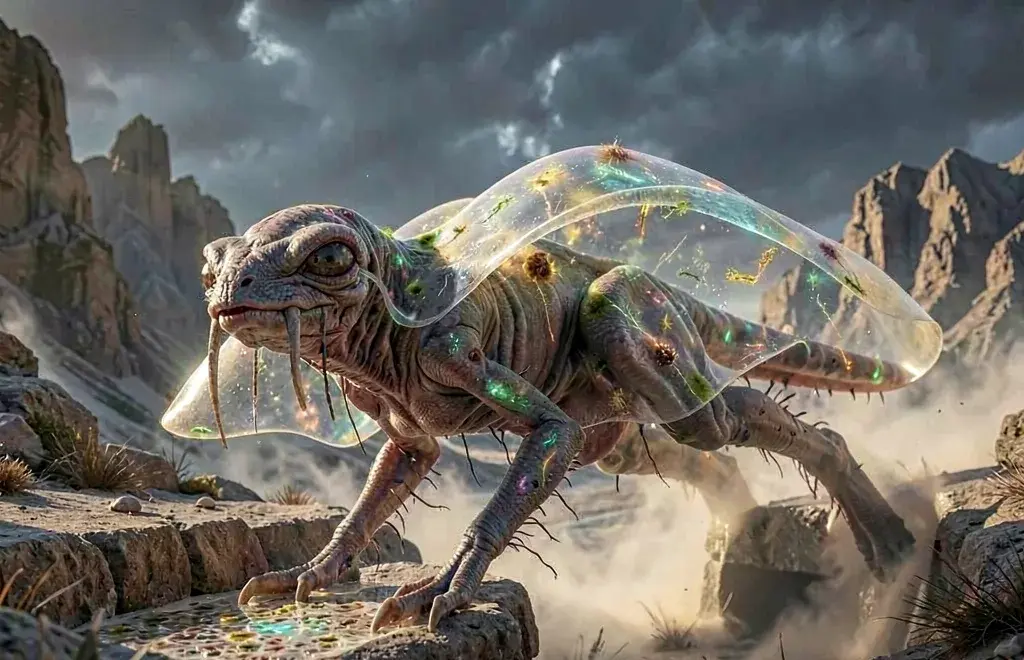
Aeroplasmus crystallus manifests as gelatinous, translucent sheets that detach during Aethelgard's rare hyper-saline dust storms. These surface drifters ride high-altitude gusts, their semi-permeable matrices filtering UV-protected organics suspended in the toxic atmosphere. The mats shimmer with iridescent crystalline structures, allowing them to harvest radiation while maintaining structural integrity against abrasive salt particulates. Once saturated with nutrients, the sheets lose buoyancy and descend into subterranean burrower tunnels below. There, they dissolve upon contact with moisture, releasing captured biomass that fuels the planet's deep biosphere. This atmospheric filtration cycle effectively bridges surface evaporation zones with underground ecosystems, sustaining life in an otherwise desiccated world through precise biological engineering.
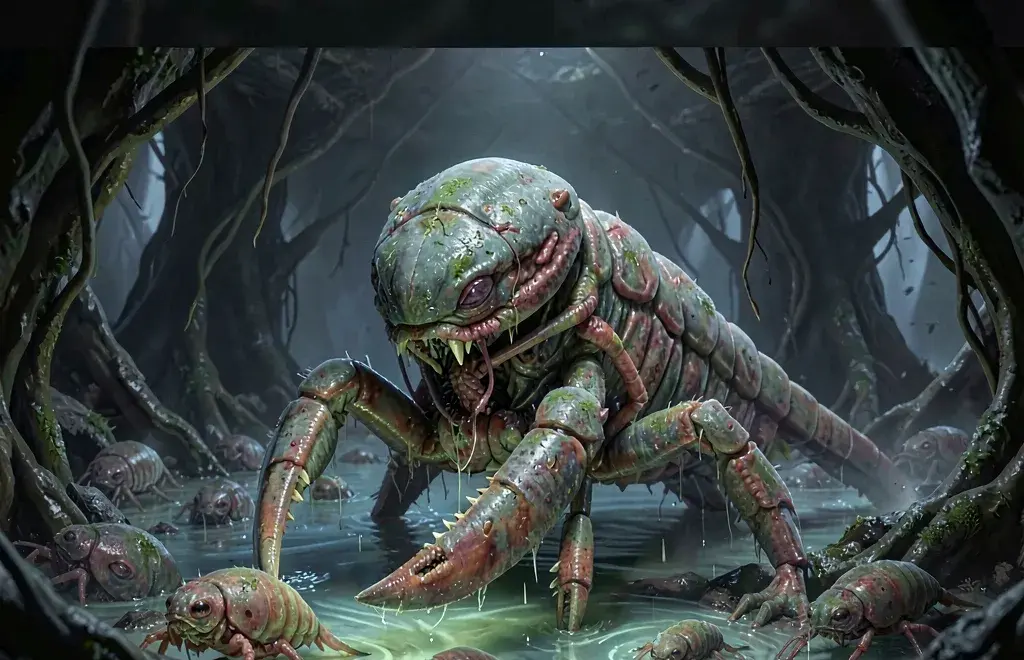
Thalassolymphus profundus are diminutive, blind macro-crustaceans inhabiting the subterranean brine pools of Aethelgard's hyper-evaporite crust. Lacking pigment or chitinous armor, their soft, gelatinous bodies drift passively within the saline currents deep beneath the rock surface. These organisms possess no visual organs, relying instead on highly sensitive chemoreceptors to navigate the perpetual darkness of the burrower's tunnels. Functioning as obligate scavengers, they subsist entirely on the metabolic waste expelled by the massive burrowing creatures above. This symbiotic relationship allows the drifters to thrive in an environment devoid of sunlight or external organic input. Their translucent forms pulse faintly with bioluminescence only when disturbed, serving as a transient signal amidst the crushing pressure of the deep crustal aquifers.
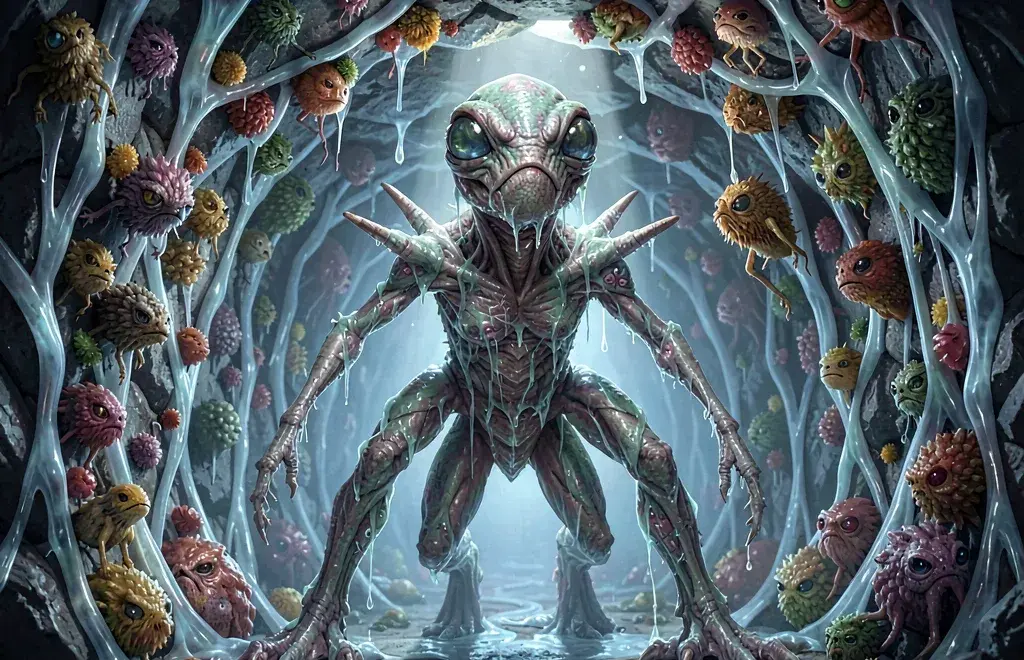
Saxifraga mineralis manifests as delicate, crystalline lattices clinging to Aethelgard's hyper-evaporite tunnel systems. These sessile colonies thrive within the re-solidified salt veins, their translucent bodies secreting a potent, protein-rich adhesive upon contact with unstable particulate matter. This biological mortar instantly binds loose crystals into cohesive strata, effectively halting catastrophic cave-ins common in the planet's volatile subsurface environment. Field observers note that entire tunnel networks depend on these micro-fauna for structural integrity. Disruption of their secretion cycles leads to immediate geological collapse, while healthy colonies reinforce walls against seismic tremors. The glue hardens into a glass-like shield, turning fragile salt caves into enduring, life-sustaining arteries beneath the scorching surface of this super-Earth.
World Data
- star
- K-type Orange Dwarf (low UV, high IR)
- gravity
- 1.8g
- atmosphere
- Thin CO2/Nitrogen, low pressure, saturated with crystalline dust
- temp
- -60°C (surface) to 20°C (sub-surface brine layers)