
Xylora-9
Carbon/Diamond Mantle Super-Earth
Life on Xylora-9 · 4 species

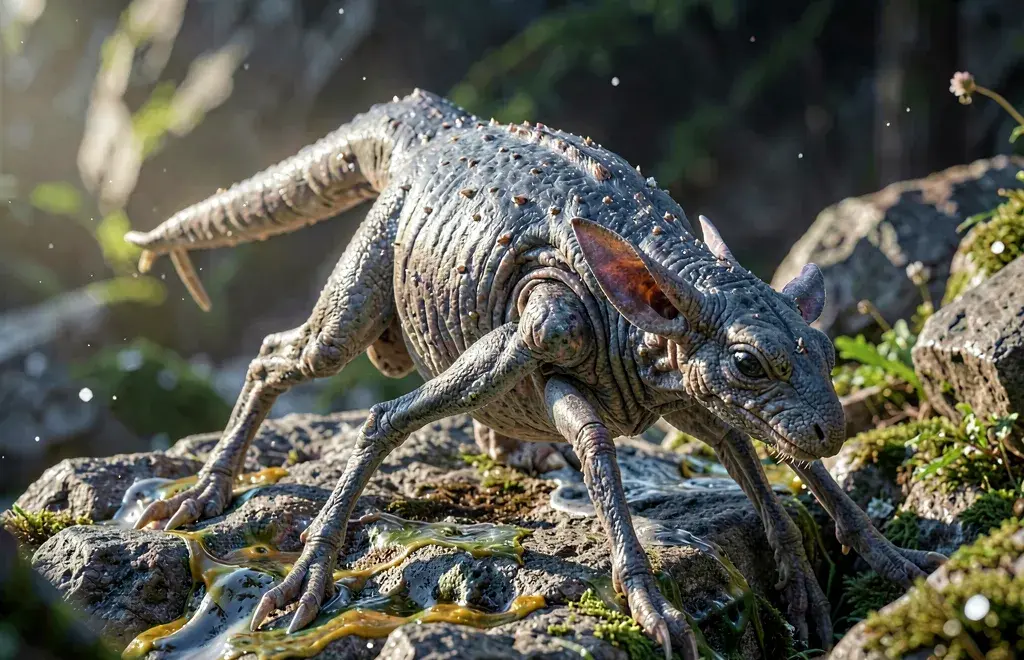
The Graphite Grazer (*Carbovore minor*) is a diminutive, hexapedal herbivore endemic to Xylora-9's fractured diamond plains. Measuring only twelve centimeters in length, these resilient creatures possess chitinous mandibles evolved specifically for scraping thin, iridescent bio-carbon films from the super-earth's abrasive rock surfaces. Their six sturdy legs anchor them against high-gravity winds while they feed on the mineral-dependent microbial mats that cling to the dark, lustrous crust. Despite their fragile appearance, Grazer herds move with surprising coordination, navigating the jagged terrain in synchronized pulses to avoid predation by aerial scavengers. They digest the carbon-rich films through a specialized gut flora capable of breaking down exotic hydrocarbons, converting the planet's unique geology into vital energy. Their presence marks stable bio-carbon zones, serving as key indicators for primary production within Xylora-9's harsh, metallic ecosystem.
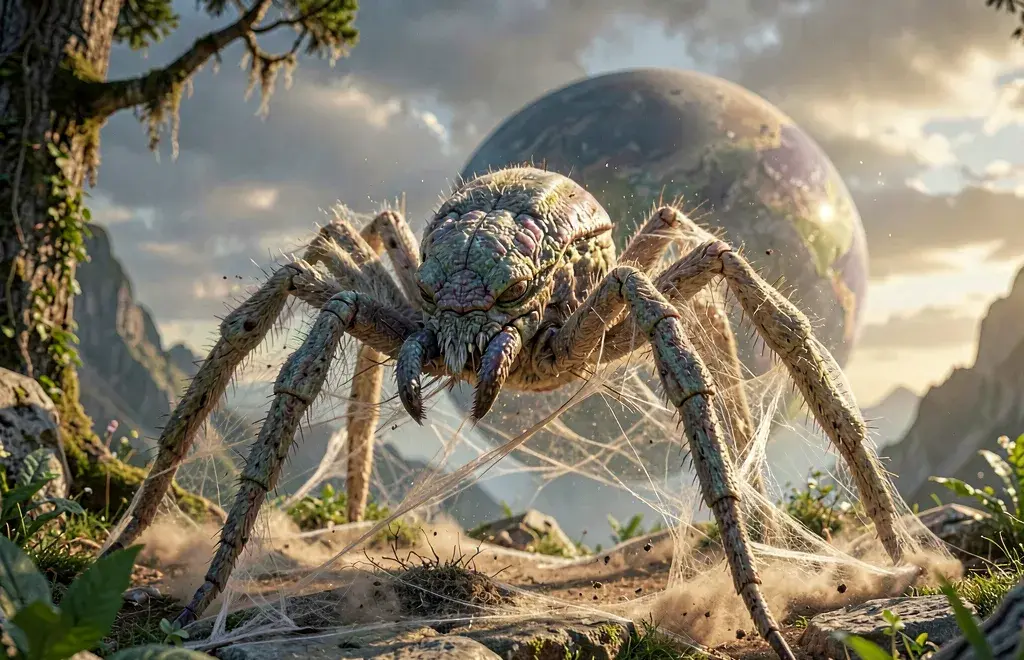
Aerolith spinus, or Dust Weavers, are diminutive arachnids adapted to Xylora-9's dense, carbon-rich atmosphere. Their eight legs grip the diamond-mantle rock while they deploy adhesive silk filaments into high-altitude wind currents. These nets entrap floating hydrocarbon particulates, which the creatures harvest by slowly reeling in the mesh and processing the organic slurry through specialized mandibles. Functioning as planetary decomposers, Dust Weavers prevent toxic dust accumulation in the upper atmosphere. Their translucent exoskeletons reflect ultraviolet radiation, allowing them to remain active during Xylora-9's perpetual twilight. Observed colonies often form intricate, glistening lattices across canyon ridges, silently converting airborne pollutants into stable biomass for larger scavengers.
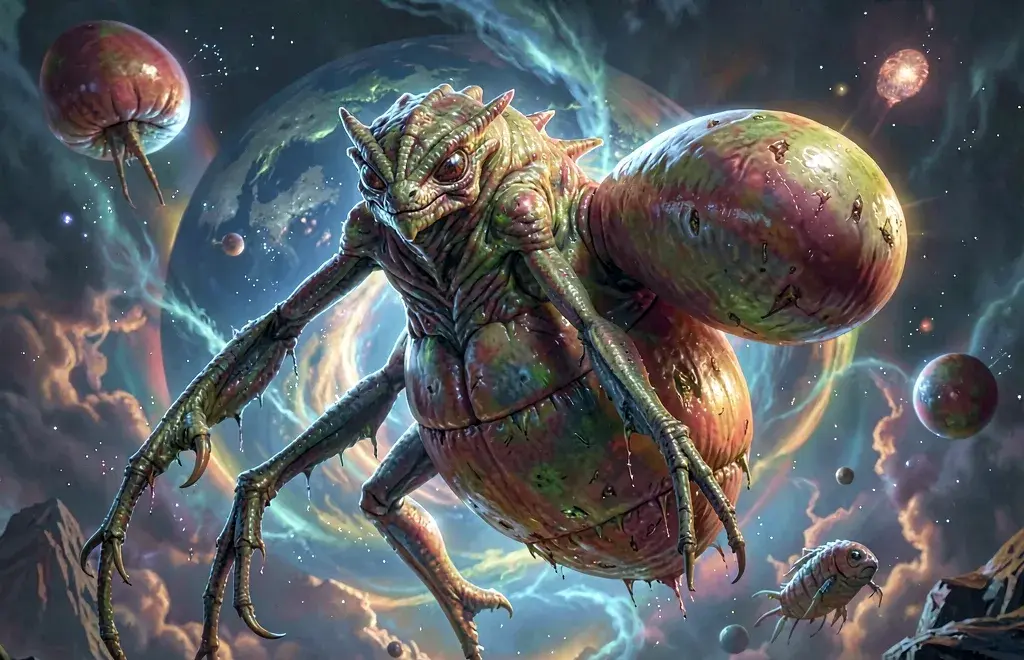
Gasflatus levitas, or Pressure Drifters, navigate Xylora-9's crushing super-atmosphere using translucent, helium-filled sacs that maintain neutral buoyancy within diamond-laced cloud layers. These gelatinous entities drift passively on high-pressure currents, their semi-permeable membranes filtering microscopic carbon particulates from the dense air to sustain basic metabolism while conserving energy against immense gravitational stress. When hunting, Drifters contract specific muscle rings to alter density, diving rapidly into deeper strata where smaller prey congregate. They deploy sticky, electrostatic tendrils to capture agile micro-drifters before buoyancy reasserts control, propelling them back toward lighter upper currents. This vertical migration strategy allows them to exploit the planet's extreme pressure gradients as both a hunting ground and an escape mechanism from larger apex predators.
World Data
- star
- K-type Orange Dwarf
- gravity
- 1.5 Earths
- atmosphere
- CO2/Methane, 5 atm
- temp
- 280-320K