
Aethelgard Prime
Hyper-Evaporite Desert
Life on Aethelgard Prime · 4 species

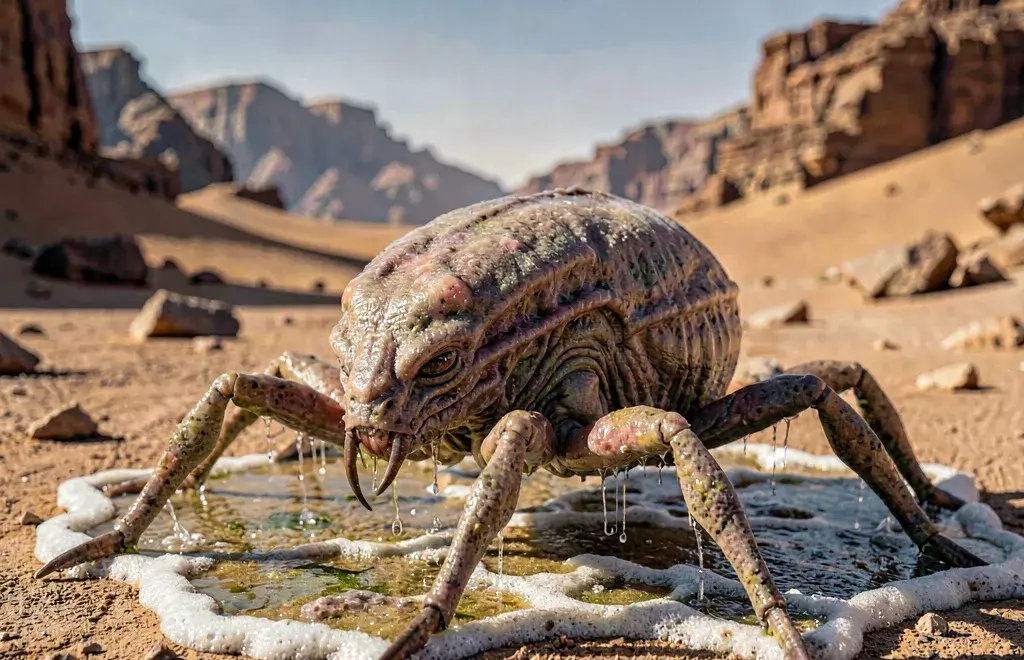
Silicate Grazers (Lithovora planus) glide silently across Aethelgard Prime's hyper-evaporite flats, their flattened, six-legged bodies hugging the salt crust to minimize wind exposure. These gentle filter-feeders extend translucent rasping pads to scrape microscopic biofilms from the bleached surface, processing vast quantities of mineral-rich brine while extracting essential nutrients from the mats. To survive the scorching desiccation, they possess specialized hypodermal sacs that retain absorbed moisture for weeks, rendering them nearly invisible against the shimmering white dunes when dormant. Despite their slow movements and low profile, their gelatinous, salt-saturated tissues serve as a tempting water source for local predators, forcing the grazers to maintain constant vigilance during their brief, twilight feeding cycles.
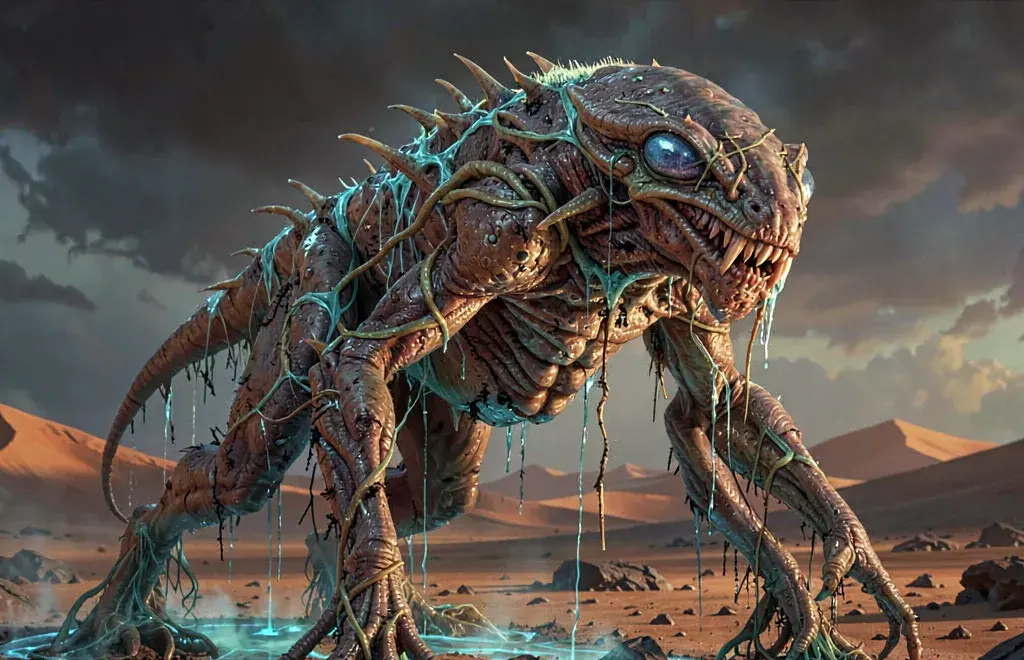
Brine-Drifters (Aquamotus profundus) navigate Aethelgard Prime's shallow subsurface brine veins, emerging only during rare hyper-evaporite rains. These translucent, gelatinous detritivores possess ciliated flaps that filter particulate organic matter from the saline slurry, converting decaying biomass into nutrient-rich sediment. Their semi-permeable skin regulates internal salinity, allowing them to thrive where surface life cannot survive the desiccating heat. By processing dead flora and fauna trapped in the mineral crust, Brine-Drifters act as essential ecological recyclers. They excrete concentrated nitrates and phosphates directly into the porous soil, fertilizing dormant root systems beneath the salt flats. Without this subterranean alchemy, Aethelgard's fragile biosphere would starve amidst its own evaporite desolation.
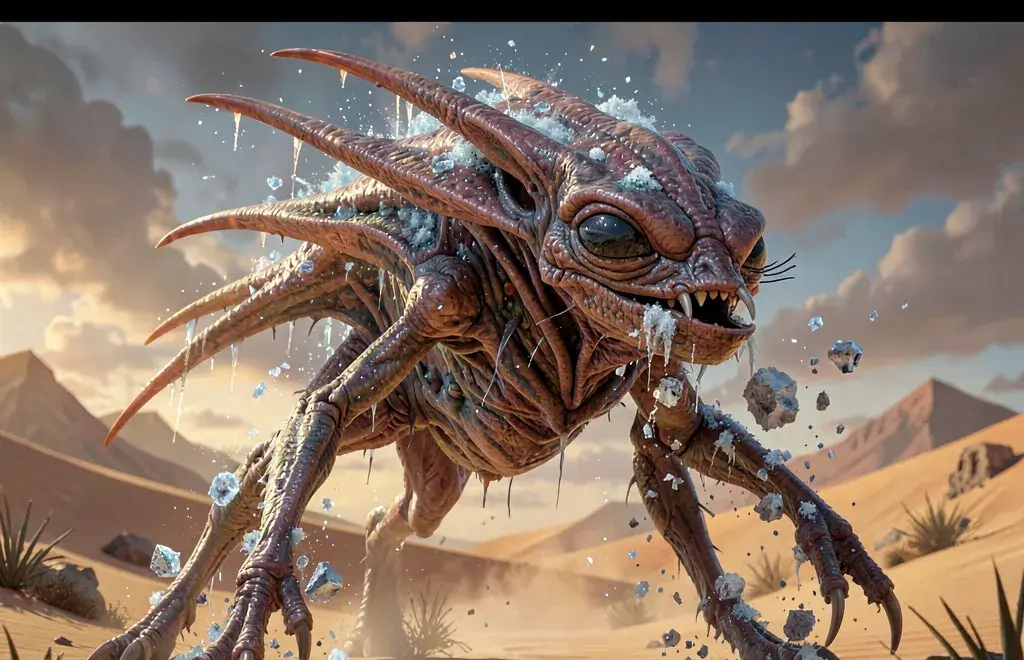
*Aerofiltrum parvus* thrives within Aethelgard Prime’s hyper-saline evaporite deserts. Microscopic filterers drift on thermal updrafts, crystalline exoskeletons harvesting hygroscopic salt aerosols for energy. Translucent bodies shimmer faintly against the arid sky, visible only under magnification as they process brine into organic matrix fragments. Though termed predators, they graze on dissolved ions, shedding nutrient-rich debris fueling larger aerial fauna. This constant excretion sustains the atmospheric ecosystem, supporting mid-level scavengers and avian analogues. Without their salt-processing cycles, Aethelgard’s sky would remain barren; these micro-predators are the vital invisible architects of its living clouds.
World Data
- star
- K-type Orange Dwarf (Low UV, High IR)
- gravity
- 0.85 g (Low density crust, high porosity)
- atmosphere
- Dense, hyper-saline aerosol haze (NaCl/KCl particulates), 2.5 atm surface pressure
- temp
- -20°C to -60°C (Surface), -10°C (Sub-surface brine pockets)