
Xylos Prime
Hyper-arid Evaporite Desert with Subsurface Acidic Aquifers
Life on Xylos Prime · 4 species


Aerovagus sulfidus, the Aero-Drifter, is a buoyant, sac-like organism native to Xylos Prime's hyper-arid evaporite deserts. Filled with heated hydrogen derived from subsurface acid reactions, it rides thermal updrafts at altitudes of three kilometers. Its translucent membrane filters airborne sulfur particulates for nutrition, turning the creature a faint, iridescent yellow. This gas-bag fauna survives solely on atmospheric resources, avoiding the scorching surface below where liquid water is nonexistent. A critical ecological role emerges as the Drifter acts as a mobile disperser. Tiny, dormant budding nodes adhere to its sticky outer cuticle during rare nocturnal condensations. As currents guide these wanderers across vast saline flats, they eventually detach upon encountering specific mineral-rich vents, seeding new colonies in isolated pockets of subsurface moisture. This inadvertent transport ensures the species' survival despite the planet's fragmented habitable zones.
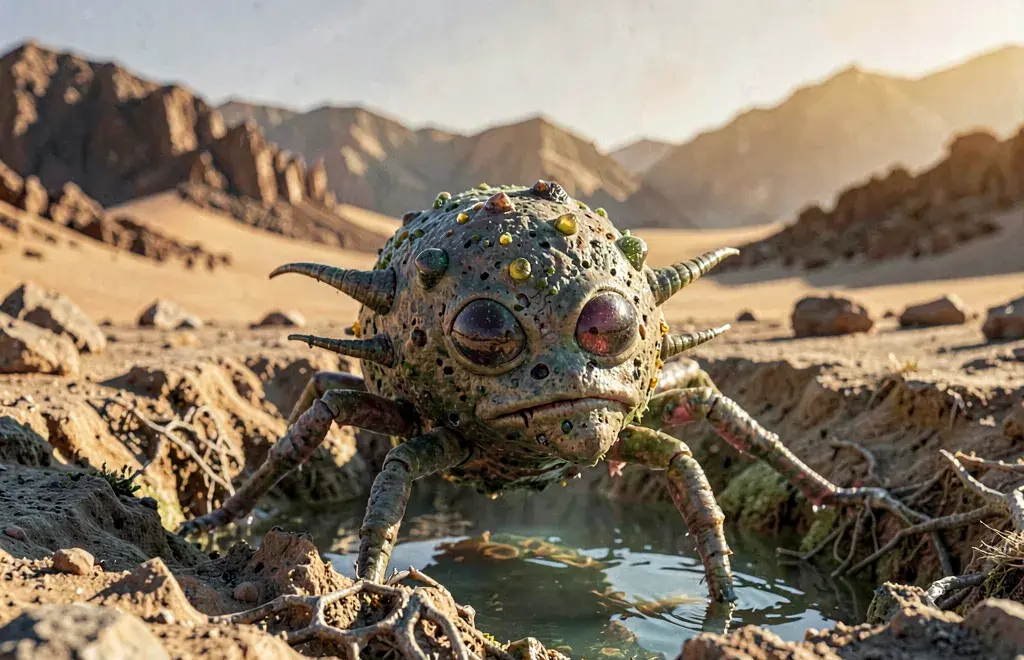
Lithovora acidiphila forms vast, invisible mats within Xylos Prime's acidic aquifers, surviving where few organisms dare tread. These microscopic prokaryotes thrive in hyper-saline brines, metabolizing the crumbling salt-lattice remnants of ancient evaporation cycles. Their colonies secrete potent enzymatic acids to dissolve solid mineral structures, converting dead crystalline debris into bioavailable nutrients for the subsurface ecosystem. Under magnification, the colony appears as a shifting, iridescent film clinging to porous rock faces. Despite their diminutive size, their collective decomposition drives the planet's slow geological turnover, slowly recycling the desert's rigid architecture. Without this relentless microscopic workforce, the aquifers would stagnate, choked by unprocessed lattice waste that starves larger, unseen trophic levels.
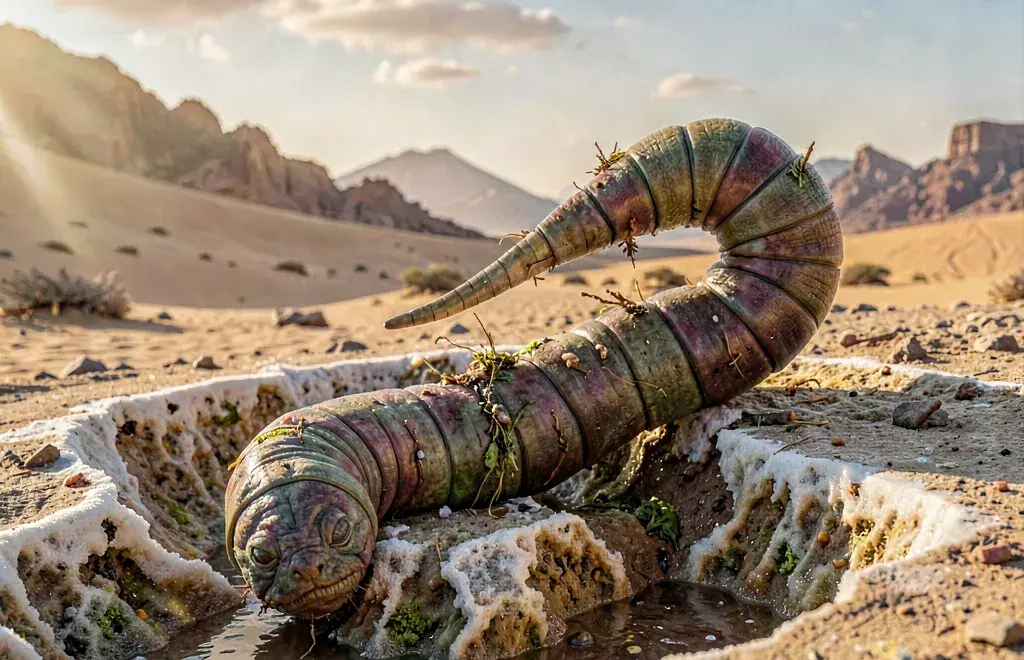
Crustoruptor tubularis, or the Silicate Burrower, thrives within Xylos Prime's hyper-arid evaporite crusts. This blind, segmented annelid navigates deep fissures via chemosensory antennae, tunneling through brittle salt layers to access subsurface acidic aquifers. Its translucent, calcified segments refract faint subterranean light, camouflaging it against the mineral matrix while extracting trace electrolytes from brine pools. Often mistaken for geological debris, the burrower serves as a vital nutrient vector for the planetary Loom. Upon death or molting, its salt-encrusted body releases concentrated organic acids and minerals directly into the Loom's mycelial network. This localized enrichment sustains the Loom's vast subterranean digestion systems, turning the worm's ephemeral existence into essential biological fuel for the desert's dominant lifeform.
World Data
- star
- K-type Orange Dwarf (Low UV, High IR)
- gravity
- 0.85g
- atmosphere
- Thin CO2/N2, high sulfur dioxide aerosols, no free oxygen
- temp
- -20°C ambient, +60°C in shallow brine pools