
Nyx-7b
Tidally Locked Subterranean Biosphere
Life on Nyx-7b · 4 species

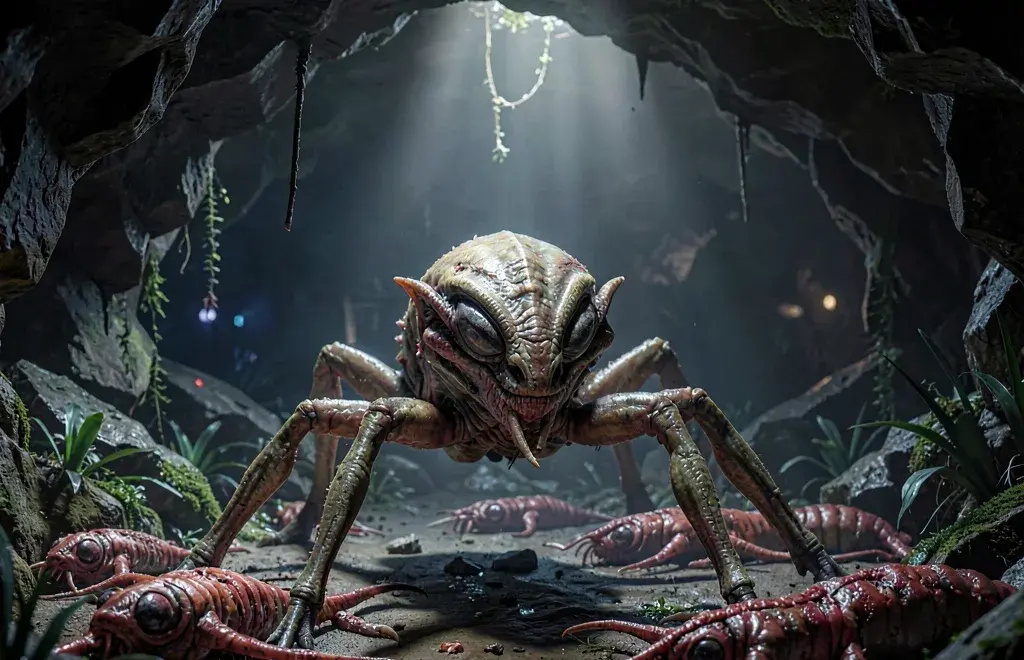
The blind, six-limbed Void-Crawler (*Trenchavis voidis*) navigates Nyx-7b’s eternal darkness via seismic vibration sensitivity. Its articulated limbs grip slick dense basalt floors with precision while sensory cilia detect structural shifts, guiding the chitinous invertebrate toward biomass within the dark cold deep subterranean lithosphere. An active primarily facultative scavenger, it targets fallen Xylophage-88 carcasses specifically through scent and vibration cues. Sharp mandibles breach tough carapaces to extract nutrient-rich fluids efficiently. In this light-starved ecosystem, Crawlers display territorial aggression over scarce resources, ensuring dominance over competitors when rare fresh biomass is present.
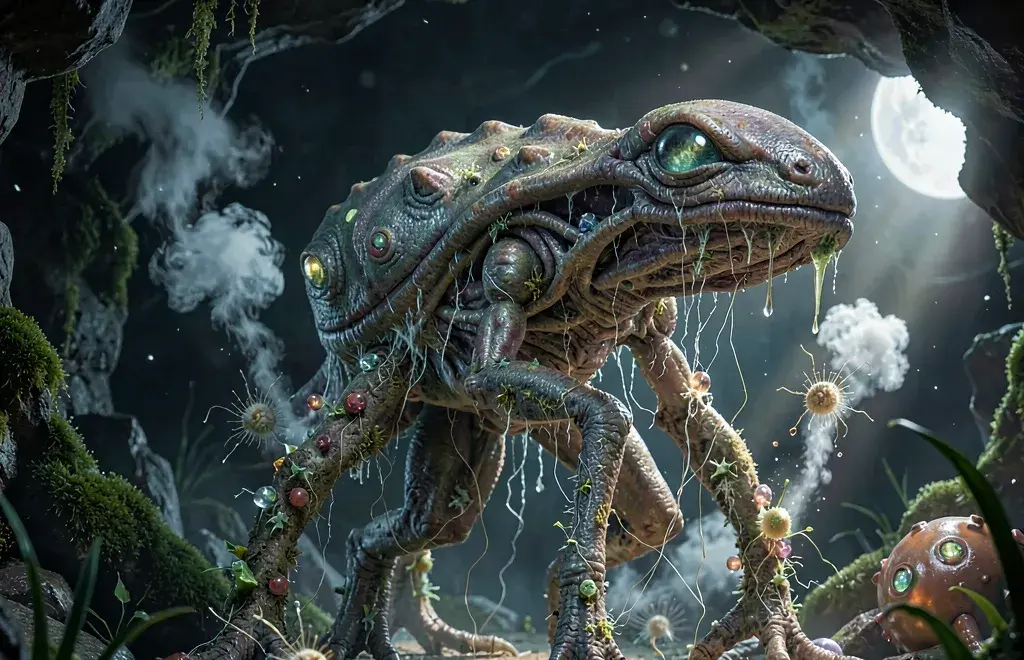
On Nyx-7b's eternal night side, the Methane-Siphon (Vaporus rootis) thrives as a microscopic scavenger within the subterranean fissures. These resilient micro-fauna attach to the silicate-collagen husks of deceased Xylophage-88s, secreting potent enzymes that rapidly dissolve the alien biomass. Under pressurized thermal vents, they convert the organic-silicate matrix into volatile gases, their primary metabolic byproduct being pure methane. This decomposition cycle is critical to the local biosphere's equilibrium, replenishing the dense atmosphere with greenhouse gases essential for maintaining surface temperatures in the tidally locked world's dark hemisphere. Without these tiny decomposers recycling nutrients and fuel, the subterranean ecosystem would stagnate, leaving the planet's fragile thermal balance vulnerable to catastrophic freezing.
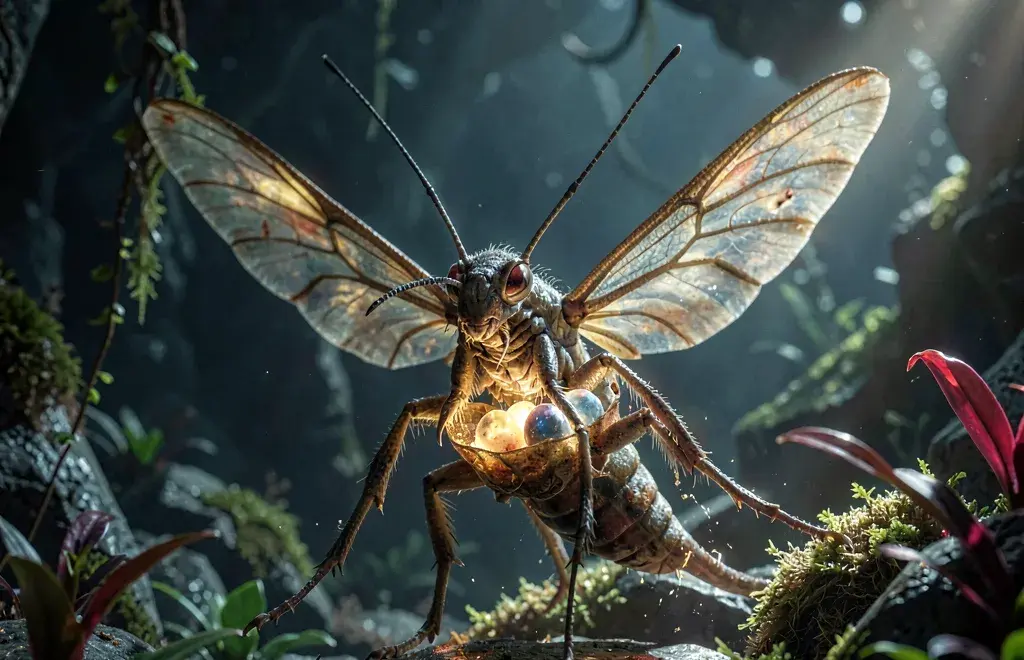
The Lumina larva, or "Glow-Worm," is a bioluminescent insect endemic to Nyx-7b's subterranean caverns. Roughly two centimeters long with translucent, iridescent wings, it navigates the perpetual darkness by emitting a soft violet pulse. Its primary host is the massive Xylophage-88, a gas-filled herbivore that relies on buoyancy to traverse the planet's deep fungal forests. Females covertly deposit eggs into the insect's internal gas chambers during feeding frenzies. Upon hatching, larvae consume the lighter-than-air gases required for lift. As the host loses buoyancy, it sinks prematurely toward crushing depths, dying before releasing new spores. This parasitic cycle severely limits Xylophage populations, maintaining a precarious ecological balance in the tidally locked realm's lightless strata.
World Data
- star
- Red Dwarf (M4V) - Negligible surface flux
- gravity
- 0.85 G
- atmosphere
- Dense, high-CO2, trace methane, 4.5 bar surface pressure, stagnant air
- temp
- 12°C (constant thermal equilibrium)