
Xylos Prime
Hyper-arid Silicate Desert with Transient Subsurface Hydrothermal Oceans
Life on Xylos Prime · 4 species

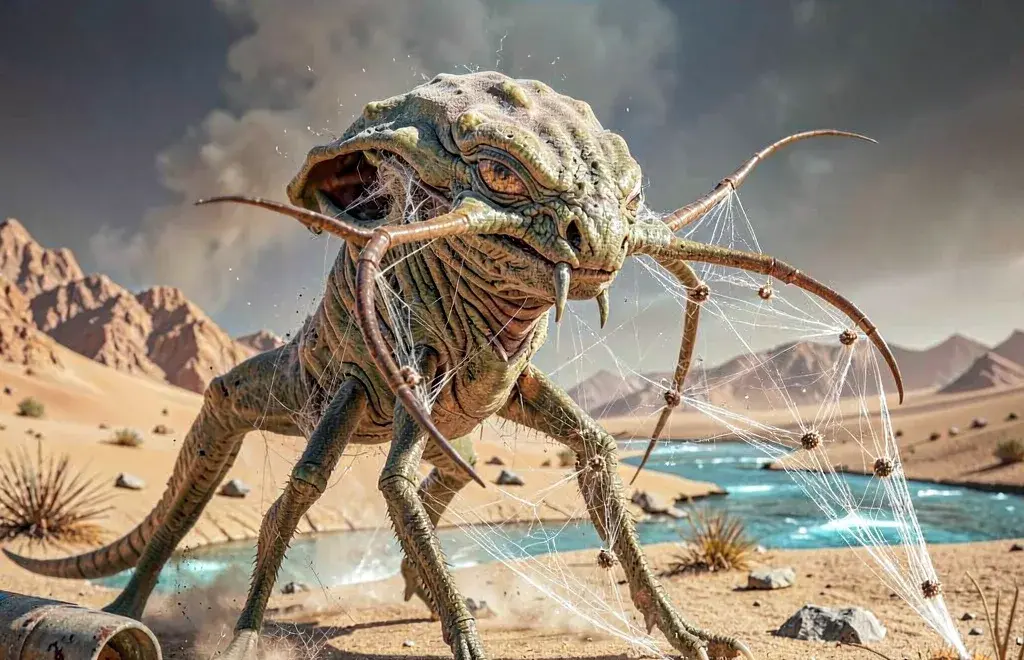
Silicocellus aranea, or Dust-Mite Weavers, are microscopic silicate-dust agglomerations that dominate Xylos Prime's hyper-arid atmosphere. During daily dust storms, these organisms extrude electrostatic filaments to spin ephemeral webs within the turbulent air streams. These nets efficiently trap fine particulate matter and transient hydrothermal spores rising from subsurface oceans, converting inorganic grit into bio-available nutrients essential for survival in this barren desert world. Acting as the primary producers of the atmospheric food web, they form a floating, shimmering biomass layer that drifts with thermal currents. Larger microfauna graze on these drifting colonies, while the Weavers' discarded webs eventually settle, seeding the surface dust with organic matter. This unique cycle sustains Xylos Prime's fragile ecosystem, bridging the gap between the deep hydrothermal vents and the scorching, windswept dunes above.
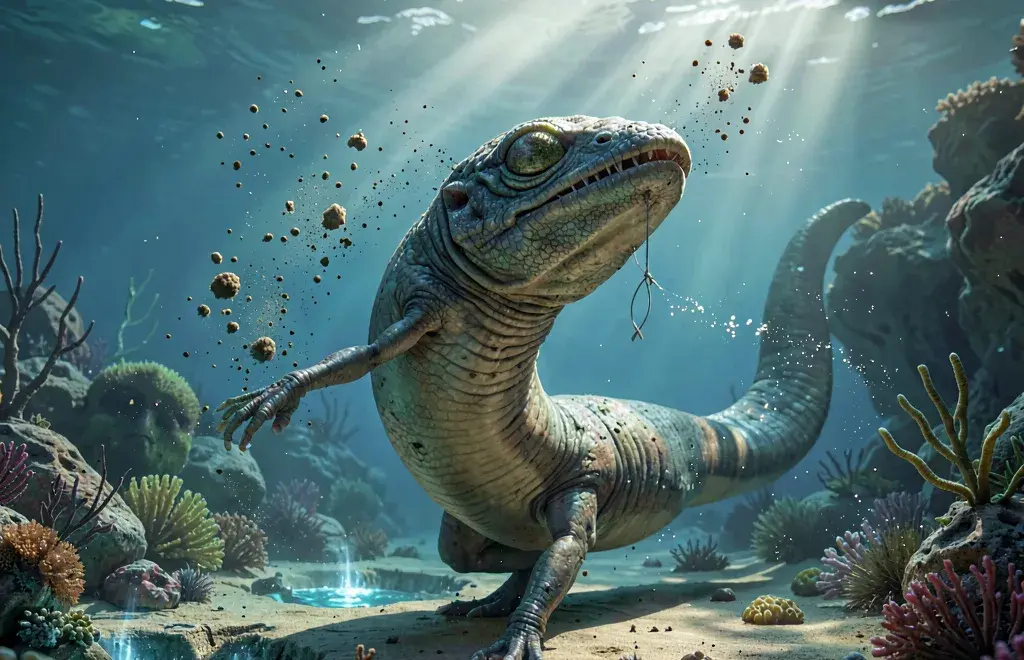
Thermoflux anguilla, the Thermal Eel, navigates Xylos Prime's fleeting subsurface oceans via heightened thermal sensitivity rather than sight. Its translucent, eel-like body pulses with bioluminescent heat-signatures, camouflaging it against the boiling silicate currents where transient hydrothermal vents sustain life. Blind but exquisitely tuned to temperature gradients, it detects minute fluctuations caused by falling spores of the Static-Weaver, a surface-dwelling organism whose desiccated reproductive dust drifts down through fissures. This predator strikes with lightning precision, consuming the nutrient-rich spores before they reach the ocean floor. By exploiting the thermal contrast between the warm vent waters and cooling spore clouds, Thermoflux anguilla thrives in an ecosystem defined by ephemeral moisture and extreme heat. Its existence underscores the planet's fragile balance, where life clings to brief moments of hydrothermal stability amidst a hyper-arid silicate wasteland.
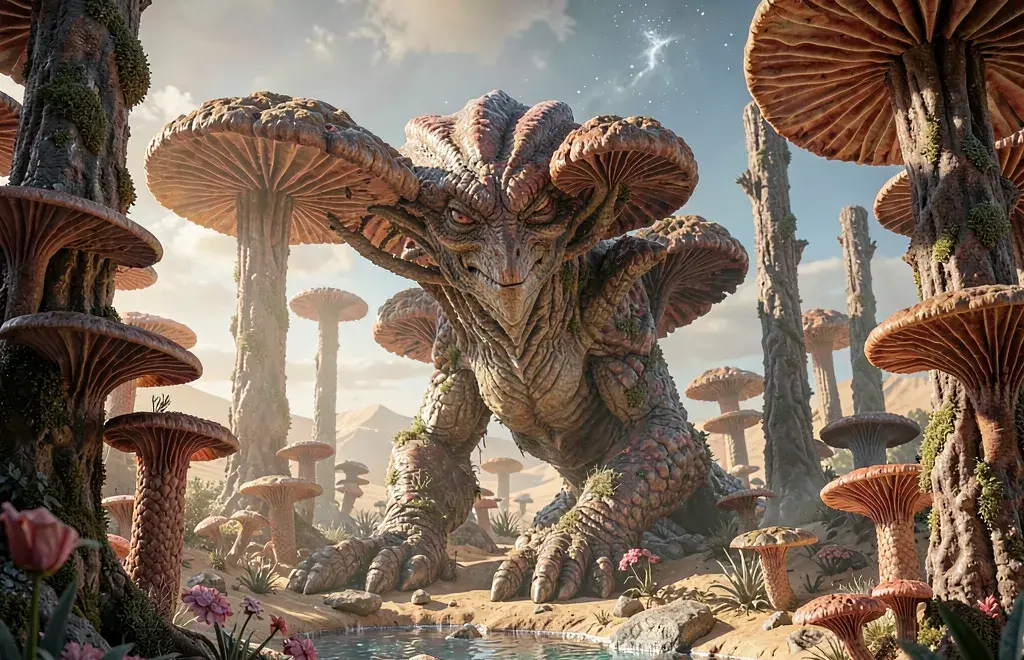
Pyrothrix columnaris, the Vent-Fungal Spires, dominates the ephemeral hydrothermal basins of Xylos Prime's subsurface oceans. These towering, silicate-reinforced fungi thrive on thermal gradients, forming dense forests that anchor against violent currents. Their heat-resistant caps filter superheated mineral plumes, converting geothermal energy into organic biomass through unique chemosynthetic pathways. The spires create a critical microhabitat in this hyper-arid world, their porous surfaces acting as the sole viable substrate for Xylosia spore settlement. By stabilizing loose silicate sediments and releasing essential nutrients, these primary producers sustain the fragile deep-ocean ecosystem, allowing complex life to persist within the planet's fleeting liquid pockets.
World Data
- star
- Red Dwarf (M4V), dim but heat-rich
- gravity
- 0.85g (Earth)
- atmosphere
- Thin, super-dense CO2 and suspended silicate dust (15% opacity), high surface pressure
- temp
- -40°C (surface) to 90°C (subsurface ocean interface)