
Kaelum Prime
Ice-Rich Gas Giant
Life on Kaelum Prime · 4 species

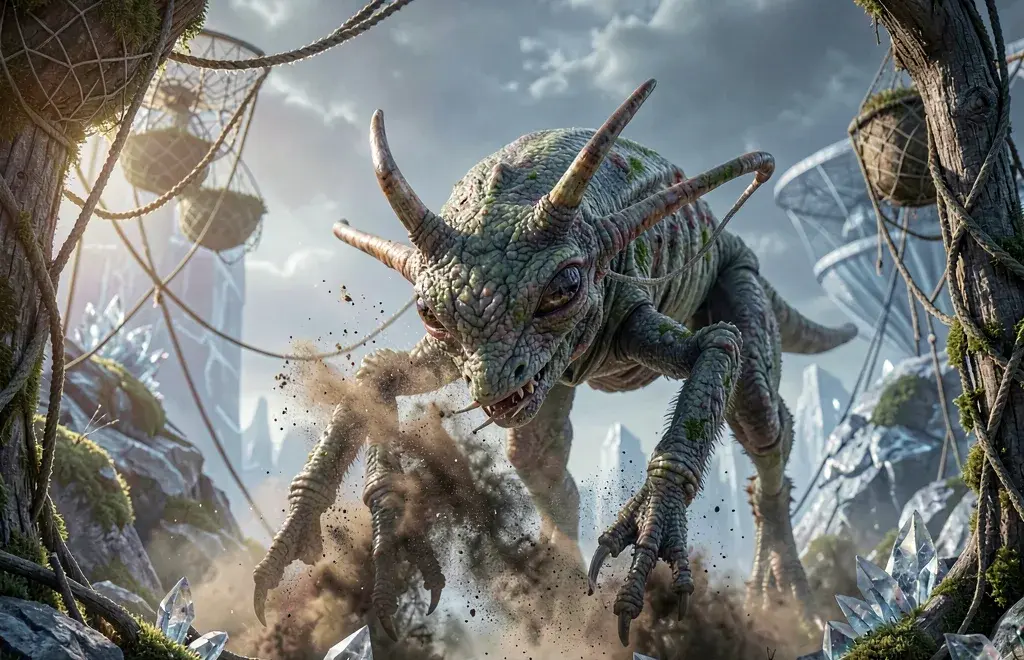
The *Lithosoma parva*, or "Dust-Grinder," thrives in the frigid upper strata of Kaelum Prime, a niche occupied solely beneath the glacial lattice of the native weavers. These microscopic filterers drift passively within turbulent cryo-currents, utilizing ciliated oral discs to sieve fine silicate dust rejected during the weavers' crystallization cycles. Their translucent bodies shimmer with trapped particulate matter, rendering them nearly invisible against the backdrop of swirling ice fog. As primary consumers, they convert this mineral slurry into organic biomass through chemosynthesis fueled by trace ammonia vents. Though individually insignificant, their swarms form vast, shifting clouds that recycle essential nutrients back into the atmospheric food web. Their absence would cause toxic dust accumulation, destabilizing the delicate structural integrity of the weavers' massive ice networks above.
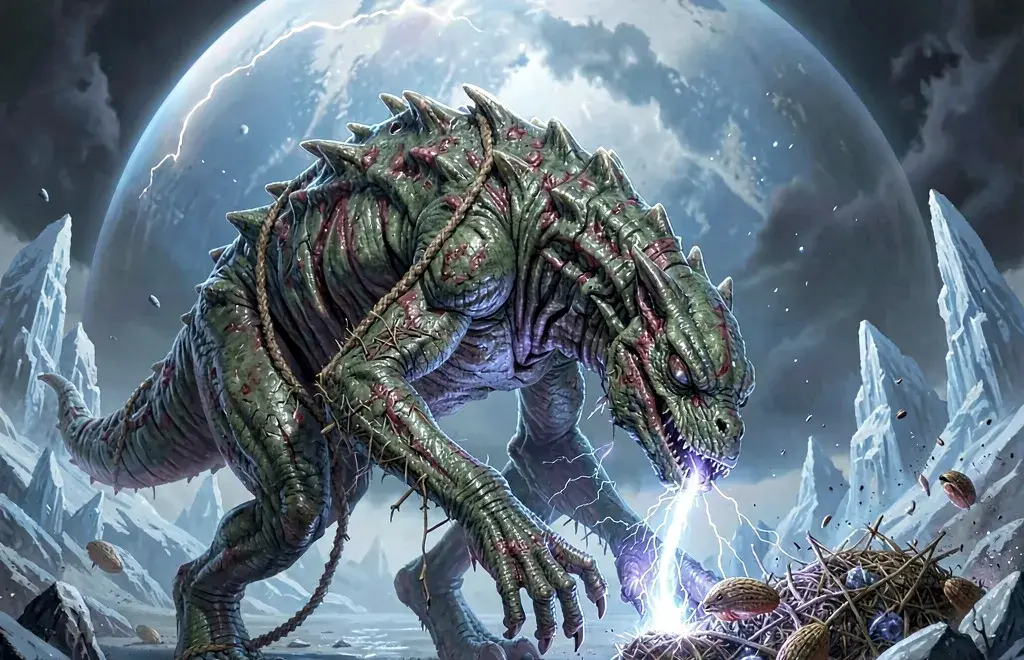
Fulgurivora longus, or the Static-Eel, navigates Kaelum Prime's dense, cryogenic clouds as a specialized aerial predator. Its translucent body houses conductive filaments capable of generating lethal high-voltage discharges. Unlike terrestrial hunters that pursue prey physically, the Static-Eel targets floating weavers by sensing their bio-electric signatures within the atmospheric currents. Upon contact with a target, the eel delivers a precise shock designed to induce rapid lattice collapse in the weaver's buoyant structure. This sudden loss of structural integrity causes the victim to plummet into the crushing depths below, where extreme pressure instantly liquefies its form. The Static-Eel then descends to feed on the dissolved organic matter, completing its role as an efficient secondary consumer in this hostile sky-ocean ecosystem.
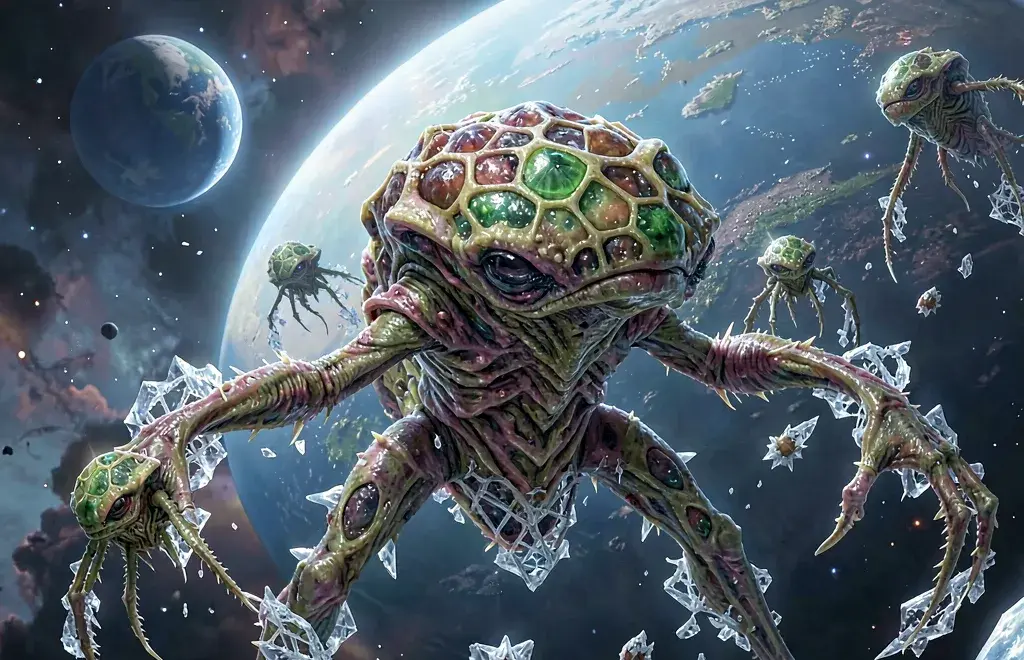
Sporevagus volans, the Lattice-Seed, inhabits Kaelum Prime's frigid upper atmosphere as a transient larval dispersal stage. Drifting on cryo-winds, these hexagonal silicate fragments detach from mature colonies when atmospheric density shifts. The shards sink through stratified ice layers until reaching high-pressure zones that trigger rapid densification, halting their descent momentarily before structural reassembly begins anew in the dark depths below. This cyclical fragmentation allows the species to colonize remote vertical niches within the gas giant's turbulent envelope. Each fragment carries a dormant genetic lattice, activating only upon contact with specific helium-ice mixtures. Observers note faint bioluminescent pulses during reformation, marking the transition from inert debris back to active disperser, ensuring the lineage survives Kaelum Prime's relentless vertical storms.
World Data
- star
- K-Type Dwarf
- gravity
- 1.5g
- atmosphere
- Hydrogen-Helium with high ice particulate density
- temp
- -120C to 200C vertical gradient