
Mycelia Prime
Sub-terra Fungal Biosphere
Life on Mycelia Prime · 4 species

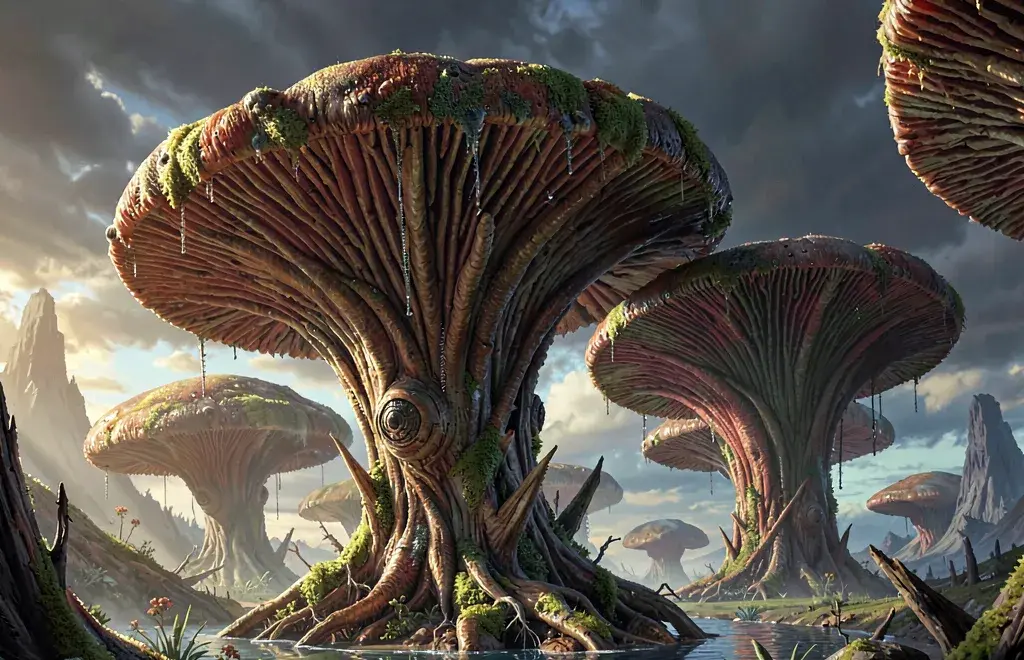
The Giant Cap (Basidiomycota gigas) anchors Mycelia Prime's sub-terra biosphere as a colossal, stationary primary producer. These massive fungal towers, reaching three hundred meters high, function as the planet's sole atmospheric water reservoirs, condensing moisture from geothermal vents and storing it within their porous, cellulose-dense caps. Their broad, umbrella-like surfaces dominate the dim landscape, creating unique microclimates that sustain lesser flora below while filtering toxic gases through specialized gill structures. Though immobile, the Giant Cap serves as the critical structural vessel for the symbiotic Weaver species. The Weaver's intricate silken networks reinforce the Cap's stalk against seismic shifts, preventing collapse while harvesting nutrient-rich sap exuded from the host's vascular system. This obligate partnership ensures the stability of the entire fungal ecosystem, turning these silent giants into living fortresses that regulate water cycles and provide shelter for the subterranean web of life.
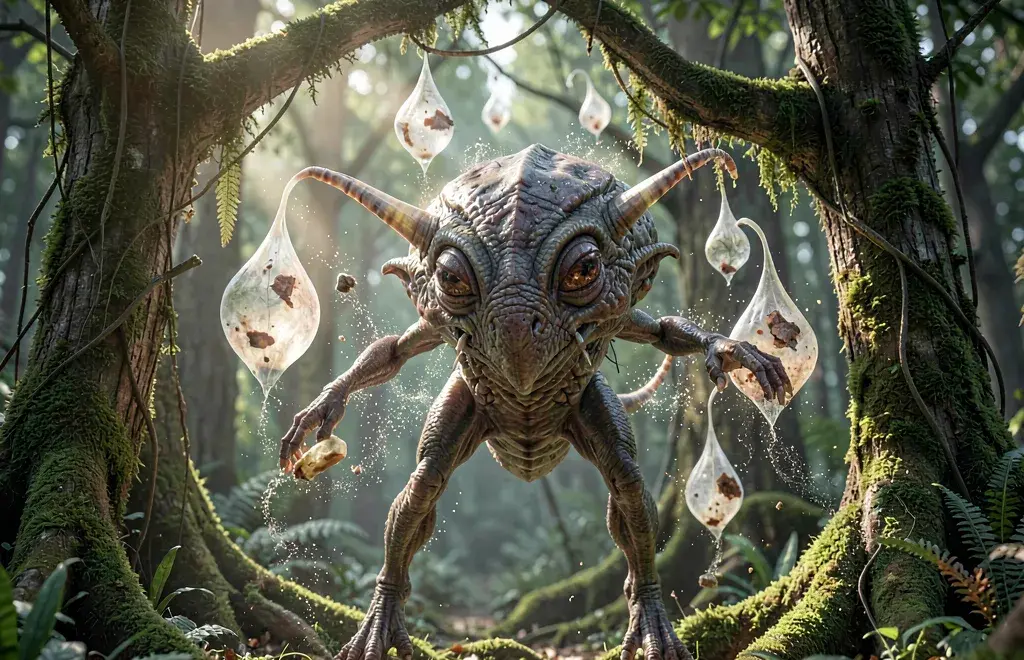
The Spore-Sifter (*Aero-fungus volans*) drifts silently through Mycelia Prime's sub-terra canopy, its gossamer, translucent sacs billowing like living sails. These fragile structures act as delicate air filters, passively trapping excess airborne spores from the dense fungal forest below. By regulating particulate density, this species prevents catastrophic overgrowth that could suffocate the underlying mycelial networks, maintaining a precarious atmospheric equilibrium within the cavernous biosphere. Observations reveal thousands of these floating organisms moving in synchronized currents, their internal membranes glowing faintly as they digest captured nutrients. Though seemingly fragile, their collective filtering capacity is immense, processing tons of spores daily. Without the Spore-Sifter's constant vigilance, the forest would rapidly choke itself, collapsing the delicate sub-terra ecosystem into a stagnant, suffocating mass.
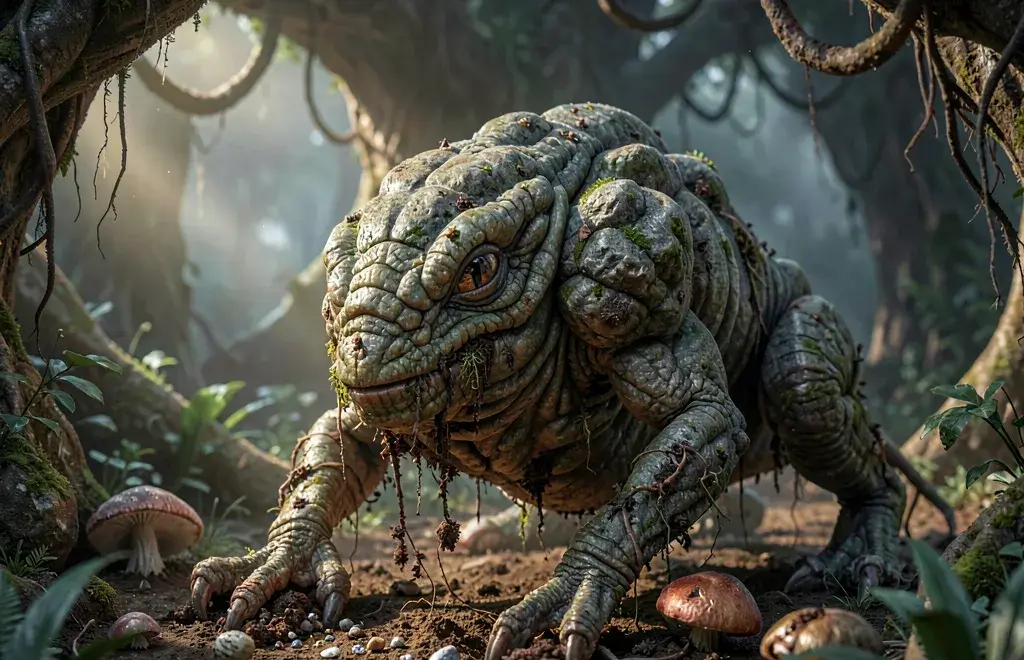
The Root-Grinder (Lithos-mycetoid) appears as a slow-drifting cluster of basalt-grey nodules, camouflaged perfectly against the cavern walls of Mycelia Prime's sub-terra strata. These detritivores traverse the fungal floor with glacial patience, their calcified undersides grinding silently over decaying fallen caps. As they move, specialized enzymatic secretions dissolve tough chitin and lignin, extracting essential nutrients while pulverizing the substrate into fine, mineral-rich dust. This deliberate recycling process is vital to the planet's dark biosphere, transforming death into fertile soil that fuels the next generation of giant mushrooms. Though easily mistaken for inert geology, a close inspection reveals faint, rhythmic pulsations within their rocky shells. The Root-Grinder ensures the eternal cycle of decomposition continues, bridging the gap between organic decay and geological renewal in the deep fungal dark.
World Data
- star
- Red Dwarf (K7V)
- gravity
- 0.85g
- atmosphere
- High-density CO2/Nitrogen with trace methane; 3.5 atm surface pressure
- temp
- 280K (7°C) average, geothermal variance dominant