
Ferrum 9
Iron-Oxide Desert World
Life on Ferrum 9 · 4 species

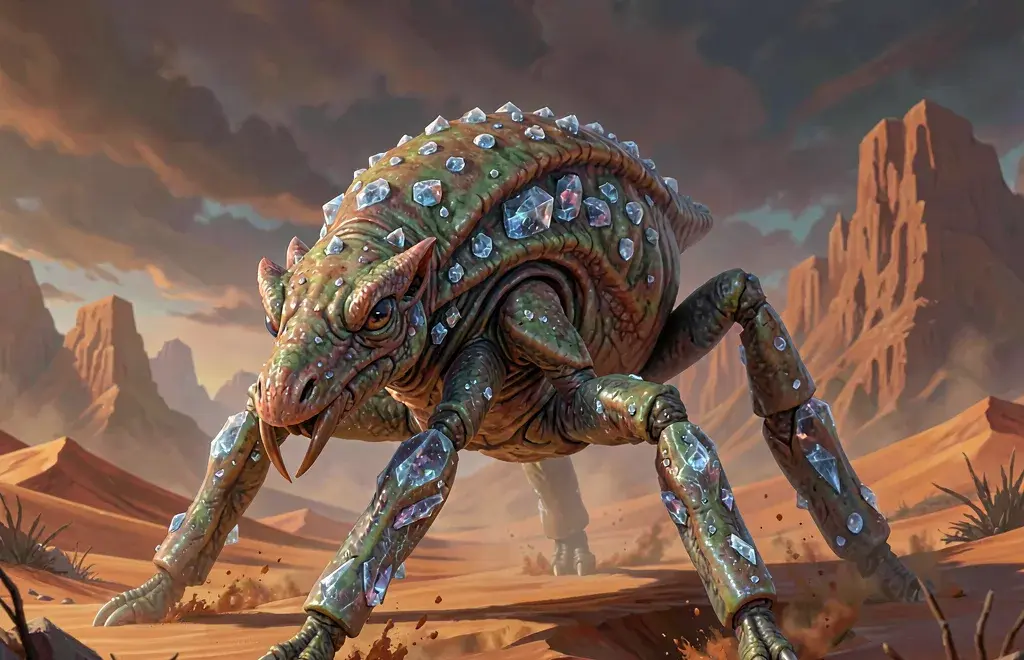
The Dust-Strider (Ambulocrusta pulveris) navigates Ferrum 9's rusted dunes as a six-legged grazer, its segmented carapace impregnated with silica to resist abrasive iron-oxide winds. These creatures tunnel shallowly beneath the surface, harvesting nutrient-rich lichen that clings to subsurface regolith. Their rhythmic limb movements churn the soil, creating micro-tunnels that stabilize the loose desert floor against rapid erosion. Crucially, their synchronized subterranean locomotion generates a consistent low-frequency tremor unique to the species. This seismic signature serves as the primary calibration signal for the Redox Anchor, a critical terraforming device buried deep within the crust. Without the Dust-Strider's constant, rhythmic digging, the Anchor would fail to detect geological shifts, leaving the colony vulnerable to catastrophic tectonic instability.
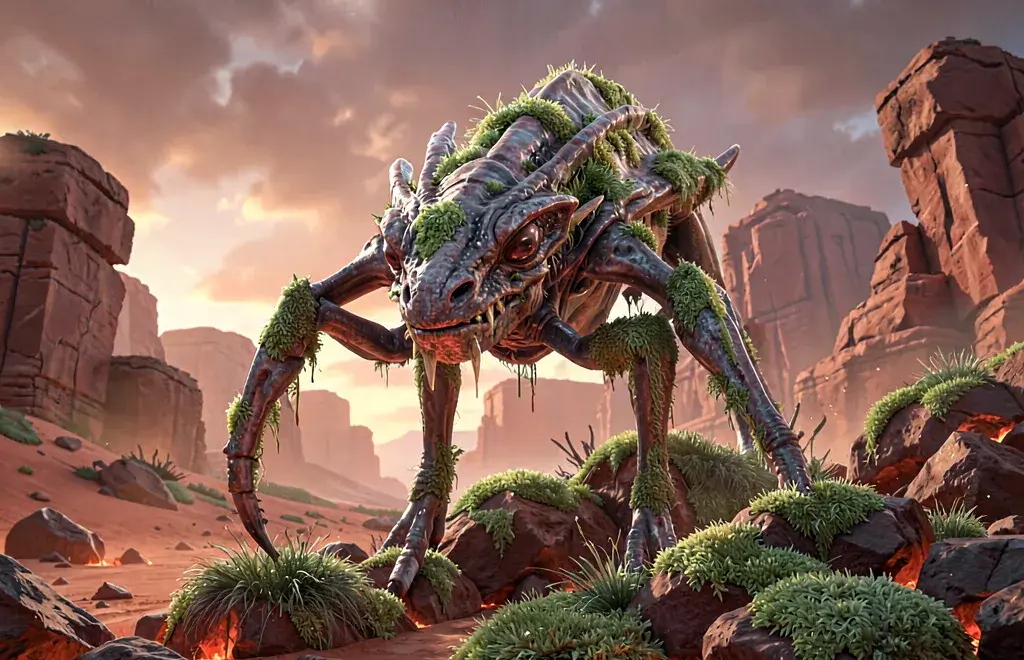
Vent-Moss (*Thermochloris ferrum*) blankets Ferrum 9's superheated basalt ridges as a rust-colored, fibrous carpet. Lacking chlorophyll, this flora thrives through chemosynthesis, metabolizing iron oxides and sulfur vapors venting from subterranean fissures to sustain rapid growth at temperatures exceeding sixty degrees Celsius. The moss's dense, heat-resistant filaments create a porous mat that insulates the scorching ground beneath while releasing faint, metallic pheromones. This thermal camouflage is critical for the symbiotic Redox Anchor, a predatory arthropod that embeds itself within the Vent-Moss layer. The creature mimics the moss's oxidation patterns perfectly, using the carpet's heat signature to mask its own body temperature from prey. As wanderers cross the iron-desert, they inadvertently disturb the mat, triggering the Anchor's explosive ambush from beneath the deceptive, rust-hued floor.
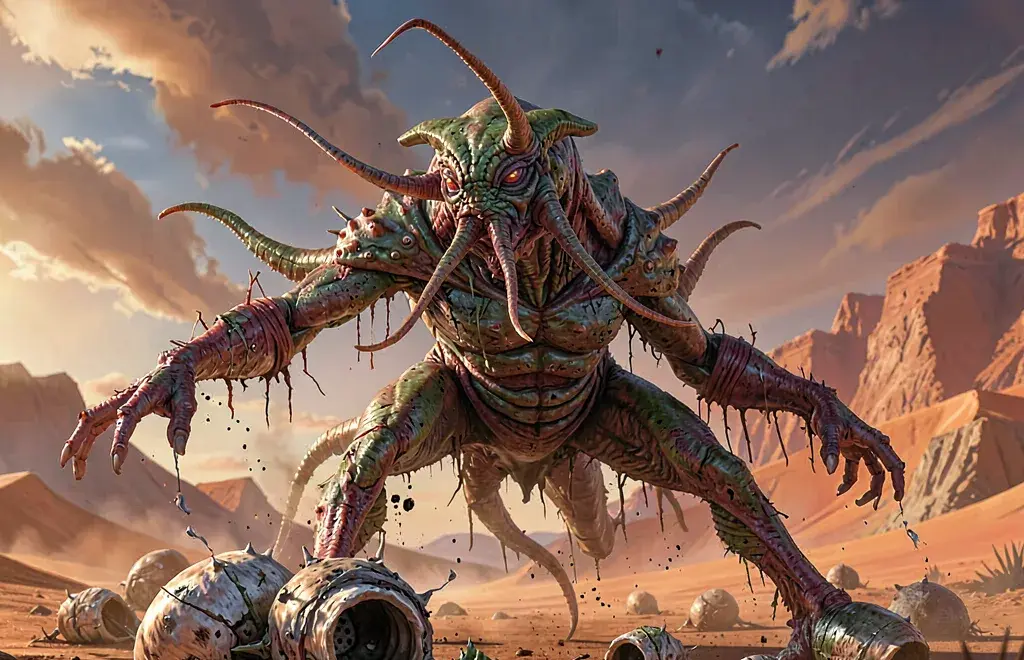
Aeolospora ventus, the Spore-Worm, initiates life as a gossamer larva carried by Ferrum 9's relentless rust-storms. Upon landing on the brittle, iron-carapace remnants of dead Redox Anchors, it secretes potent acids to dissolve the mineralized shells. This process rapidly converts solid iron back into bio-available nutrients, seeding the barren dunes with life-sustaining dust essential for the planet's fragile ecosystem. As the larva matures, its translucent body fills with ingested rust, turning a deep ochre that camouflages it against the oxide sands. It anchors itself within hollowed-out Anchor husks, continuing the cycle of decomposition until fully metamorphosed into a stationary spore-release node. This critical role ensures nothing is lost in the desolate iron wastes, maintaining the delicate geological balance through constant recycling.
World Data
- star
- K-type Orange Dwarf
- gravity
- 1.4g
- atmosphere
- CO2/Nitrogen, High Dust
- temp
- -10C avg