
Vitra
Silicate desert world
Under a fierce blue-white sun the ground itself has melted to glass, and the ultraviolet would sterilise bare cells in minutes. Water is the rarest treasure. Life here did not flee the light — it sheathed itself in transparent silica and learned to eat it. The Glasswing Basker turns this lethal star into food across a desert of mirrors.
Life on Vitra · 4 species


The Glass-Strider (*Vitricursor limus*) is a low-profile arachnoid endemic to Vitra's silicate deserts, uniquely adapted as both scavenger and hydro-engineer. Utilizing specialized acidic mandibles, it dissolves the brittle silica husks of decaying baskers, releasing trace water molecules trapped within the crystalline lattice. This vital extraction process sustains life in an environment where liquid moisture is virtually non-existent, turning mineral decay into a lifeline for the creature and its ecosystem. Six suction-cupped legs grant these silent hunters the ability to traverse slick glass dunes without scratching their own protective chitin. The adhesive pads distribute weight evenly, preventing slippage on polished surfaces while remaining invisible against the reflective terrain. This stealthy mobility allows them to approach vulnerable baskers undetected, ensuring efficient harvest before other scavengers arrive in this harsh, sun-scorched world.
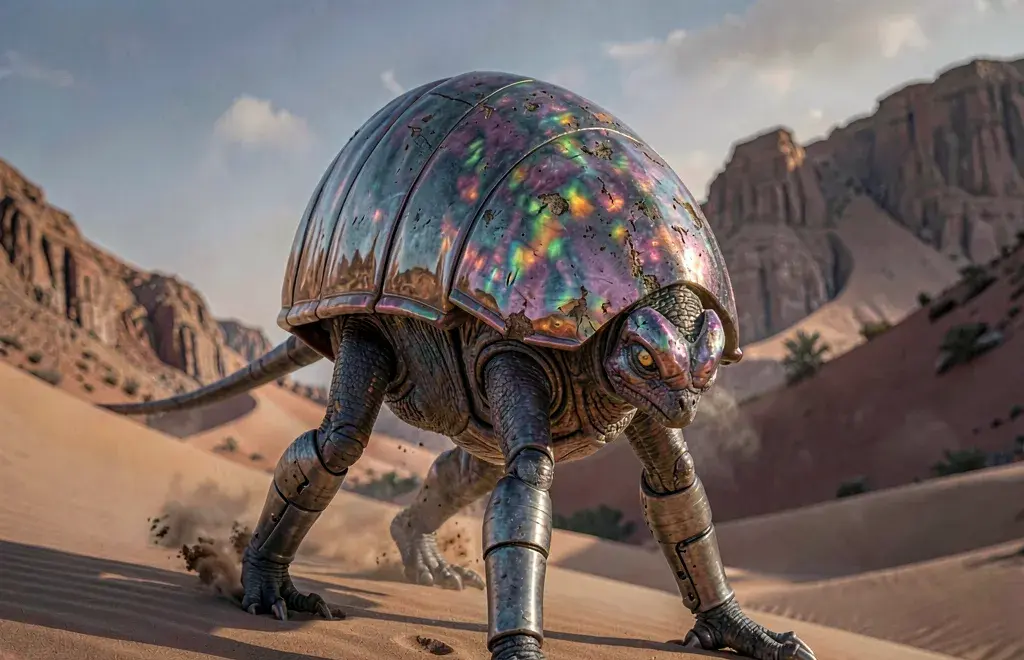
Specula venatoria, the Prism-Stalker, dominates Vitra's silicate dunes through perfect optical deception. Its polished carapace refracts ambient light with such precision that the creature becomes indistinguishable from the shifting sands, rendering it an invisible ambush predator. This refractive camouflage allows it to remain undetected until the moment of strike. A thermal hunter, it navigates the thin atmosphere by sensing heat differentials, tracking prey seeking shade beneath massive baskers. When detection is made, hydraulic legs extend with explosive force, launching the stalker from its transparent hiding place to capture vulnerable quarry before they can retreat into deeper shadows.
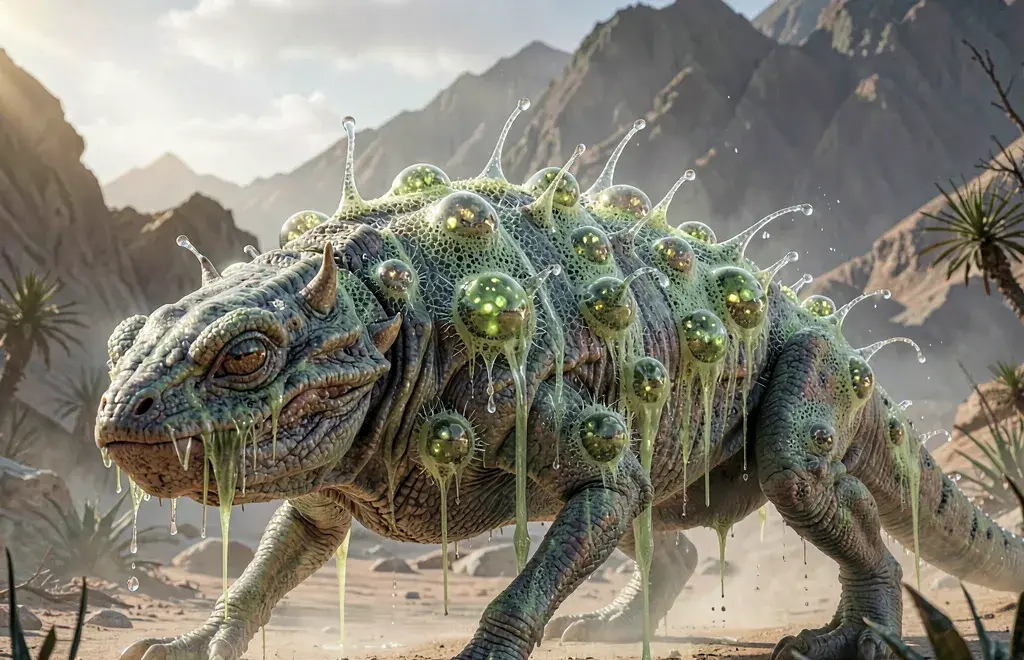
Aqua-Vinculum sessilis manifests as iridescent, glass-like colonies clinging to the dorsal ridges of Vitran baskers. These sessile epibionts deploy microscopic porous filaments into passing air currents, actively harvesting ambient humidity in an otherwise arid silicate desert. The extracted moisture is instantly mineralized, creating a pure reservoir that sustains both the colony and its host's metabolic needs during prolonged droughts. In return for this hydrological service, Fog-Menders secrete a viscous, amber-hued slime rich in UV-absorbing compounds. This protective layer forms a translucent shield over the basker's exposed photosynthetic core, deflecting lethal solar radiation during peak daylight hours. The symbiotic bond transforms the host into a mobile oasis, allowing survival where independent organisms would rapidly desiccate under Vitra's relentless glare.
World Data
- Star
- Vitra A · blue-white, high-UV
- Gravity
- 1.1 g
- Atmosphere
- dry, thin
- Surface
- fused glass