
Earth · +50 Myr
Deep-future Earth
Wind the clock fifty million years past us: the cities drowned, the coasts redrawn, humanity a grey seam in the rock. Into the warm shallows over those ruins, intelligence re-evolved from an utterly different root — coral that learned to think. The Reefmind drapes its slow vast mind across our graves, the far fate of the same world the Walking Groves of Verdance branch from.
Life on Earth · +50 Myr · 4 species

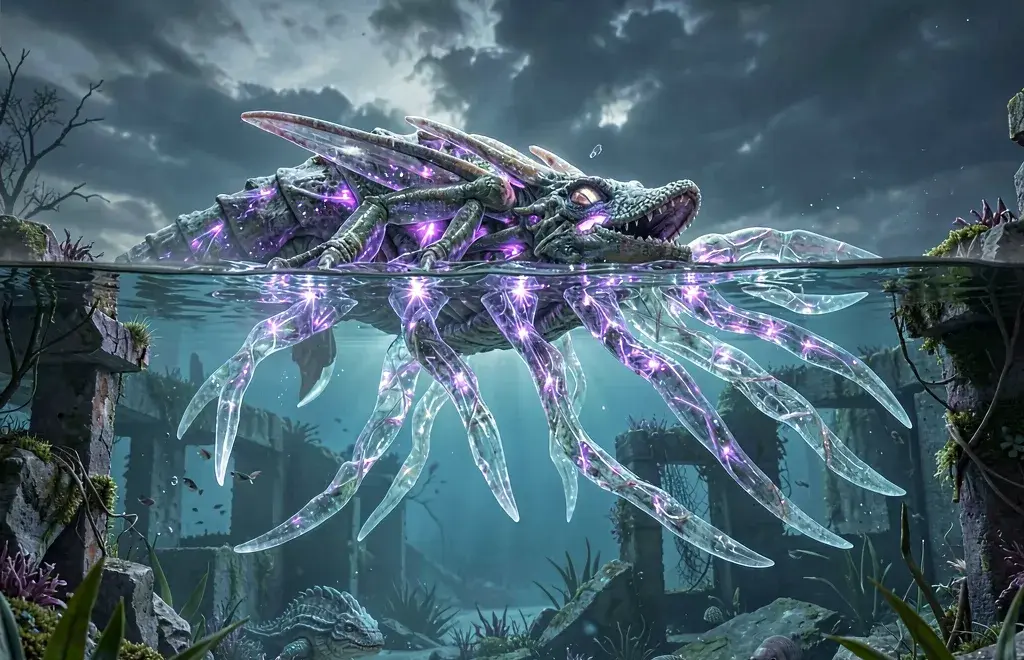
Vitrigelidium maris dominates the sun-drenched shallows of the deep-future ocean, its translucent fronds reinforced with silicate lattices to withstand Sol's intensifying ultraviolet output. Specialized violet pigments within these glass-like structures efficiently harvest high-energy radiation, driving a unique photosynthetic process that thrives where older flora now perish. The vegetation drifts just below the surface, forming vast, shimmering canopies that refract light into kaleidoscopic patterns across the water column. Beneath this luminous veil lies a critical refuge: the rigid, brittle architecture of the kelp weaves through submerged ruins, creating complex micro-habitats for smaller fauna seeking shelter from surface heat and predation. These silicate matrices offer essential structural integrity to the drowning cities below, transforming ancient stone into vibrant, living reefs that sustain a fragile ecosystem adapted to an aging star's harsh glare.
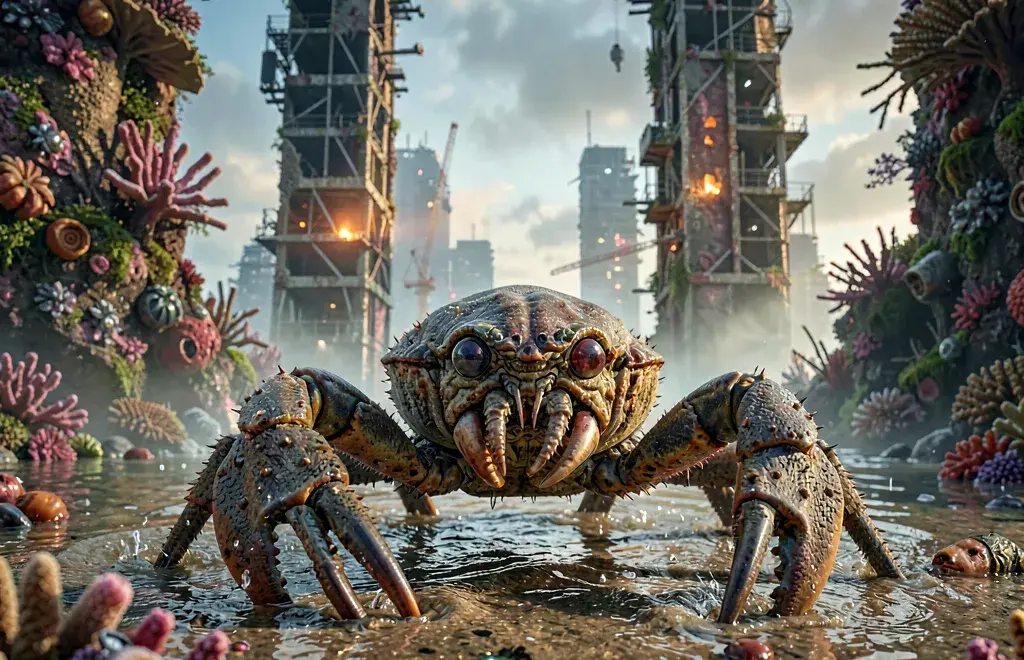
Squalocarcus abysmus, the Mud-Sifter Crab, dominates Earth's warm shallows five million years hence, gliding effortlessly over coral-encrusted skyscrapers. Evolving broad, flattening claws and a low center of gravity, this detritivore navigates submerged urban ruins with remarkable stability, sieving nutrient-rich sediment from silt-choked lagoon floors. Its body is armored in thick, translucent chitin that refracts the dim light filtering through the water column. Specialized chemosensory organs line its sensory palps, allowing it to detect trace metals released by slowly corroding human infrastructure. This acute ability guides them toward decaying rebar and copper piping, vital sources of essential minerals in an ecosystem where natural rock weathering has slowed. They function as the primary recyclers of the deep-future seabed, turning ancient waste into living biomass.
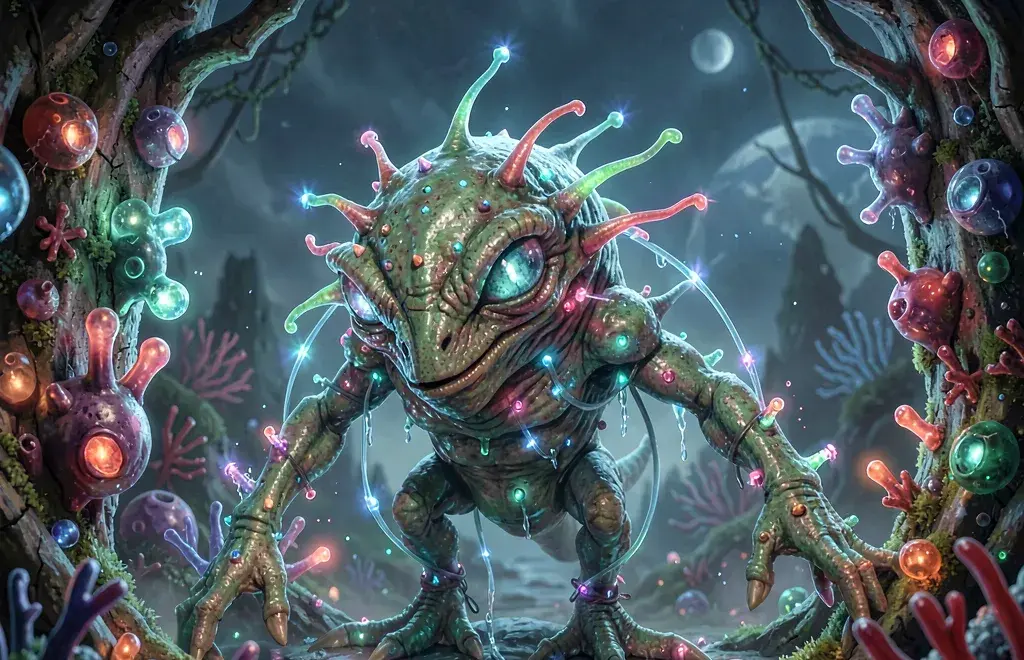
Sibilus parasitus, or the Whisper-Jell, manifests as clusters of translucent, gelatinous polyps clinging to the outer cortex of Earth's vast Reefmind colonies. These diminutive organisms have thrived in deep-future ecosystems for over fifty million years, feeding exclusively on excess metabolic byproducts while releasing potent calming neurochemicals that soothe the host's collective consciousness against environmental stressors. Functioning as a distributed immune network, Whisper-Jells detect local infections or damage instantly. Upon sensing distress, they trigger rapid, synchronized bioluminescent pulses that race across the Reefmind's neural web. This visual alarm allows the shared mind to isolate threats and mobilize defenses within milliseconds, cementing the symbiont's vital role in planetary neural health.
World Data
- Star
- Sol · aged G-type
- Gravity
- 1.0 g
- Era
- post-human
- Seas
- warm, risen