
Aethelgard
High-UV Super-Earth with Cryogenic Surface
Life on Aethelgard · 4 species

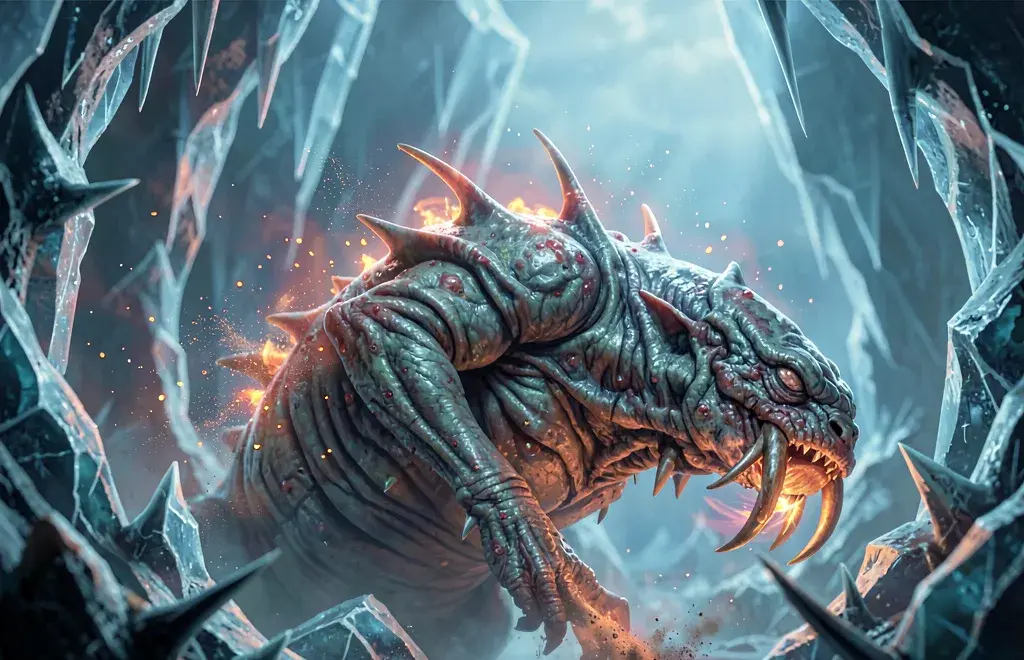
Cryofagus profundus, commonly known as the Frost-Maw, is a blind, vermiform organism thriving within the deep glacial fissures of Aethelgard's cryogenic crust. This filter feeder sustains itself by ingesting radioactive dust particles suspended in sub-ice currents, converting radiation into metabolic energy while remaining imperceptible to visual predators due to its complete lack of eyes and pigmented tissue. Despite inhabiting near-absolute zero environments, the Frost-Maw emits a faint thermal signature from its metabolic core, creating a localized heat plume detectable by infrared sensors. This unintended beacon paradoxically serves as a primary attractant for the Neon Strider, rendering the otherwise cryptic worm vulnerable to predation in an ecosystem where thermal anomalies are rare and highly sought after.
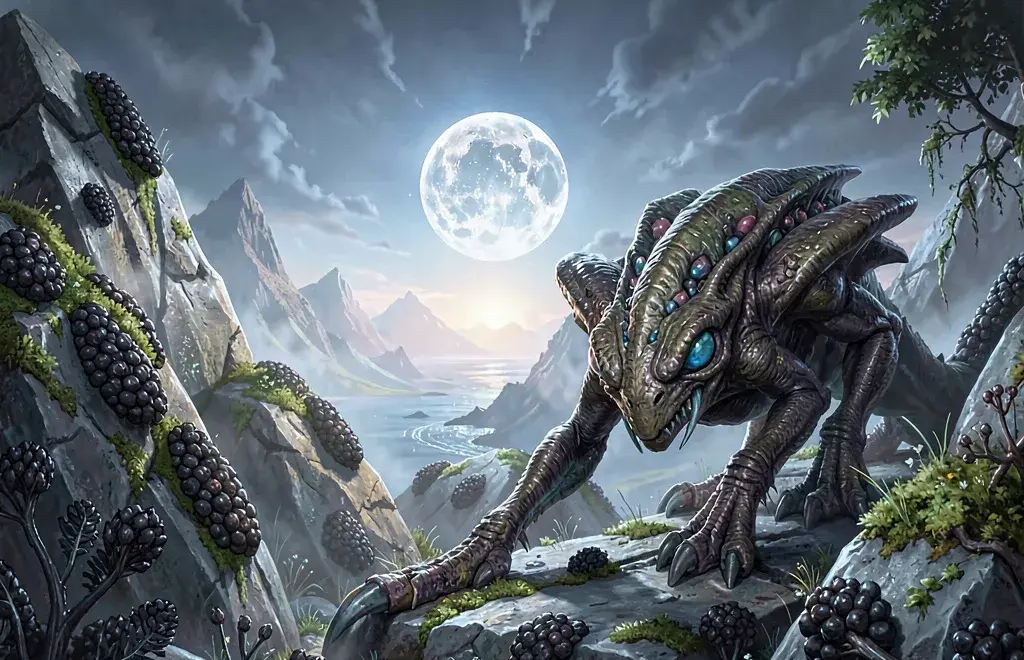
Tenebrus radiophila forms expansive, charcoal-black mats clinging to the leeward shields of basalt outcrops on Aethelgard's frozen plains. These flat colonies bypass photosynthesis entirely; instead, specialized pigments in their upper cortex directly harvest high-energy ultraviolet radiation, converting it into chemical bonds within hours. The resulting biomass glows with a faint, violet bioluminescence only when shielded from the star's harsh glare. In this cryogenic wasteland, Umbra-Moss remains the sole primary producer, anchoring the local food web. Its dense, heat-retaining layers create micro-habitats where scavengers burrow for warmth and sustenance. Without these dark, radiating islands of life, Aethelgard's surface would remain a sterile expanse of ice, devoid of organic carbon or movement.
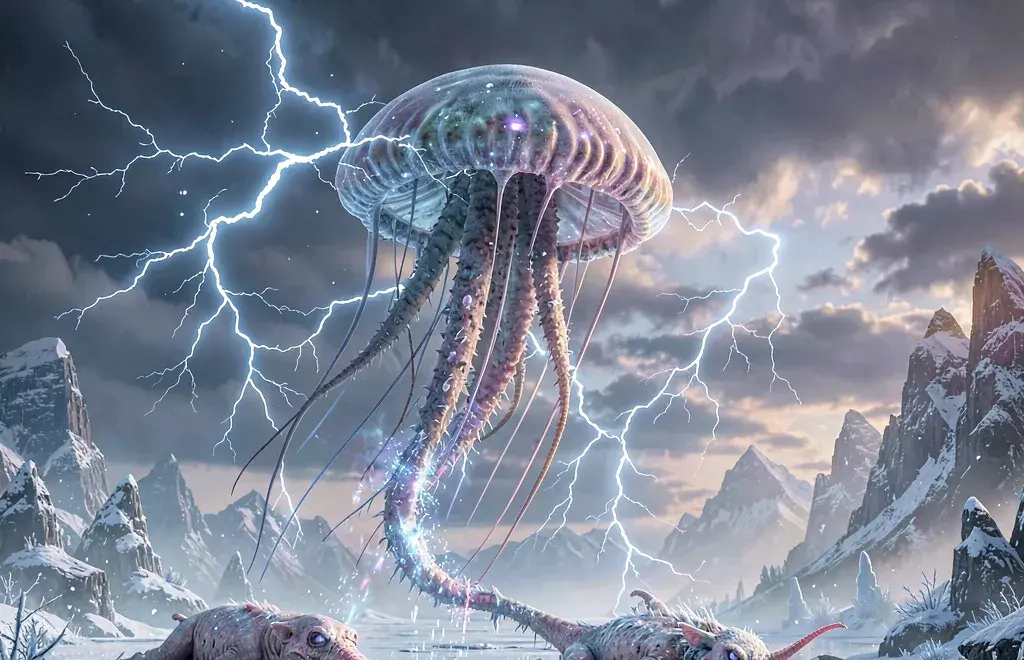
The Static-Drifter (*Electroplasma vagans*) hovers perpetually in Aethelgard's ionized upper air, its translucent, jellyfish-like bell pulsing with captured violet lightning. Specialized cilia filter ambient static from the planet's relentless UV storms, converting atmospheric charge into metabolic energy while the creature floats weightlessly above the toxic clouds. When electrical reserves deplete, these drifters descend through the cryogenic fog to scavenge frost-maw carcasses on the frozen surface. Their electrostatic fields briefly thaw nearby ice, allowing flexible tendrils to extract nutrient-rich fluids from the desiccated remains before ascending once more into the storm-wracked zenith.
World Data
- star
- White Dwarf (WD 1145+017 type, high UV flux)
- gravity
- 1.4g
- atmosphere
- Dense, stagnant Sulfur-Helium mix; high ozone shielding at altitude, thin at surface
- temp
- -180°C surface; -150°C at 500m depth