
Vermis Prime
Silicate-Volatile Super-Earth
Life on Vermis Prime · 4 species

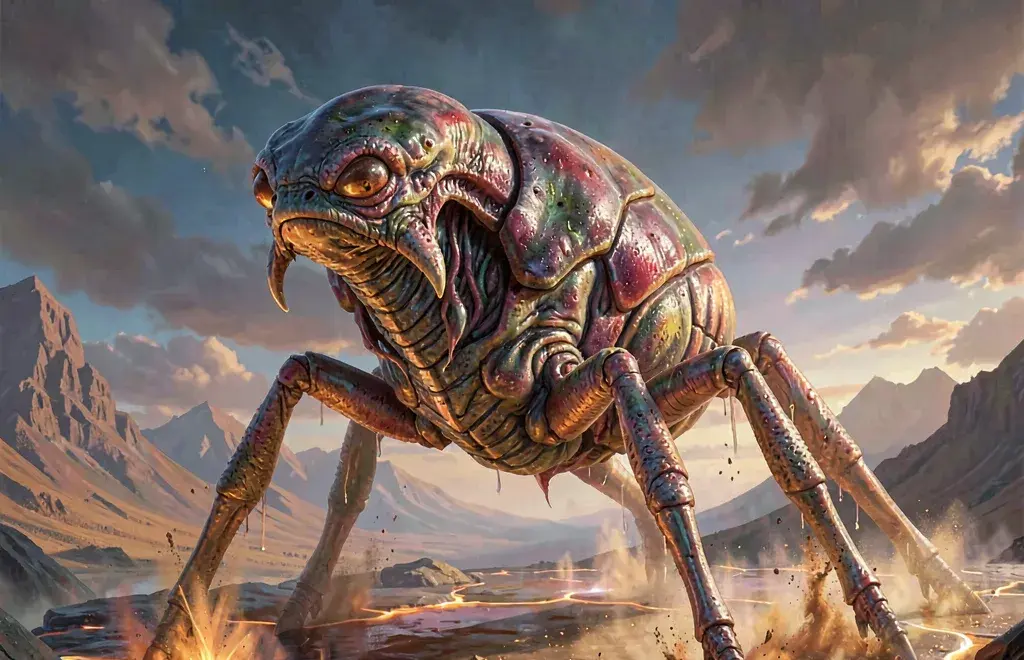
Sulfolithos arachne, the Sulfur-Weaver, navigates Vermin's scalding geothermal vents as a six-legged lithovore. Its obsidian carapace resists extreme heat while specialized mandibles grind cooling crust into fine particulate matter. The creature moves with deliberate slowness across shifting tectonic plates, extracting sulfur-rich dust through filter-feeding appendages that line its underbelly. This primary consumer thrives where volatile gases condense, converting raw mineral deposits into metabolic energy. Its silk-like secretions bind loose scree, stabilizing precarious ledges for future grazing. In the perpetual twilight of Vermis Prime's high-pressure atmosphere, the Weaver stands as a vital link between geologic activity and the planet's nascent biosphere.
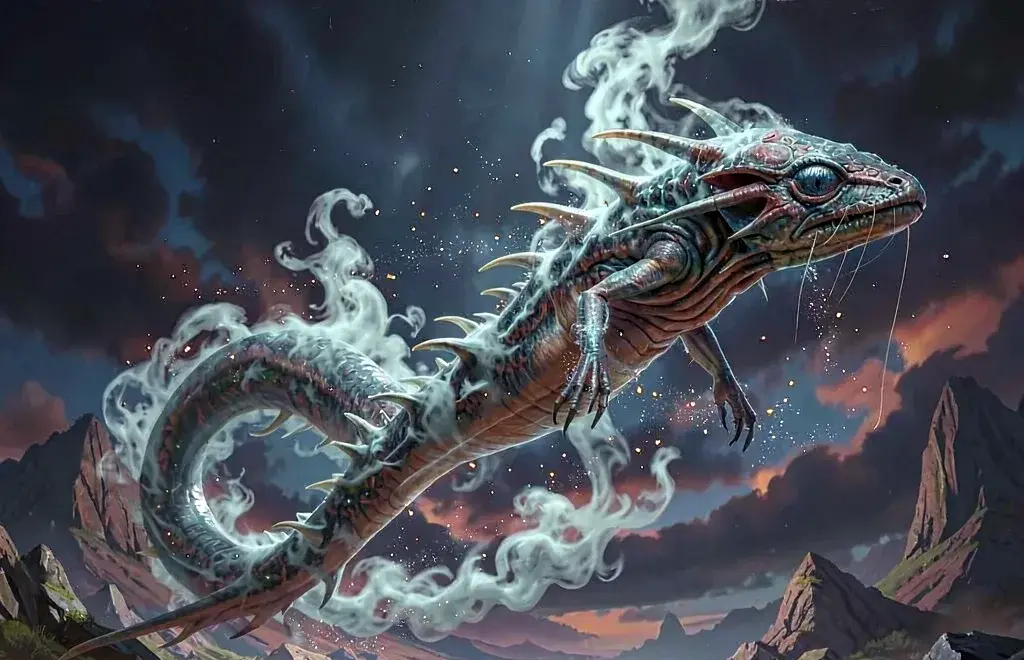
The Vapor-Eel (*Aerovora serpens*) navigates Vermis Prime's crushing atmosphere as a slender, translucent ribbon of semi-stable gas. Propelled by rhythmic undulations of its ionized core, it glides effortlessly through the dense, neon-hued haze, filtering trace metals and volatile toxins from the air. Its gill-like membranes flash with bioluminescence as they scavenge heavy particulates, converting atmospheric poison into buoyant energy. This specialized scavenger thrives where other life struggles, acting as a vital atmospheric scrubber for the super-Earth's toxic skies. Observers note its tendency to congregate near volcanic vents, where metal vapor concentrations peak. By metabolizing these hazardous compounds, the eel not only sustains itself but subtly clarifies the local air, creating fleeting pockets of breathable stability amidst the silicate storms.
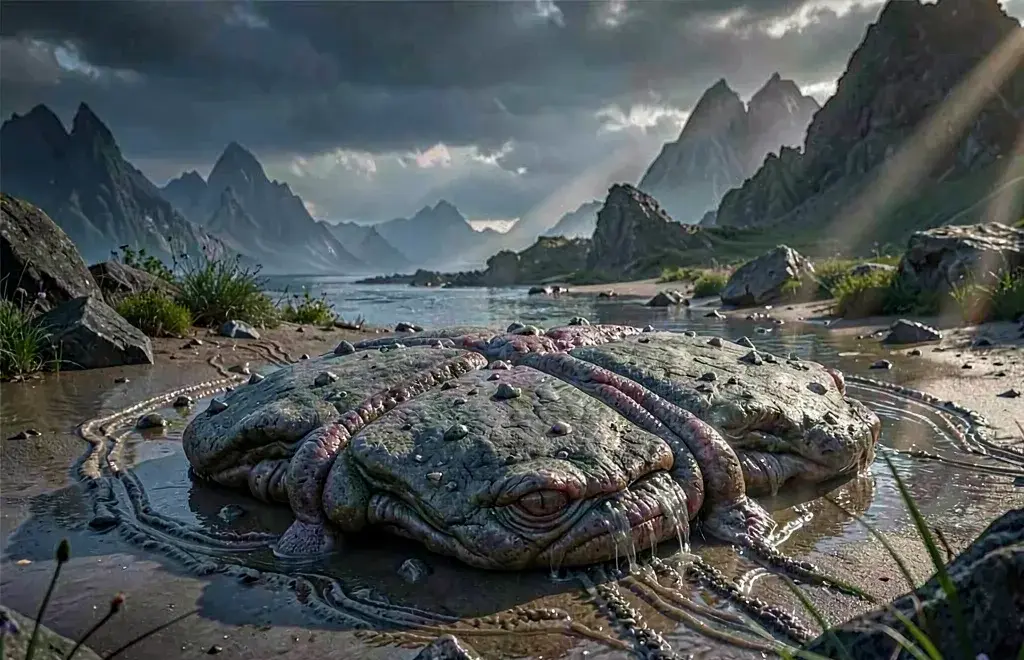
The Crust-Grazer (Lithophaga terra) is a low-profile, tank-shaped dweller of Vermis Prime's volatile silicate plains. Its carapace fuses with local bedrock, allowing it to slowly traverse the planet's harsh surface while secreting an enzymatic solvent that dissolves mineral strata for sustenance. As it feeds, the creature leaves behind distinct, glass-smooth trails where rough stone has been polished into reflective ribbons. These glistening paths serve as both territorial markers and navigational aids, guiding other grazers through the planet's frequent dust storms while revealing the rich geology beneath their armored bellies.
World Data
- star
- K-type Orange Dwarf
- gravity
- 1.4g
- atmosphere
- Dense SO2/Vapor, 0.1% O2, 98% H2S
- temp
- 180°C - 240°C (Surface), 400°C (Geothermal vents)