
Mnemosyne-7
Subsurface Ocean Ice Moon
Life on Mnemosyne-7 · 4 species

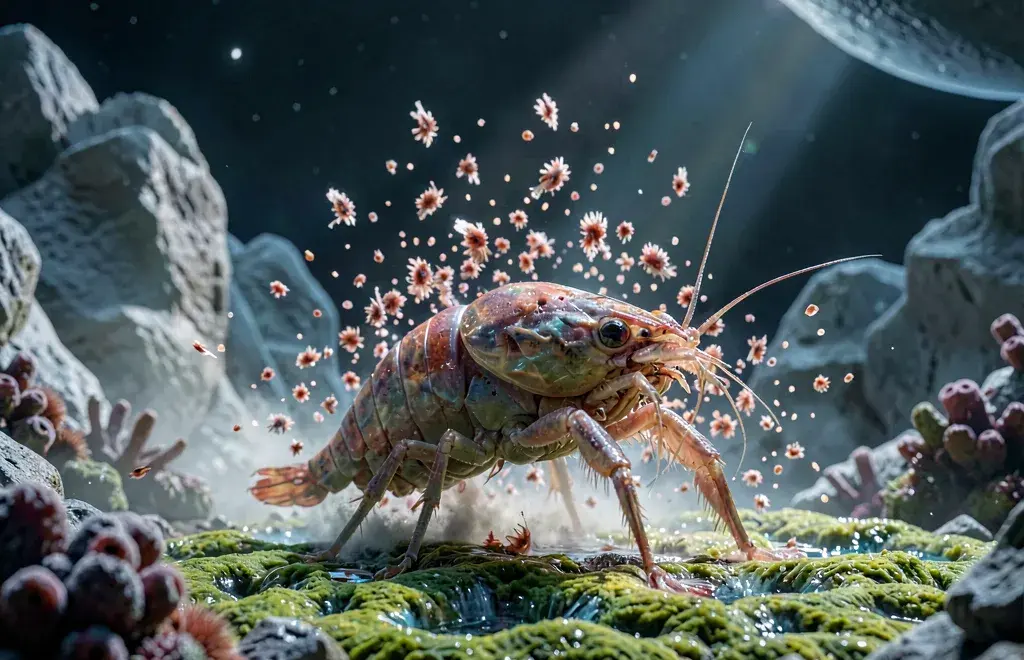
*Pyrocaris minor* thrives within Mnemosyne-7’s cold, dark subsurface ocean. These semi-translucent crustaceans feature exaggerated thermoreceptors along their carapace, allowing them to detect minute temperature shifts within frigid currents below the ice shell. Consequently, dense swarms congregate around hydrothermal plumes where thermal warmth meets nutrient-rich water. As primary grazers, they harvest chemosynthetic microbial mats growing on vent chimneys. Swarming protects them from larger predators, though high metabolic rates demand constant active feeding. To observers, their faint bioluminescent flashes resemble underwater constellations dancing within the crushing pressure of this truly alien world.
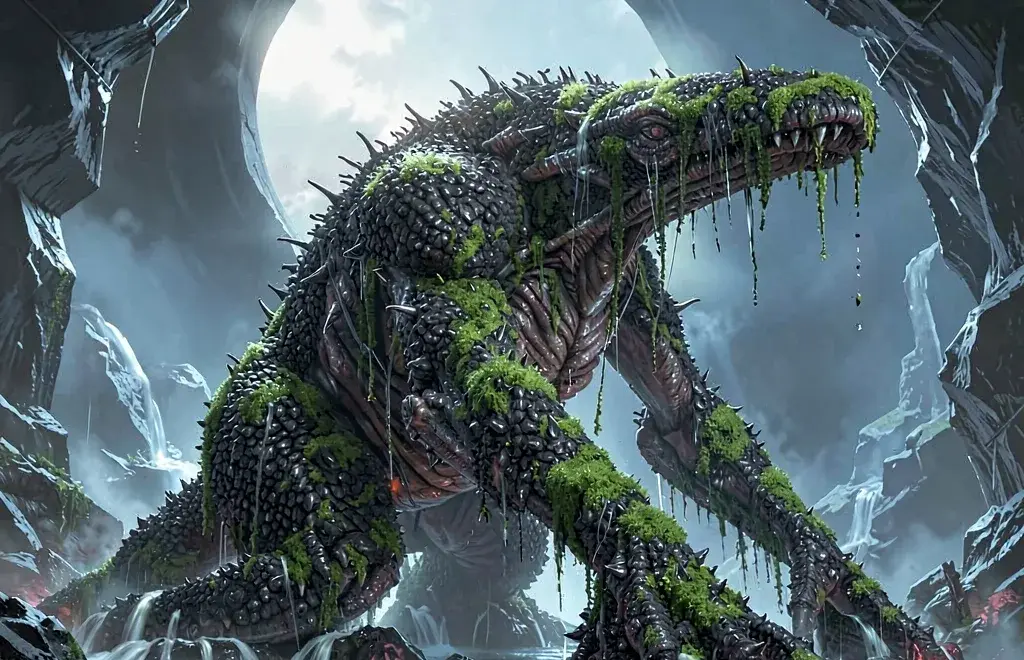
Vent Moss forms dense, obsidian carpets across Mnemosyne-7's subglacial crust, anchoring itself to active hydrothermal fissures. Unlike photosynthetic life, this Abyssalis flora thrives on chemosynthesis, metabolizing sulfur and methane plumes to fuel rapid growth in the crushing dark. Its filamentous, black fronds pulse faintly with bioluminescent veins, marking the nutrient-rich zones where thermal gradients peak. As the moon's primary producer, Vent Moss sustains a complex, isolated food web beneath miles of ice. Grazing crustaceans strip its surface for energy, while larger predators stalk these dark oases. Without this resilient bacterial matrix, the subsurface ocean would remain a barren, lifeless void, devoid of the vibrant ecosystems clinging to the vent's warmth.
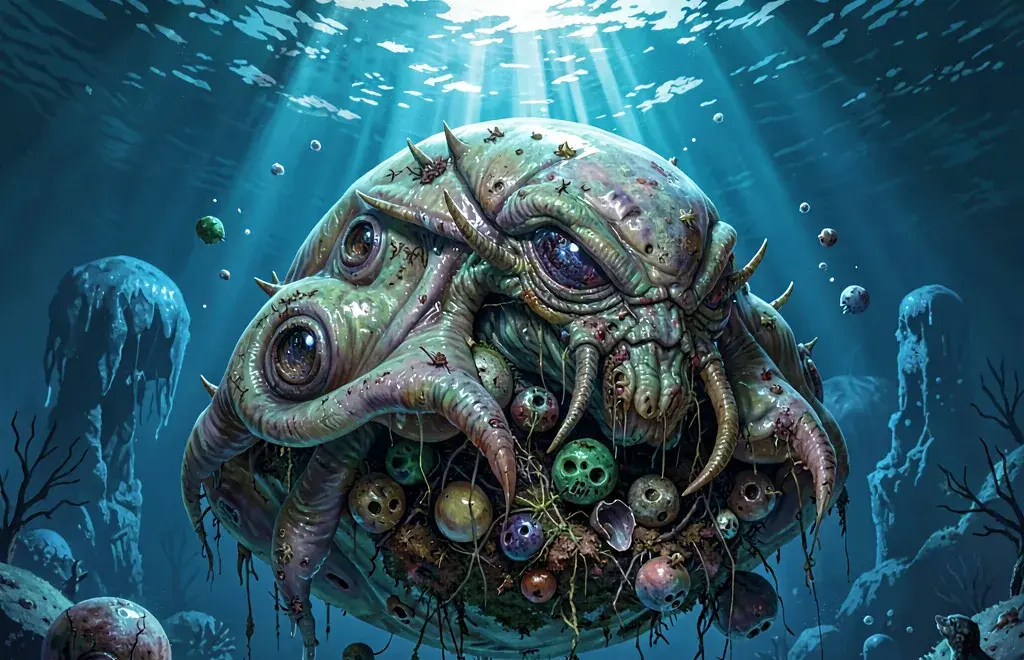
The Drift Jelly (*Nebuliflexus gigante*) dominates Mnemosyne-7's subsurface ocean as a colossal, translucent entity, slowly pulsing through the crushing darkness. Its gelatinous form stretches over thirty meters, acting as a passive filter that sweeps the water column for organic particulate. With no eyes or fins, it relies entirely on chemical gradients to navigate the perpetual night, drifting in slow, rhythmic undulations driven by internal fluid dynamics. Primary sustenance comes from the carrion of fallen Cryooculus and sinking detritus, which its permeable epidermis absorbs directly through osmosis. This scavenging behavior makes it a vital component of the moon's deep-crust nutrient cycle, effectively recycling biomass that would otherwise vanish into the ice ceiling. Despite its immense size, the creature poses little threat to active fauna, serving instead as a silent, drifting grave for the ocean's dead.
World Data
- star
- Red Dwarf (M-Class), 0.08 Solar Mass
- gravity
- 0.38g (Tidal Locking)
- atmosphere
- Negligible (Ice Shell Thickness: 40km)
- temp
- -200°C (Shell) to 15°C (Deep Ocean Vent)