
Xylos Prime
High-UV Super-Earth
Life on Xylos Prime · 4 species

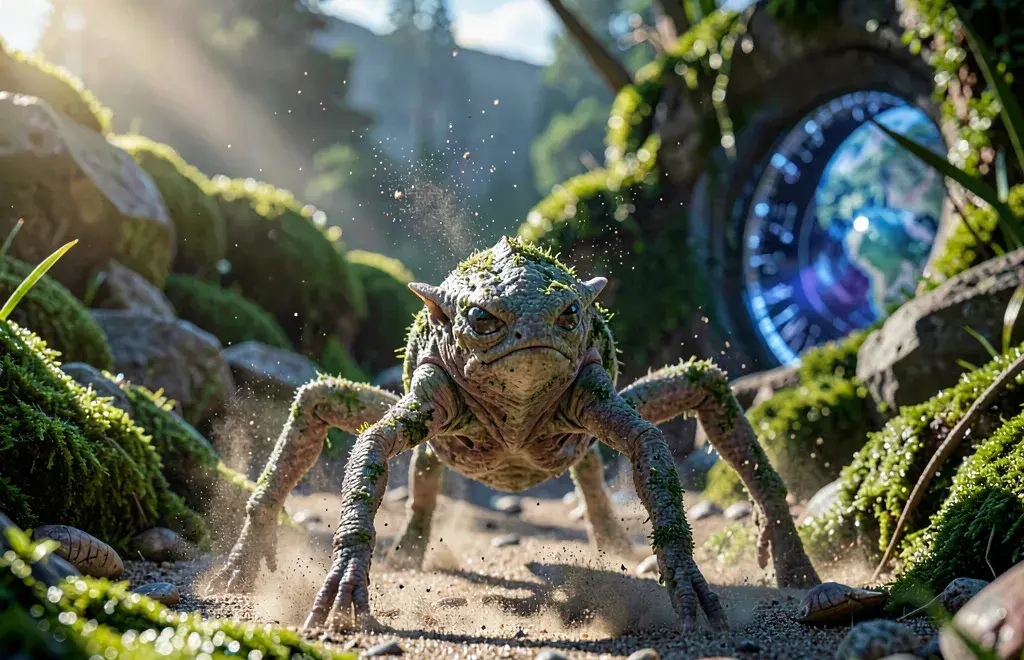
*Aerolithus volans* is a dense, six-legged floater continuously skimming Xylos Prime’s crust via magnetic buoyancy. High-density bones provide stability against local winds. It navigates thermal updrafts from geothermal vents, hovering inches above the regolith to avoid UV exposure while scanning nutrient-rich crevices below. These grazers harvest mineral dust and radiation-resistant algae from shielded fissures using a rasping proboscis. Unique gut flora converts silicates into energy, ensuring survival in this harsh environment. Breeding occurs during planetary eclipses when UV levels drop, securing offspring safely within the protective shadow of larger lithovores.
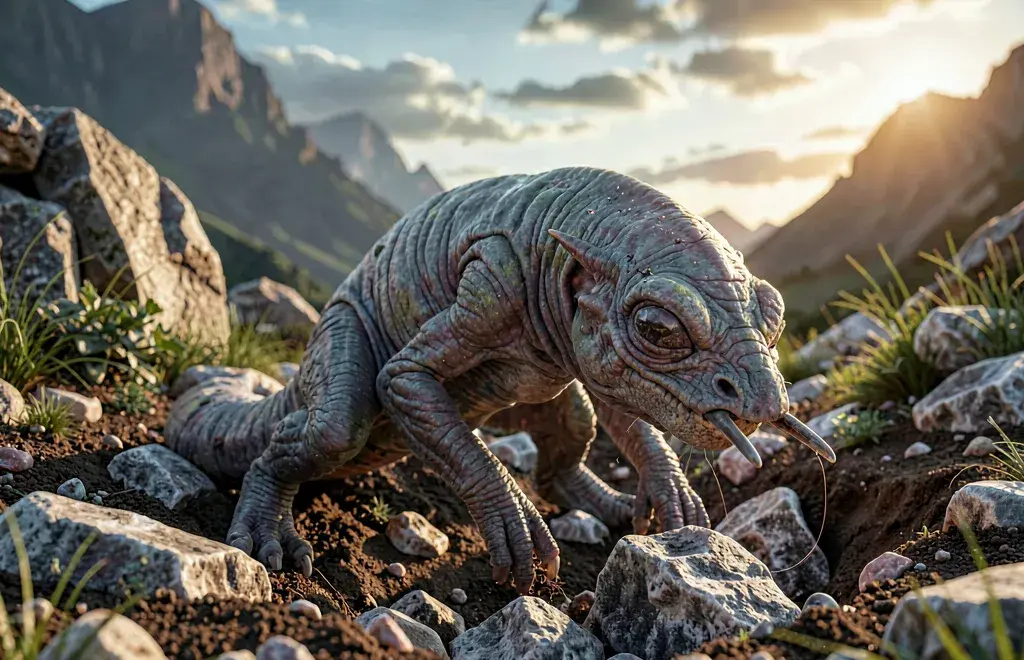
Lithosaurus profundus, the Rock-Borer, is a blind, vermiform detritivore endemic to Xylos Prime's fractured crust. Adapted to perpetual subterranean darkness and crushing pressures, it navigates solely through seismic vibration sensing along its segmented, chitinous flanks. Its calcified snout secretes potent acids, dissolving ancient limestone strata into a nutrient-rich slurry that sustains the planet's fragile biosphere. By grinding bedrock deep underground, this creature accelerates mineral recycling far faster than surface weathering allows. Its burrowing tunnels create vital aeration channels for sub-crustal fungi and microbial mats, effectively turning dead rock into fertile soil. Without the Rock-Borer's relentless excavation, Xylos Prime would remain a sterile, lifeless expanse of inert stone.
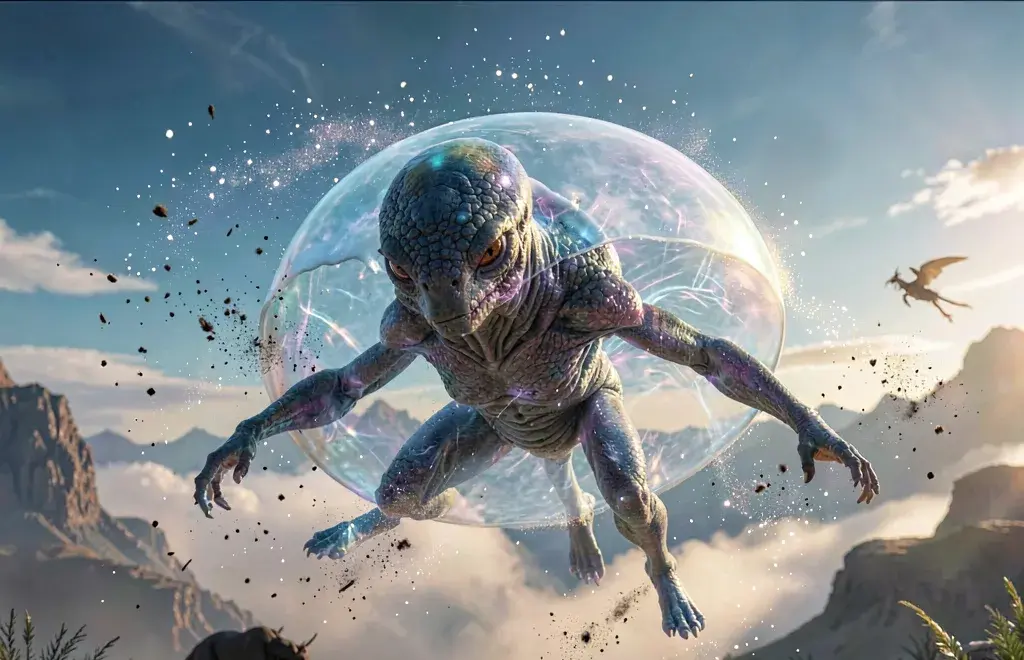
Uranosoma caerulea, or the Sky-Jelly, dominates Xylos Prime's turbulent upper atmosphere as a translucent, gelatinous apex predator. Its membrane filters lethal high-UV radiation while capturing nutrient-rich airborne spores through passive diffusion. Drifting on thermal updrafts, it maintains neutral buoyancy, its iridescent body shimmering against the violet sky until prey is detected. When starved of spores, the creature descends rapidly in a silent, fluid swoop to ambush Dust-Grazers below. Expanding its gelatinous tendrils into a suffocating net, it immobilizes terrestrial herbivores before ascending again to digest them mid-drift. This vertical hunting strategy ensures survival on this harsh super-Earth, turning the sky itself into both pantry and hunting ground.
World Data
- star
- Main Sequence F-type (Blue-White, High UV Flux)
- gravity
- 1.8g (High)
- atmosphere
- Dense Sulfuric/Argon mix, Ozone-depleted, heavy particulate haze
- temp
- Average 45°C, Surface spikes to 80°C in direct light, deep burrows stay 15°C