
Aethelgard
Tidally Locked Terrestrial
Life on Aethelgard · 4 species

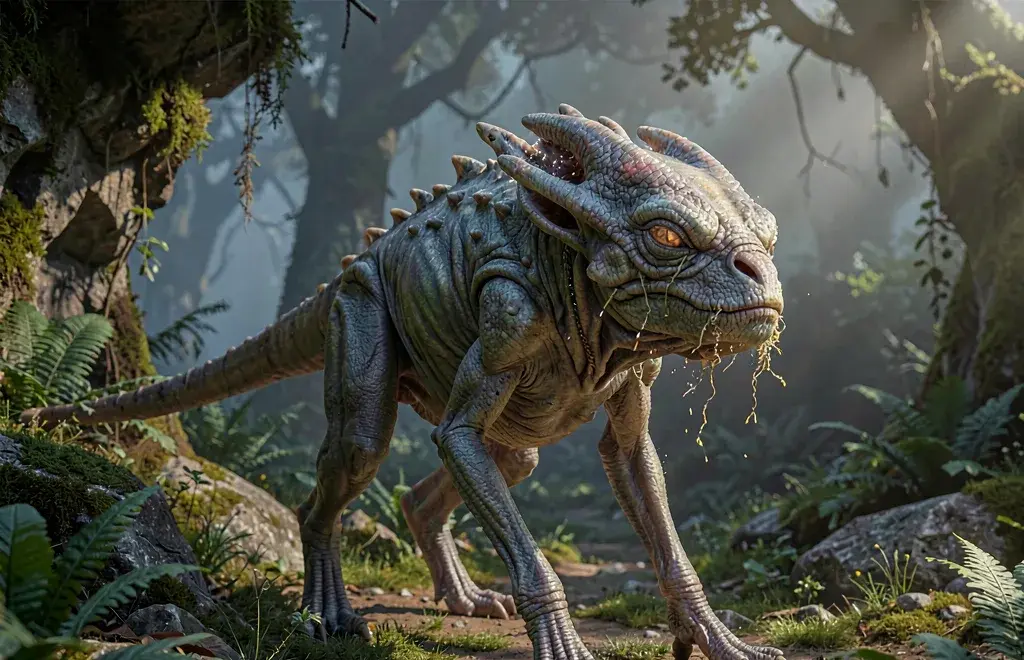
Thermovora xylos, or the Xylos grazer, is a low-maintenance herbivore uniquely adapted to Aethelgard's terminator zone. Its thick, copper-hued integument functions as an ambient heat filter, passively absorbing thermal radiation from the perpetual twilight while insulating its core against freezing winds. This passive thermoregulation allows the creature to remain active without expending energy on internal heating. Grazing primarily on sun-baked lichen and moss, these slow-moving animals blend seamlessly into the rocky gradients between day and night. As a primary prey species, their sluggish gait makes them vulnerable to predators, yet their ability to harvest warmth from the air provides a crucial survival advantage in this tidally locked world's harsh thermal extremes.
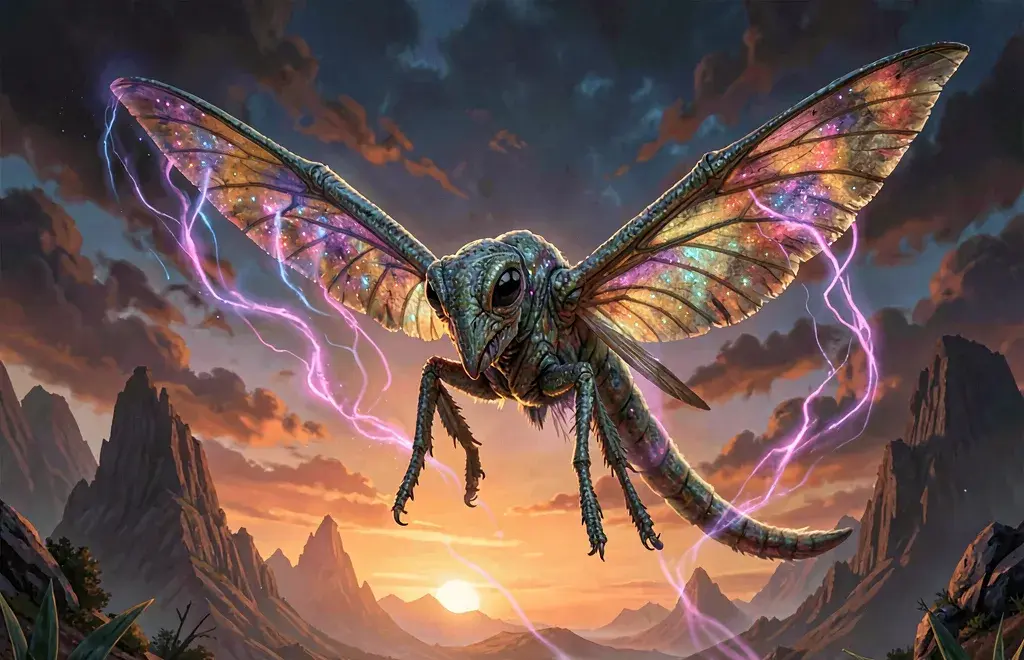
Aeropsylla velum, or the Wind-moth, thrives along Aethelgard's narrow twilight band, exploiting perpetual thermal updrafts between the scorching day side and frozen night. Its translucent, sail-like wings catch rising air currents, allowing effortless gliding across the terminator without flight muscle expenditure. This energy-efficient locomotion is vital for survival in an environment where vertical wind shear is constant but horizontal movement is restricted by extreme temperature gradients. Primarily pollinating heat-adapted flora near geothermal vents, these delicate creatures serve as a critical food source for larger aerial predators. Their iridescent bodies reflect faint starlight from the night side and solar glare from the day side, providing camouflage against both celestial poles. Despite their fragility, they possess an uncanny ability to sense pressure shifts, diving instantly when storm fronts breach the stable terminator zone.
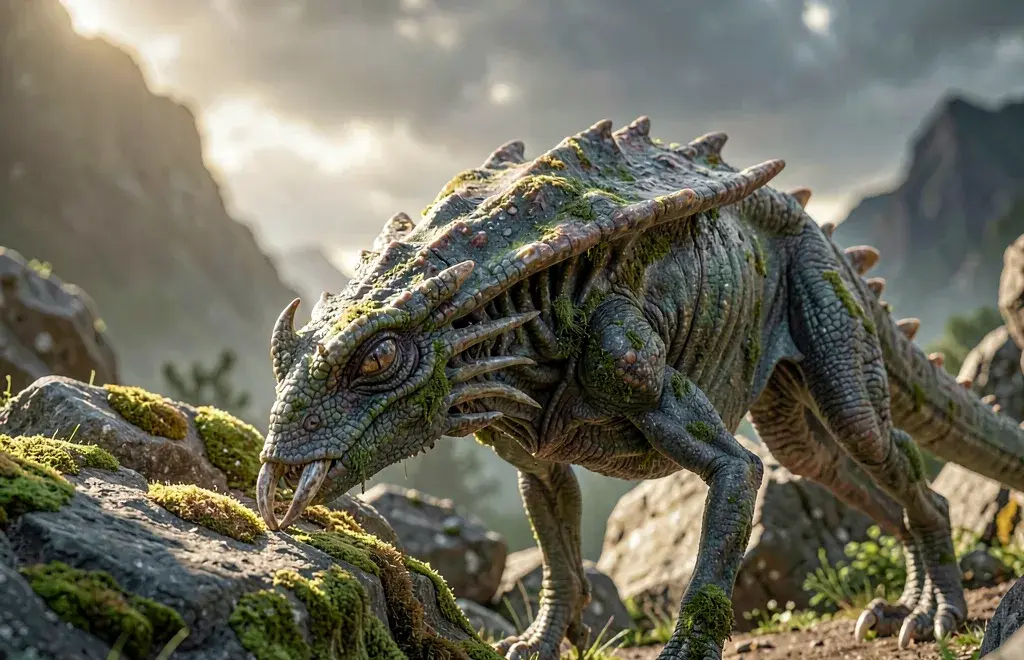
The Basalt-scraper (*Lithovora rima*) patrols the twilight rim of Tidally Locked Aethelgard, its obsidian carapace blending seamlessly with the cooling volcanic plains. Low to the ground, this six-legged detritivore utilizes rasping mandibles to graze thick microbial mats that thrive in the perpetual dusk, efficiently recycling ancient rock surfaces into nutrient-rich sediment for the surrounding flora. Despite their sluggish appearance, these creatures possess a keen sensitivity to thermal gradients, allowing them to navigate the narrow habitable band between scorching day and freezing night. By preventing algal overgrowth on basalt cliffs, they maintain critical light penetration for subterranean fungi, acting as essential ecosystem engineers that stabilize the planet's fragile twilight biosphere.
World Data
- star
- M-dwarf (dim, red)
- gravity
- 1.2g
- atmosphere
- 4-bar nitrogen-carbon dioxide mix
- temp
- -20C to 40C (terminator band)