
Ferrum IV
Super-Earth (Iron-Oxide Crust)
Life on Ferrum IV · 4 species

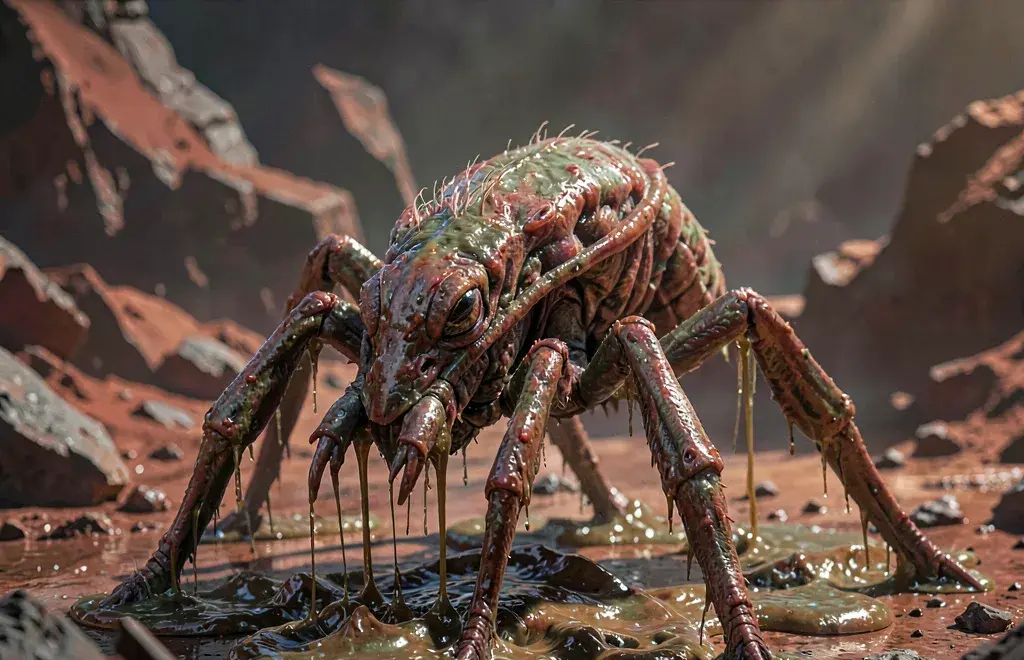
Aeolus arachnea, the Dust-Weaver, is a diminutive hexapedal arthropod endemic to Ferrum IV's rust-red wastes. Evolved for low-gravity stability, its spindly legs grip the iron-oxide crust while specialized mandibles rasp away the calcified slime cast off by passing Flux-Striders. These hardened residues serve as both shelter and primary sustenance. Through a unique metabolic pathway, the creature extracts trace lead from the strider's waste, converting it into a dense, metallic exoskeleton plating that shields against the planet's intense radiation. Often mistaken for loose debris in the shimmering dust storms, the Dust-Weaver functions as a vital scavenger, recycling toxic byproducts and sustaining itself in an otherwise barren landscape.
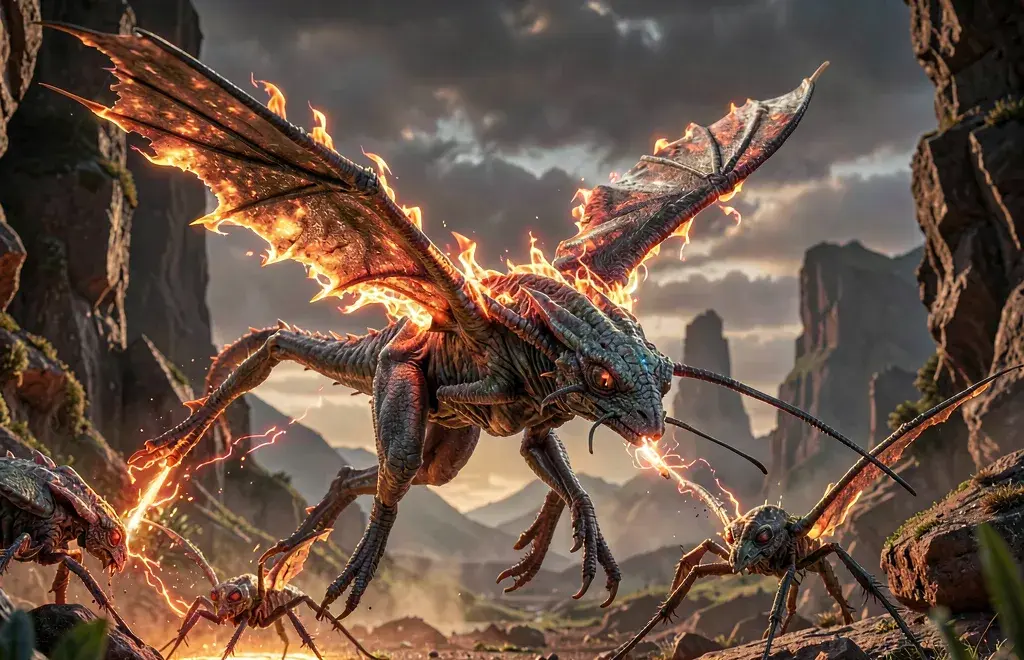
Ignis volatus, the Flare-Skimmer, dominates Ferrum IV's rust-choked skies with wings of translucent, heat-shielded keratin. These apex hunters wait motionless within thermal updrafts, their bodies insulated against the planet's frequent solar flares that scorch the iron-oxide crust below. Their physiology is uniquely adapted to absorb intense radiation, converting it into a temporary metabolic boost essential for high-altitude pursuit. When Flux-Striders emerge from subterranean burrows during flare peaks, the Skimmer dives with terrifying precision. It targets the Strider's dorsal energy sacs, using razor-sharp talons to pierce and siphon their stored bio-electric charge. This predatory theft not only sustains the Flare-Skimmer but leaves its prey lethargic and vulnerable, cementing the creature's role as the iron world's ultimate aerial predator.
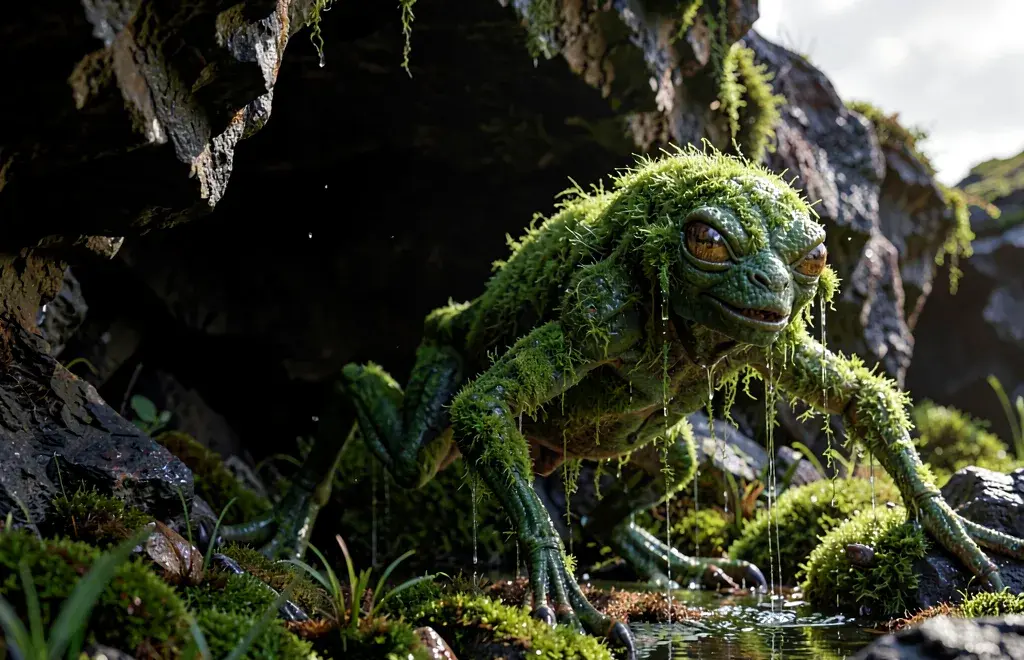
Ferrum bryum, colloquially Iron-Moss, is a low-lying primary producer endemic to Ferrum IV's oxidized basins. Unlike typical flora relying on stellar radiation, this sessile organism thrives exclusively in the deep shadows cast by massive Flux-Striders. Its rust-colored filaments anchor firmly into loose regolith, acting as a critical soil stabilizer against the planet's frequent tectonic tremors while forming dense, crimson mats that prevent catastrophic erosion. The species survives via osmotic absorption of organic runoff and mineral leachates from Strider excreta. Its unique metabolic pathway converts iron-rich waste into structural cellulose, reinforcing its grip on the unstable crust. Consequently, Iron-Moss blooms only along migratory paths, creating a symbiotic carpet that simultaneously nourishes the ground beneath the titans and secures the planet's fragile surface layers.
World Data
- star
- Red Dwarf (M-type, high flare activity)
- gravity
- 1.4g
- atmosphere
- Thin CO2, trace Argon, charged particle storms
- temp
- -40C to 15C (surface), stable thermal layers