
Chromata
地下生物発光群島
Chromata の生命 · 4 種

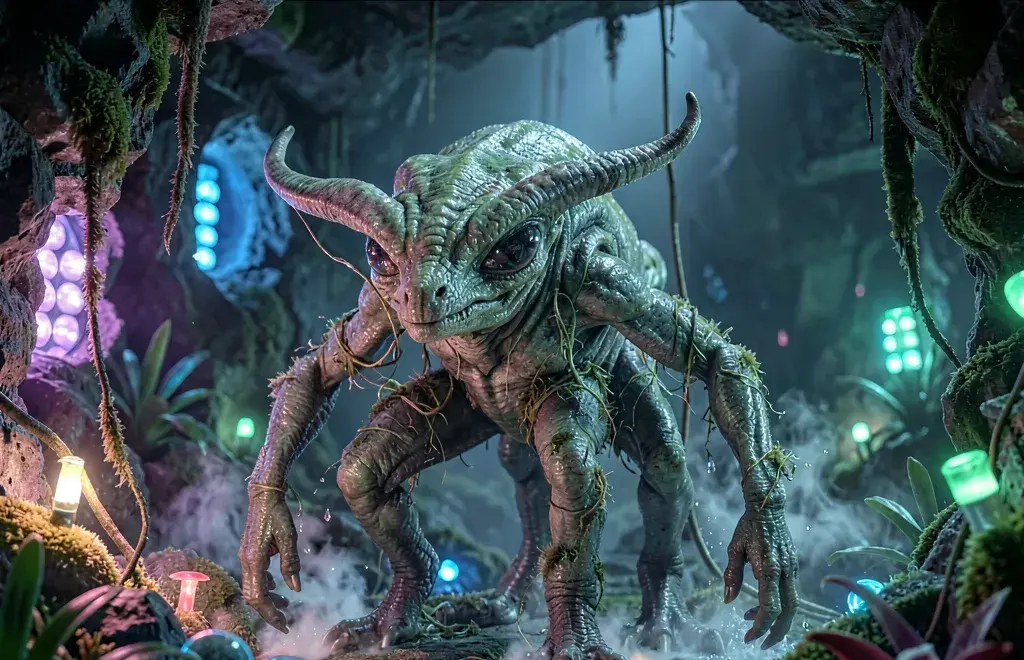
マイコフィラム・ラディカンス(通称:ベント・ウィーバー)は、クロマタの地下に広がる島嶼群の亀裂に根を張り、繊維状の根茎で直接過熱された噴気孔へと接続している。この固着性の一次生産者は完全な暗闇の中で繁栄し、地熱鉱物を代謝すると同時にメタンと水蒸気の安定した噴出をもたらすことで、島嶼群の湿潤な微小気候を維持している。 その半透明の傘は低周波の生物発光を脈動させ、火山性揺動のリズムに合わせて点滅することで共生する草食生物を引き寄せる。移動はできないものの、ウィーバーが形成する広大な菌糸ネットワークは玄武岩地殻の下で張り巡らされ、不安定な地表を安定化させるだけでなく、有毒ガスを甘く粘性のある蜜へと変換し、島嶼群全体の食物網を支えている。
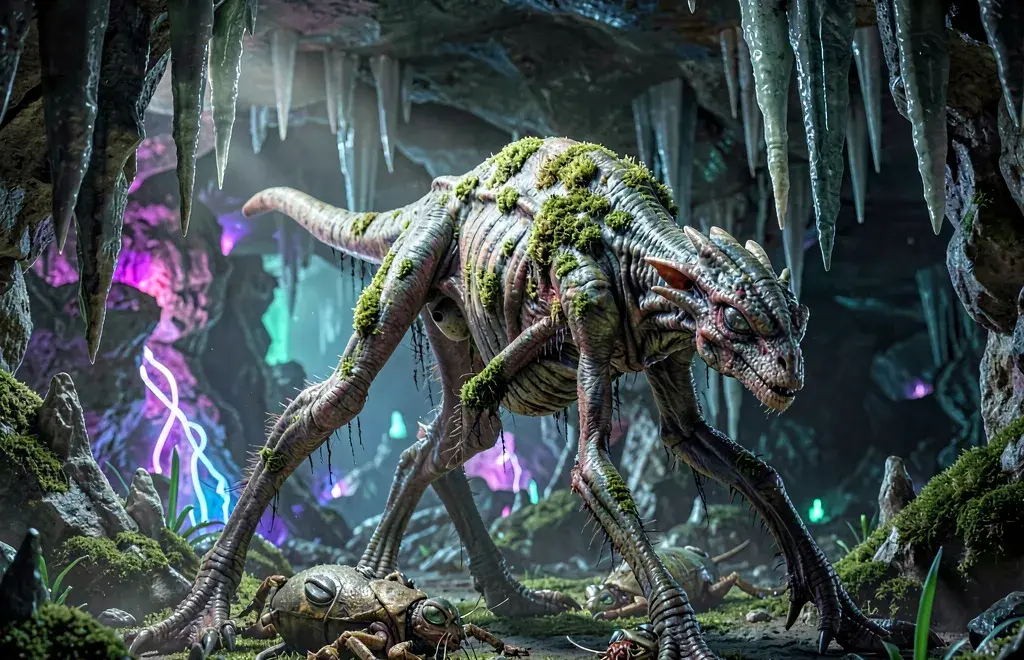
アンブルクロス・グラビタス、通称ドリフトストライダーは、吸盤で鉱物表面を掴む6本の静水圧脚を用いて逆さつららの上を移動し、クロマタの地下の島々を航行する。そのキチン質の外骨格は周囲の生物発光を反射し、輝く洞窟内での擬態を助ける。 この好機的な腐肉食者は主に落下したハイドロ・ドリフターを摂食し、特殊な顎で腐敗した死体から栄養豊富な液体をろ過する。この生物はゆっくりとした意図的な歩行を行い、酸素の少ない深部でエネルギーを節約しつつ、側線センサーを用いて絶対的な闇の中を接近してくる捕食者や新鮮な死肉からの振動を検知する。
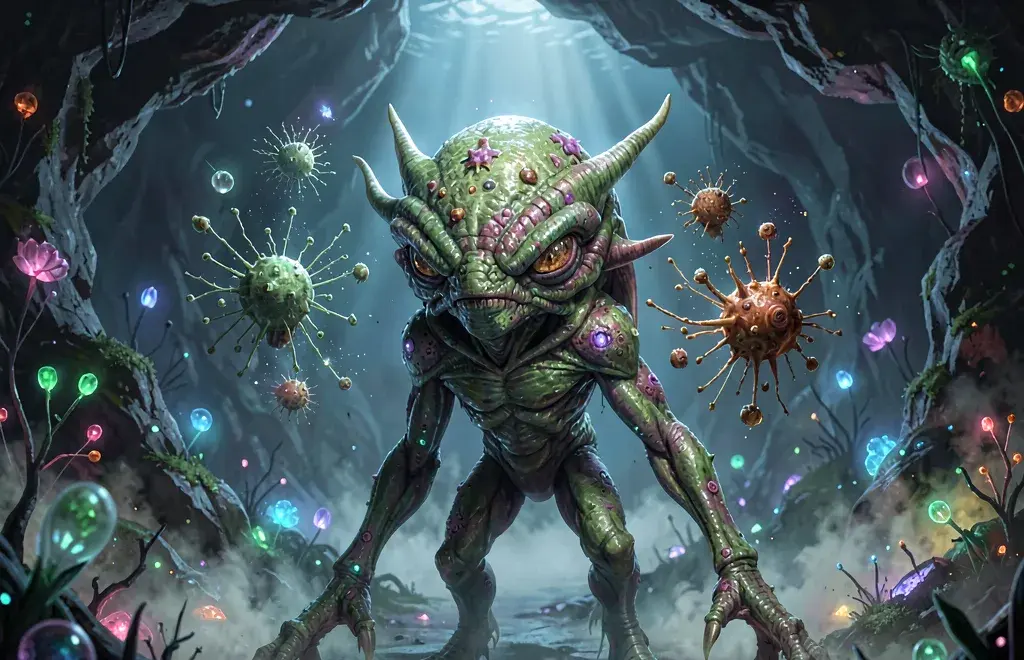
The Cave-Mist (*Aeroplankton sulfura*) thrives within Chromata's subterranean haze, forming iridescent clouds that drift through sulfur-rich caverns. These microscopic entities feed exclusively on dissolved hydrogen sulfide and trace methane, converting toxic gases into vibrant, bioluminescent biomass. Their collective movement creates shifting auroras of violet and green, illuminating the dark archipelago where no sunlight penetrates. Observations suggest *Aeroplankton* clusters act as a single atmospheric processor, regulating local gas concentrations while providing sustenance for larger filter-feeders. Each organism is roughly two micrometers across, encased in a semi-permeable membrane that withstands high pressure. In dense fog banks, the mist glows intensely, marking safe passages through Chromata's labyrinthine tunnels for native fauna navigating the perpetual night.
世界データ
- star
- なし(地熱/化学発光)
- gravity
- 0.6g
- atmosphere
- 高密度、高CO2、ヘリウム3とメタン霧で飽和
- temp
- 安定45°C(地熱勾配)