
Chromata
Subterranean Bioluminescent Archipelago
Life on Chromata · 4 species

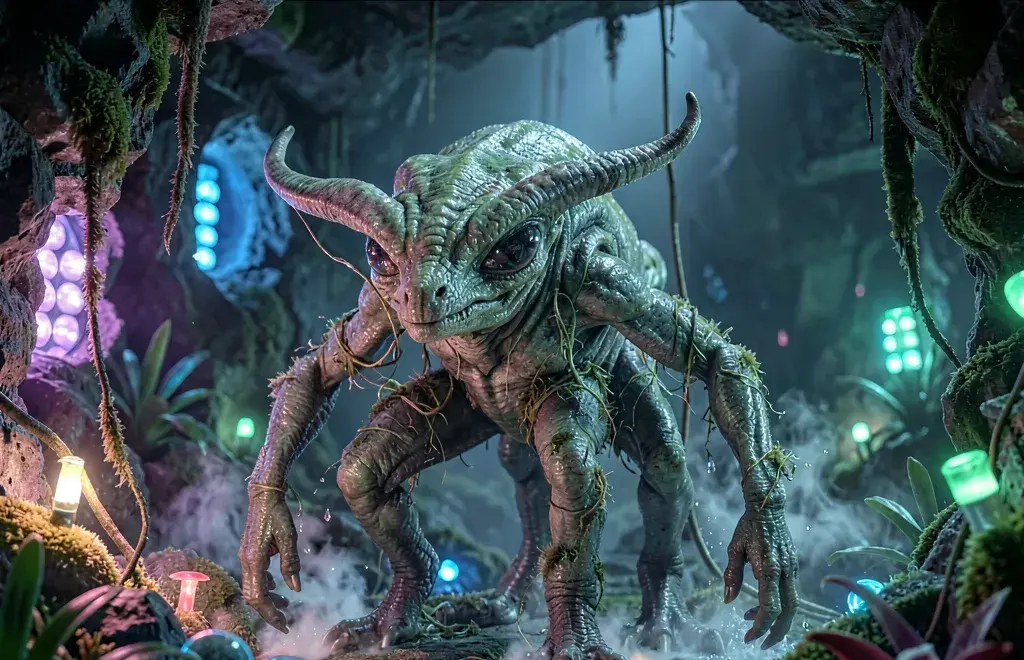
Mycofilum radicans, the Vent-Weaver, anchors itself to fissures within Chromata's subterranean archipelago, its fibrous rhizomes tapping directly into superheated vents. This sessile primary producer thrives in total darkness, metabolizing geothermal minerals while exuding a steady plume of methane and water vapor that sustains the island's humid microclimates. Its translucent caps pulse with low-frequency bioluminescence, flickering in rhythm with volcanic tremors to attract symbiotic grazers. Though immobile, the Weaver's extensive mycelial network weaves beneath the basalt crust, stabilizing unstable ground while converting toxic gases into a sweet, viscous nectar that fuels the archipelago's entire food web.
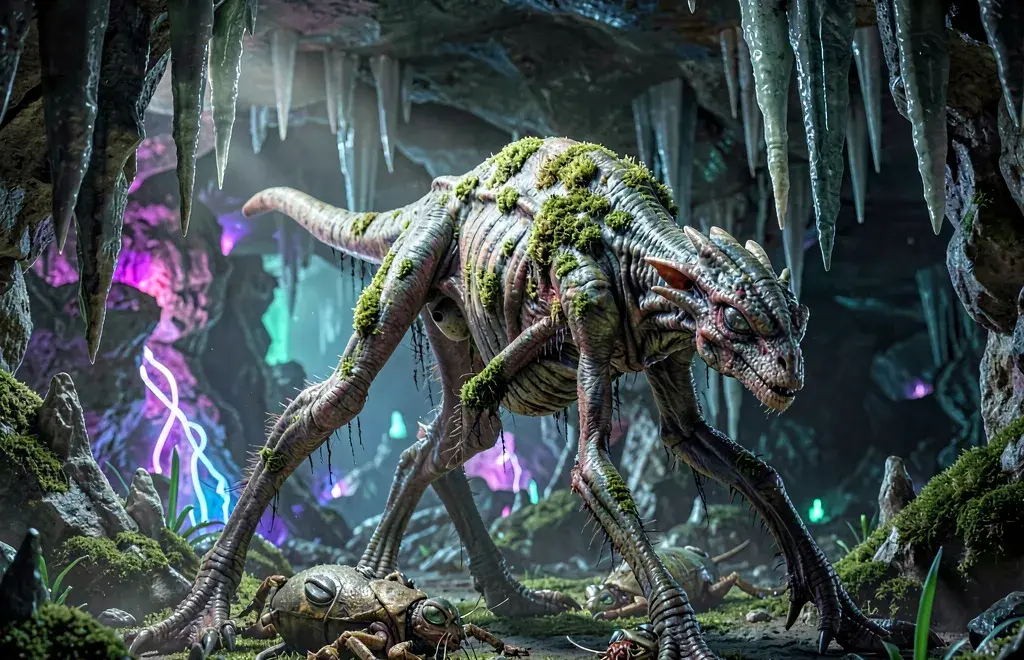
Ambulocrus gravitas, the Drift-Strider, navigates Chromata's subterranean archipelago by traversing inverted stalactites with six hydrostatic legs that grip mineral surfaces via suction pads. Its chitinous exoskeleton reflects ambient bioluminescence to aid camouflage within the glowing caverns. This opportunistic scavenger primarily consumes fallen Hydro-Drifters, filtering nutrient-rich fluids from their decaying carcasses using specialized mandibles. The creature moves with a slow, deliberate gait, conserving energy in the oxygen-poor depths while its lateral line sensors detect vibrations from approaching predators or fresh carrion in the absolute dark.
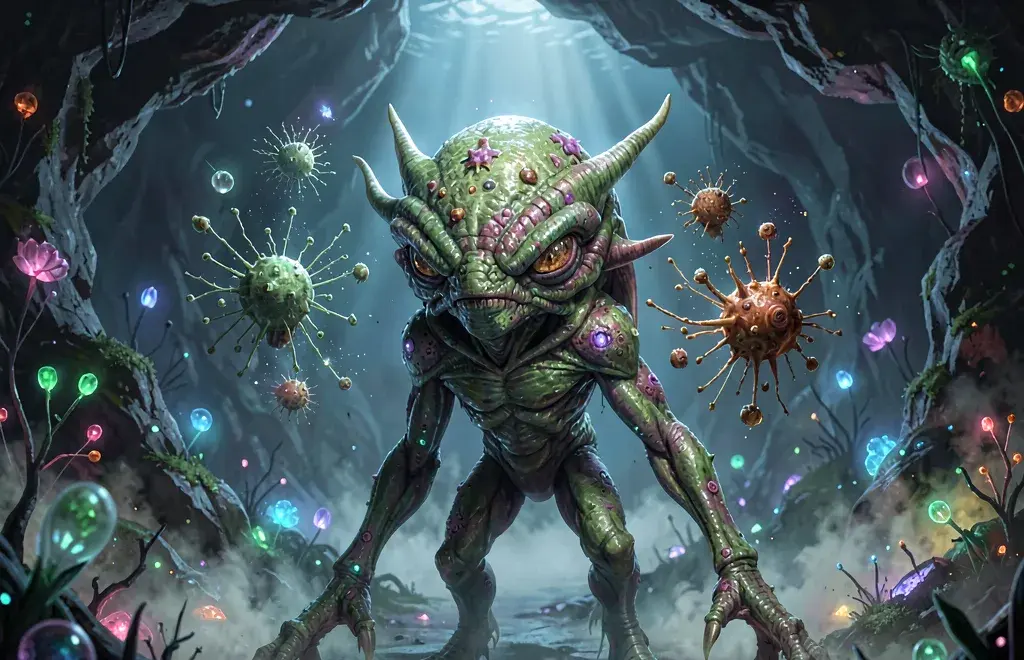
The Cave-Mist (*Aeroplankton sulfura*) thrives within Chromata's subterranean haze, forming iridescent clouds that drift through sulfur-rich caverns. These microscopic entities feed exclusively on dissolved hydrogen sulfide and trace methane, converting toxic gases into vibrant, bioluminescent biomass. Their collective movement creates shifting auroras of violet and green, illuminating the dark archipelago where no sunlight penetrates. Observations suggest *Aeroplankton* clusters act as a single atmospheric processor, regulating local gas concentrations while providing sustenance for larger filter-feeders. Each organism is roughly two micrometers across, encased in a semi-permeable membrane that withstands high pressure. In dense fog banks, the mist glows intensely, marking safe passages through Chromata's labyrinthine tunnels for native fauna navigating the perpetual night.
World Data
- star
- None (Geothermal/Chemi-luminescent)
- gravity
- 0.6g
- atmosphere
- Dense, High-CO2, Saturated with Helium-3 and Methane mist
- temp
- Stable 45°C (Geothermal gradients)