
Xylos-9
Высокоатмосферная экзопланета в разреженном вакууме
Жизнь на Xylos-9 · 4 видов

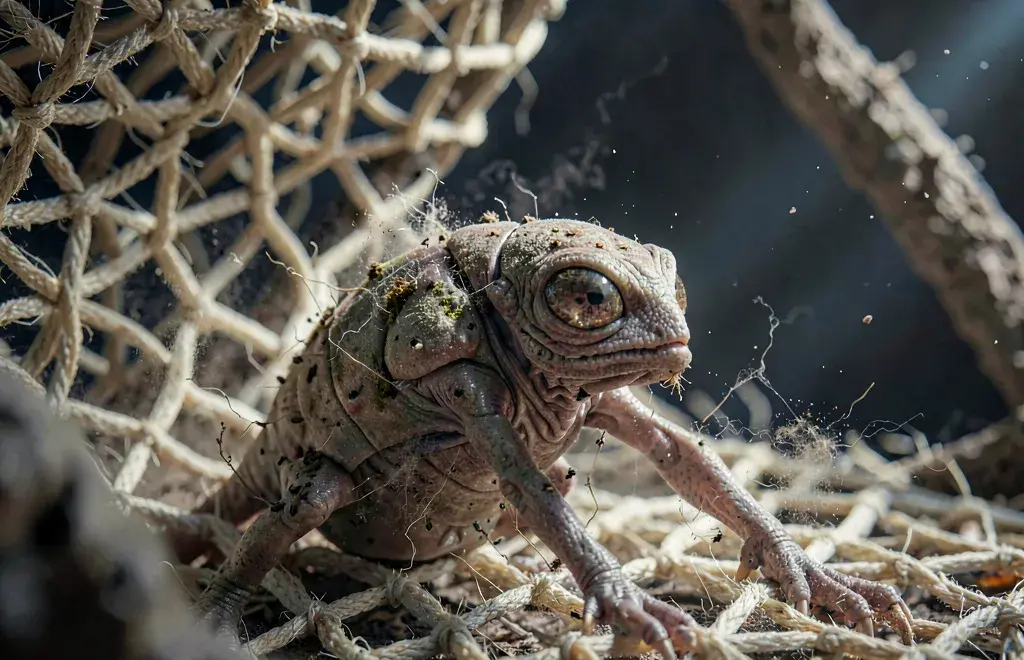
The Dust-Mite (*Litho-granum*) is a microscopic grazer endemic to Xylos-9's thin-vacuum stratosphere. Encased in a refractive silica-carapace, these organisms drift within high-altitude dust clouds, filtering particulate silicates for sustenance. Their hexagonal exoskeletons reflect the pale solar radiation, rendering them nearly invisible against the amber haze until they cluster. Individuals frequently anchor themselves to the Thermal-Weave's lattice, a synthetic structure stabilizing local atmospheric temperature. Here, they form dense, living carpets that harvest residual heat while grazing on suspended grit. This symbiotic adherence prevents their dispersal into the lethal upper vacuum, creating a fragile biofilm essential to the station's thermal regulation and dust filtration systems.
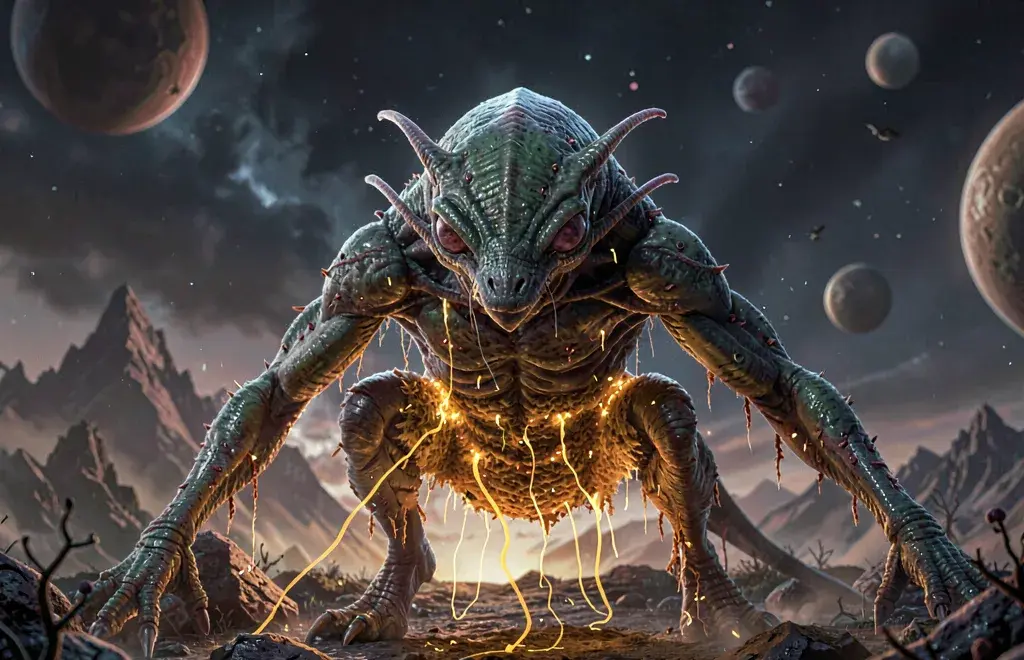
Thermovora parasitus manifests as a translucent, vein-like film on the underside of Xylos-9's Thermal-Weave organisms. This epibiotic bacterium infiltrates the host's micro-capillaries to siphon thermal gradients essential for cellular metabolism. In the thin vacuum of high-altitude zones, where ambient heat is scarce, the parasite creates localized cold spots, causing immediate tissue necrosis in its host while sustaining its own rapid replication cycle through stolen energy fluxes. Infested specimens exhibit a distinct frost-bloom pattern along their dorsal ridges as internal temperatures plummet. Without intervention, the Thermal-Weave's metabolic processes freeze within hours, leading to structural collapse of the host's protein lattice. Field researchers recommend immediate cryo-scraping of infestation sites, though removal often proves fatal due to the irreversible thermal shock inflicted during the parasite's initial energy theft.
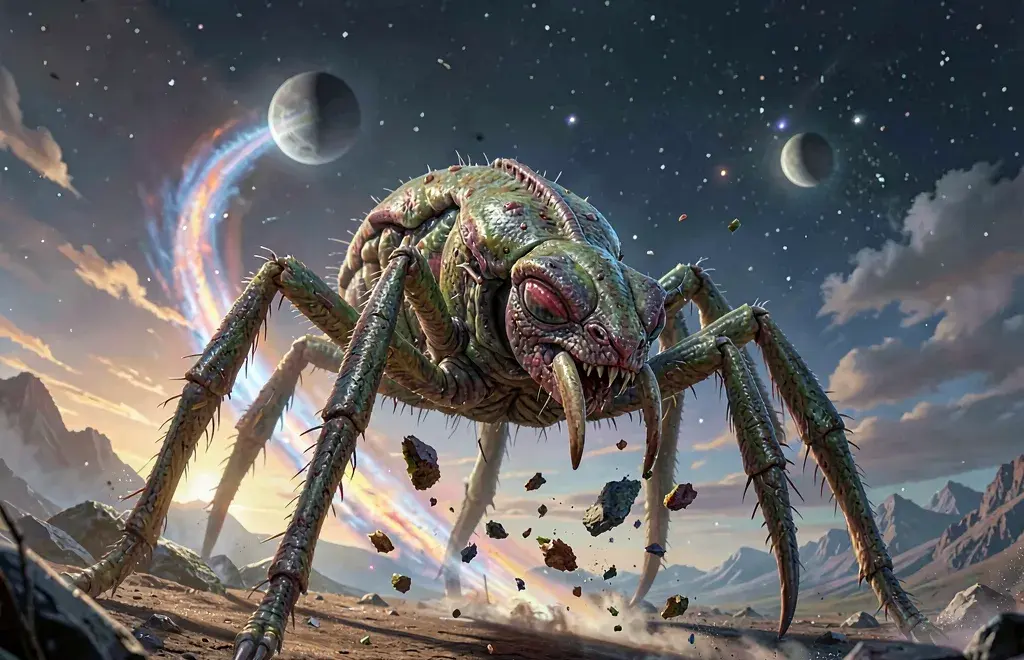
Поверхностный ползун, или терра-сталкер, процветает в разреженной верхней атмосфере Ксилоса-9, используя шесть удлинённых многосуставных конечностей для перемещения по скалистой реголитовой поверхности с минимальным контактом. Его панцирь отражает ультрафиолетовое излучение для терморегуляции, а специализированные сенсоры улавливают крошечные тепловые сигнатуры дрейфующих фрагментов Термального Сплетения. В условиях низкой гравитации существо движется с плавной точностью, экономя энергию между краткими взрывными рывками, необходимыми для навигации по изрезанным высокогорьям планеты. Иногда эти паукообразные бросаются в струйное течение, используя аэродинамическое сплющивание тела для скольжения к парящим органическим обломкам. С резким прыжком они выхватывают из воздушных потоков более мелкие фрагменты Термального Сплетения до того, как гравитация вернёт их вниз. Эта уникальная стратегия воздушного поиска пищи позволяет выживать там, где наземные ресурсы скудны, превращая турбулентные ветровые слои в динамичную охотничью угодье для этого ловкого высокогорного хищника.
Данные о мире
- star
- Оранжевый карлик класса K (низкий УФ, высокий ИК)
- gravity
- 0.35g
- atmosphere
- Чрезвычайно разреженная смесь CO2/азот; давление у поверхности 0.08 атм
- temp
- -140°C до -60°C (суточный цикл обусловлен звездным потоком)