
Xylos-9
Thin-Vacuum High-Altitude Exoplanet
Xylos-9上的生命 · 4个物种

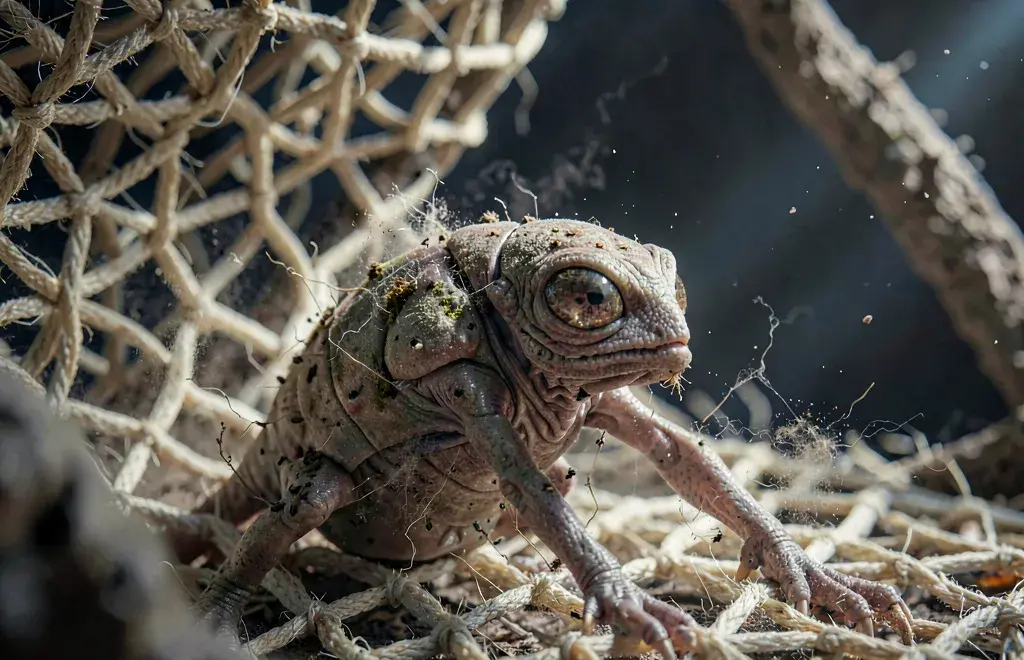
尘埃螨(*Litho-granum*)是一种原产于 Xylos-9 稀薄真空平流层的微观食草生物。它们身披折射性二氧化硅甲壳,在高空尘云中漂流,过滤微粒硅酸盐以维持生命。其六边形外骨骼反射微弱的太阳辐射,使它们在琥珀色 haze 中几乎隐形,唯有成群聚集时才显露踪迹。 个体常锚定于“热织网”的晶格结构上——这是一种用于稳定局部大气温度的合成构造。在此处,它们形成致密的活体地毯,在摄取悬浮颗粒的同时收集残余热量。这种共生附着机制防止了它们被吹散至致命的上层真空,从而构成了一种脆弱的生物膜,对空间站的热调节与除尘系统至关重要。

Thermovora parasitus manifests as a translucent, vein-like film on the underside of Xylos-9's Thermal-Weave organisms. This epibiotic bacterium infiltrates the host's micro-capillaries to siphon thermal gradients essential for cellular metabolism. In the thin vacuum of high-altitude zones, where ambient heat is scarce, the parasite creates localized cold spots, causing immediate tissue necrosis in its host while sustaining its own rapid replication cycle through stolen energy fluxes. Infested specimens exhibit a distinct frost-bloom pattern along their dorsal ridges as internal temperatures plummet. Without intervention, the Thermal-Weave's metabolic processes freeze within hours, leading to structural collapse of the host's protein lattice. Field researchers recommend immediate cryo-scraping of infestation sites, though removal often proves fatal due to the irreversible thermal shock inflicted during the parasite's initial energy theft.
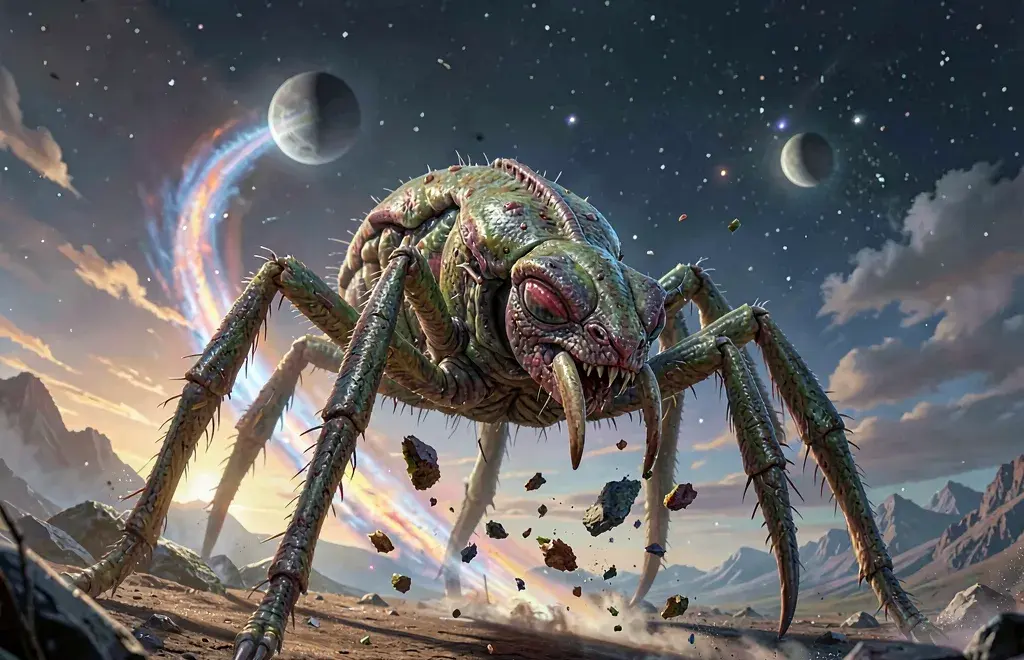
地表爬行者,又称“地影追踪者”,在 Xylos-9 稀薄的高层大气中繁衍生息。它凭借六条细长且多关节的腿,以最小接触面积穿越崎岖的岩石风化层。其甲壳能反射紫外线以调节体温,而特化的传感器则可探测飘浮的热织碎片所散发的微弱热信号。在低重力环境下,该生物能以流畅而精准的动作移动,在短暂爆发式位移之间积蓄能量,以适应星球锯齿状高地的复杂地形。 偶尔,这些蛛形生物会跃入急流,利用气动性身体扁平化滑翔至漂浮的有机碎屑附近。凭借突如其来的腾跃,它们从气流中攫取较小的热织碎片,随后在重力将其拉回之前完成捕食。这种独特的空中觅食策略使其能在陆地资源匮乏的环境中生存,将湍急的风层转化为这只敏捷的高空掠食者的动态猎场。
世界数据
- star
- K-type Orange Dwarf (low UV, high IR)
- gravity
- 0.35g
- atmosphere
- Extremely tenuous CO2/Nitrogen mix; surface pressure 0.08 atm
- temp
- -140C to -60C (diurnal cycle driven by stellar flux)